Hassan Haes Alhelou – författare
1 534 kr
Skickas inom 10-15 vardagar
Active Electrical Distribution Network: Issues, Solution Techniques and Applications is a comprehensive reference that addresses the issues and opportunities across one of the most overlooked sectors of the electrical industry, electrical distribution. The book begins with an introduction to electrical distribution networks, and then explores both present and future developments in the areas of smart grids, electric vehicles, micro grids, demand side response and active distribution networks. The ongoing transition of energy systems is also covered, providing recommendations for a higher penetration of renewable energy, utilization of new equipment and new network configurations, as well as development of new design and operation methods, and applications of new incentives and business models. The book closes with a section on optimizing operational issues, featuring guidance on optimal expansion planning of distribution systems in smart grids and optimization of photovoltaic (PV) systems.Active Electrical Distribution Network is an ideal reference for all those interested in the modeling, analysis, control, operation and planning techniques that are key to addressing the knowledge and information needs of the engineering and research audience.
Includes different techniques under DSR concepts and solutions to address home area management system problems Features various smart reactive power compensation techniques used for reactive power support Discusses different smart technologies implemented globally to improve the performance of the active distribution network2 182 kr
Läs direkt efter köp
1 534 kr
Skickas inom 10-15 vardagar
Decentralized Frameworks for Future Power Systems: Operation, Planning and Control Perspectives�is the first book to consider the principles and applications of decentralized decision-making in future power networks. The work opens by defining the emerging power system network as a system-of-systems (SoS), exploring the guiding principles behind optimal solutions for operation and planning problems. Chapters emphasize the role of regulations, prosumption behaviors, and the implementation of transactive energy processes as key components in decentralizing power systems. Contributors explore local markets, distribution system operation and proactive load management. The role of cryptocurrencies in smoothing transactive distributional challenges are presented.
Final sections cover energy system planning, particularly in terms of consumer smart meter technologies and distributed optimization methods, including artificial intelligence, meta-heuristic, heuristic, mathematical and hybrid approaches. The work closes by considering decentralization across the cybersecurity, distributed control, market design and power quality optimization vertices.
Develops a novel framework for transactive energy management to enhance flexibility in future power systems Explores interactions between multiple entities in local power markets based on a distributed optimization approach Focuses on practical optimization, planning and control of smart grid systems towards decentralized decision-making2 182 kr
Läs direkt efter köp
2 435 kr
Skickas inom 10-15 vardagar
937 kr
Skickas inom 10-15 vardagar
2 158 kr
Skickas inom 10-15 vardagar
2 158 kr
Skickas inom 10-15 vardagar
1 666 kr
Skickas inom 10-15 vardagar
2 370 kr
Läs direkt efter köp
1 097 kr
Läs direkt efter köp
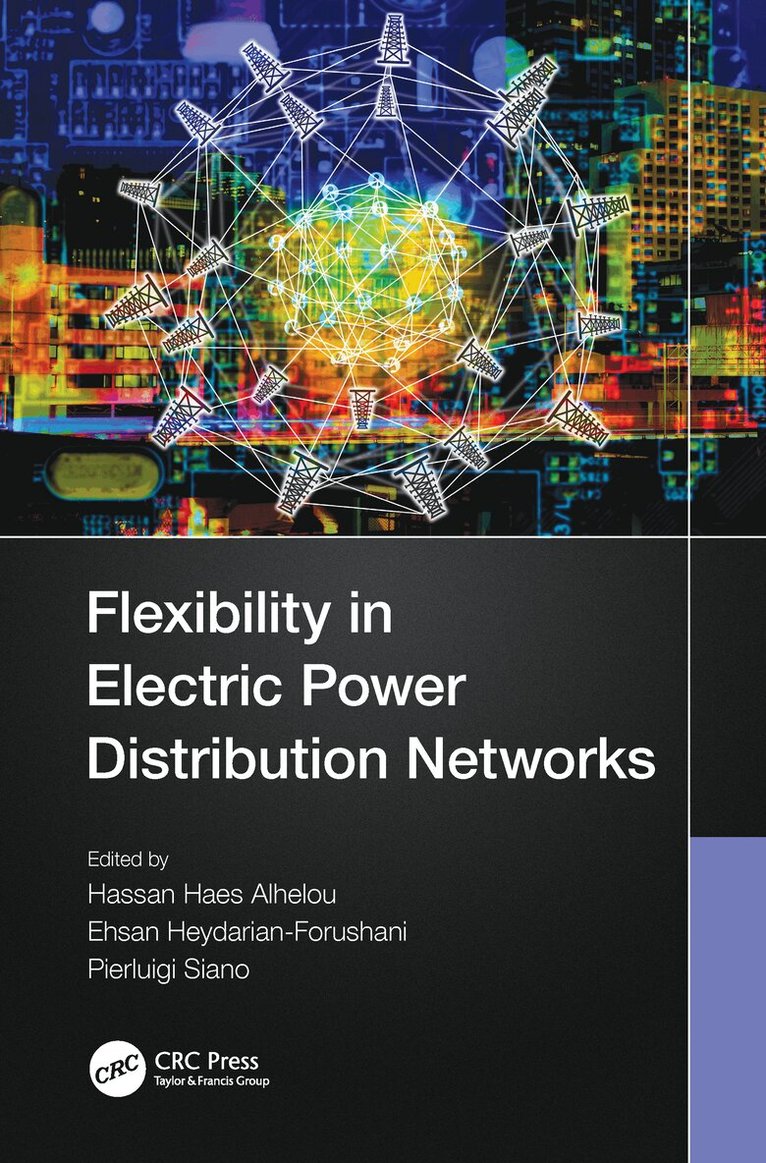
High penetration of renewable energy sources (RESs) imposes several techno-economic challenges to distribution system operators (DSOs) due to their variability in power generation and, hence, increases the need for additional operational flexibility. Operational flexibility aims at securely covering the possible variations at the minimum cost using emerging flexible alternatives or designing novel local market mechanisms to incentivize flexibility providers. In such a situation, the DSOs can use the potential of flexible options such as energy storages (ESs), demand response (DR), plug-in electric vehicles (PEVs), or on-site fast run generators. However, each of the mentioned flexible resources has its own specific characteristics and requirements that should be taken into account, and this raises the complexity. Optimal network reconfiguration schemes are the other solution for increasing power system flexibility at the distribution level.
There is a great research gap related to renewable-based distribution network planning from a flexibility point of view. Therefore, this book aims to discuss the additional flexibility needs introduced by RESs and describe general approaches to analyze the need for and provision of additional flexibility in future distribution networks at both the planning and operational time frames.
This book successfully suggests new solutions and techniques to increase the flexibility in distribution systems. It also highlights the needs for moving towards smart distribution grids in order to enhance the flexibility in modern and future power systems.
1 087 kr
Läs direkt efter köp
High penetration of renewable energy sources (RESs) imposes several techno-economic challenges to distribution system operators (DSOs) due to their variability in power generation and, hence, increases the need for additional operational flexibility. Operational flexibility aims at securely covering the possible variations at the minimum cost using emerging flexible alternatives or designing novel local market mechanisms to incentivize flexibility providers. In such a situation, the DSOs can use the potential of flexible options such as energy storages (ESs), demand response (DR), plug-in electric vehicles (PEVs), or on-site fast run generators. However, each of the mentioned flexible resources has its own specific characteristics and requirements that should be taken into account, and this raises the complexity. Optimal network reconfiguration schemes are the other solution for increasing power system flexibility at the distribution level.
There is a great research gap related to renewable-based distribution network planning from a flexibility point of view. Therefore, this book aims to discuss the additional flexibility needs introduced by RESs and describe general approaches to analyze the need for and provision of additional flexibility in future distribution networks at both the planning and operational time frames.
This book successfully suggests new solutions and techniques to increase the flexibility in distribution systems. It also highlights the needs for moving towards smart distribution grids in order to enhance the flexibility in modern and future power systems.
2 255 kr
Läs direkt efter köp
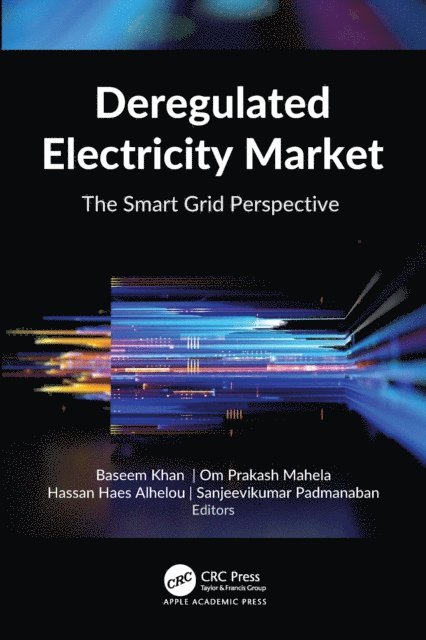
Energy demand will increase by 70% by the year of 2030, and with the continual day-by-day depletion of traditional energy sources, there is a vast need to continue the development of dependable renewable energy sources that are locally available and that enhance energy generation efficiency. This important resource presents the topical issues of the deregulated electricity market, focusing on the integration of renewable sources with engineering approaches.
The volume identifies and explores the deregulated electricity markets and looks at different renewable generation techniques and their operation and control issues. It considers the various power quality issues with renewable energy generation interfaced with smart grids and their solution techniques. It also addresses the various integration challenges of energy storage systems and energy management of electric vehicles in the smart grid environment. Topics include methods for frequency, angle, and voltage monitoring in smart grids; load frequency and voltage control pricing; grid integration of wind energy generation systems; tracking and management techniques; performance analysis; and more.
This volume is an important resource for scientists, researchers, students, and academicians across the globe concerned with adopting and implementing novel research on smart power grids and renewable energy systems.
2 255 kr
Läs direkt efter köp
Energy demand will increase by 70% by the year of 2030, and with the continual day-by-day depletion of traditional energy sources, there is a vast need to continue the development of dependable renewable energy sources that are locally available and that enhance energy generation efficiency. This important resource presents the topical issues of the deregulated electricity market, focusing on the integration of renewable sources with engineering approaches.
The volume identifies and explores the deregulated electricity markets and looks at different renewable generation techniques and their operation and control issues. It considers the various power quality issues with renewable energy generation interfaced with smart grids and their solution techniques. It also addresses the various integration challenges of energy storage systems and energy management of electric vehicles in the smart grid environment. Topics include methods for frequency, angle, and voltage monitoring in smart grids; load frequency and voltage control pricing; grid integration of wind energy generation systems; tracking and management techniques; performance analysis; and more.
This volume is an important resource for scientists, researchers, students, and academicians across the globe concerned with adopting and implementing novel research on smart power grids and renewable energy systems.
844 kr
Läs direkt efter köp
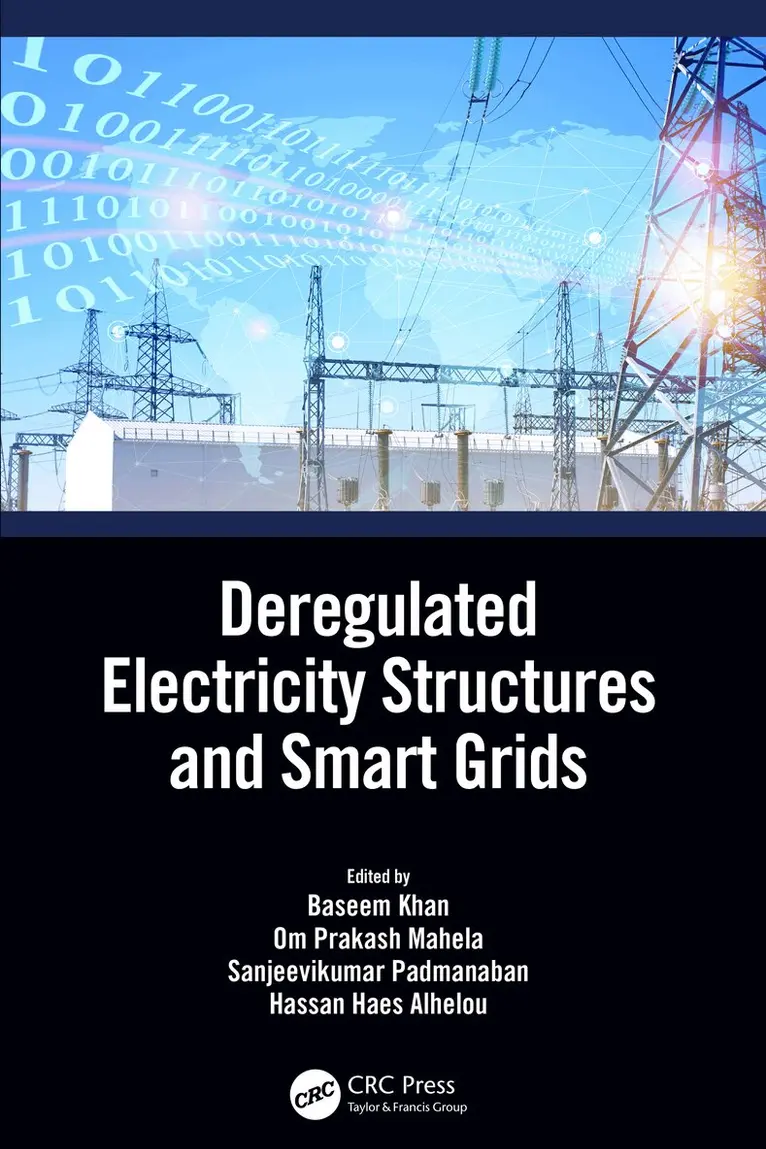
The goals of restructuring of the power sector are competition and operating efficiency in the power industry that result in reliable, economical, and quality power supply to consumers. This comprehensive reference text provides an in-depth insight into these topics.
Deregulated Electricity Structures and Smart Grids discusses issues including renewable energy integration, reliability assessment, stability analysis, reactive power compensation in smart grids, and harmonic mitigation, in the context of the deregulated smart electricity market. It covers important concepts including AC and DC grid modelling, harmonics mitigation and reactive power compensation in the deregulated smart grid, and extraction of energy from renewable energy sources under the deregulated electricity market with the smart grid.
The text will be useful for graduate students and professionals in the fields of electrical engineering, electronics and communication engineering, renewable energy, and clean technologies.
851 kr
Läs direkt efter köp
The goals of restructuring of the power sector are competition and operating efficiency in the power industry that result in reliable, economical, and quality power supply to consumers. This comprehensive reference text provides an in-depth insight into these topics.
Deregulated Electricity Structures and Smart Grids discusses issues including renewable energy integration, reliability assessment, stability analysis, reactive power compensation in smart grids, and harmonic mitigation, in the context of the deregulated smart electricity market. It covers important concepts including AC and DC grid modelling, harmonics mitigation and reactive power compensation in the deregulated smart grid, and extraction of energy from renewable energy sources under the deregulated electricity market with the smart grid.
The text will be useful for graduate students and professionals in the fields of electrical engineering, electronics and communication engineering, renewable energy, and clean technologies.
892 kr
Läs direkt efter köp
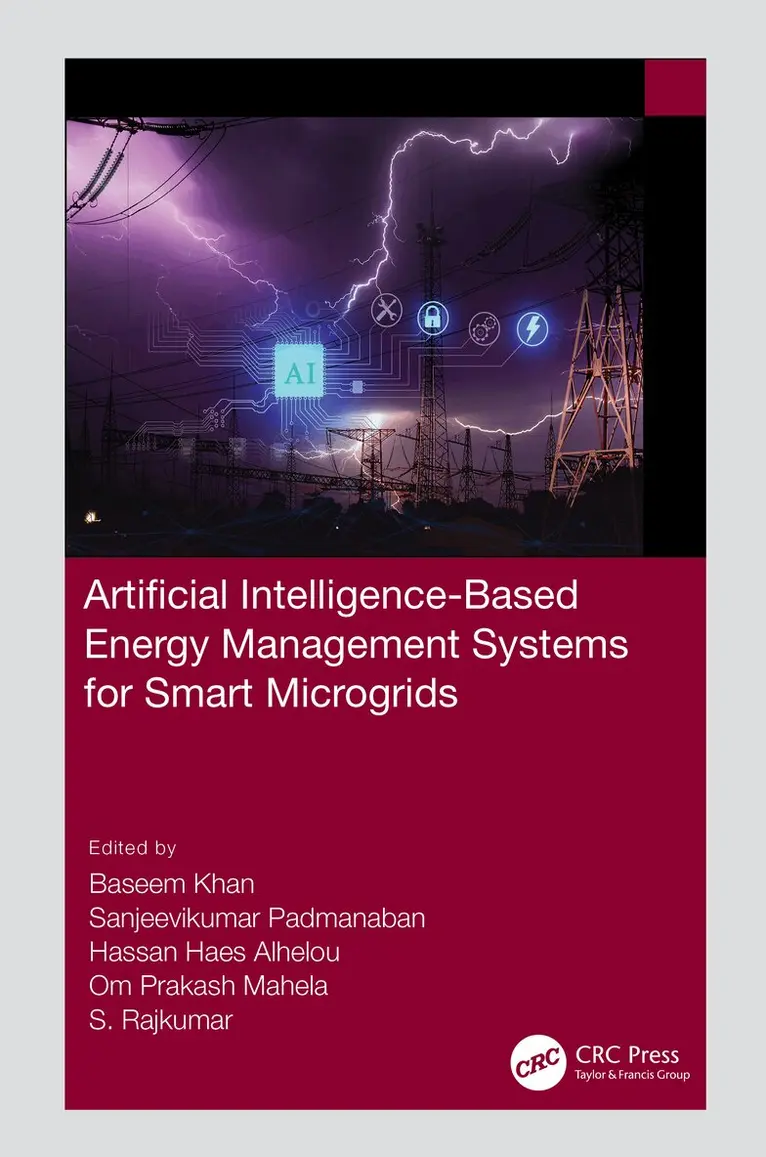
Modeling and optimization of energy management systems for micro- and mini-grids play an important role in the fields of energy generation dispatch, system operation, protection coordination, power quality issues, and peak demand conflict with grid security. This comprehensive reference text provides an in-depth insight into these topics. This text discusses the use of meta-heuristic and artificial intelligence algorithms for developing energy management systems with energy use prediction for mini- and microgrid systems. It covers important concepts including modeling of microgrid and energy management systems, optimal protection coordination-based microgrid energy management, optimal energy dispatch with energy management systems, and peak demand management with energy management systems.
Key Features:
Presents a comprehensive discussion of mini- and microgrid concepts
Discusses AC and DC microgrid modeling in detail
Covers optimization of mini- and microgrid systems using AI and meta-heuristic techniques
Provides MATLAB®-based simulations on a mini- and microgrid
Comprehensively discussing concepts of microgrids with the help of software-based simulations, this text will be useful as a reference text for graduate students and professionals in the fields of electrical engineering, electronics and communication engineering, renewable energy, and clean technology.
892 kr
Läs direkt efter köp
Modeling and optimization of energy management systems for micro- and mini-grids play an important role in the fields of energy generation dispatch, system operation, protection coordination, power quality issues, and peak demand conflict with grid security. This comprehensive reference text provides an in-depth insight into these topics. This text discusses the use of meta-heuristic and artificial intelligence algorithms for developing energy management systems with energy use prediction for mini- and microgrid systems. It covers important concepts including modeling of microgrid and energy management systems, optimal protection coordination-based microgrid energy management, optimal energy dispatch with energy management systems, and peak demand management with energy management systems.
Key Features:
Presents a comprehensive discussion of mini- and microgrid concepts
Discusses AC and DC microgrid modeling in detail
Covers optimization of mini- and microgrid systems using AI and meta-heuristic techniques
Provides MATLAB®-based simulations on a mini- and microgrid
Comprehensively discussing concepts of microgrids with the help of software-based simulations, this text will be useful as a reference text for graduate students and professionals in the fields of electrical engineering, electronics and communication engineering, renewable energy, and clean technology.
769 kr
Läs direkt efter köp
This book provides a general overview of virtual power plants (VPP) as a key technology in future energy communities and active distribution and transmission networks for managing distributed energy resources, providing local and global services, and facilitating market participation of small-scale managing distributed energy resources and prosumers. The book also aims at describing some practical solutions, business models, and novel architectures for the implementation of VPPs in the real world.
Each chapter of the book begins with the fundamental structure of the problem required for a rudimentary understanding of the methods described. It provides a clear picture for practical implementation of VPP through novel technologies such as blockchain, digital twin, and distributed ledger technology.
The book will help the electrical and power engineers, undergraduate, graduate students, research scholars, and utility engineers to understand the emerging solutions regarding the VPP concept lucidly.
763 kr
Läs direkt efter köp
This book provides a general overview of virtual power plants (VPP) as a key technology in future energy communities and active distribution and transmission networks for managing distributed energy resources, providing local and global services, and facilitating market participation of small-scale managing distributed energy resources and prosumers. The book also aims at describing some practical solutions, business models, and novel architectures for the implementation of VPPs in the real world.
Each chapter of the book begins with the fundamental structure of the problem required for a rudimentary understanding of the methods described. It provides a clear picture for practical implementation of VPP through novel technologies such as blockchain, digital twin, and distributed ledger technology.
The book will help the electrical and power engineers, undergraduate, graduate students, research scholars, and utility engineers to understand the emerging solutions regarding the VPP concept lucidly.
795 kr
Läs direkt efter köp
Enhancing the integration of renewable power generation from wind and solar into the traditional power network requires the mitigation of the vulnerabilities affecting the grid as a result of the intermittent nature of these resources. Variability and ramp events in power output are the key challenges to the system operators due to their impact on system balancing, reserves management, scheduling, and commitment of generation units.
This book presents development of energy management system for renewable power generation (EMSRPG) tool that aims to achieve power-dispatching strategies based on forecasting renewable energy resources outputs to guarantee optimal dispatch of hybrid wind-solar photovoltaic power systems (HWSPS). The key selling points of the book include the following:
Renewable energy management in modern and future smart power systems
Energy management systems
Modeling and simulations using a real-time digital simulator (RTDS)
High penetration level of renewable energy sources
Case studies based on Oman’s power systems and other power grids
This book discusses the challenges of integrating renewable resources, including low inertia systems, hosting capacity limitations of existing power systems, and weak grids. It further examines the detailed topologies, operation principles, recent developments in control techniques, and stability of power systems with a large scale of renewables. Finally, it presents case studies of recent projects from around the world where dispatchable power plant techniques are used to enhance power system operation.
795 kr
Läs direkt efter köp
Enhancing the integration of renewable power generation from wind and solar into the traditional power network requires the mitigation of the vulnerabilities affecting the grid as a result of the intermittent nature of these resources. Variability and ramp events in power output are the key challenges to the system operators due to their impact on system balancing, reserves management, scheduling, and commitment of generation units.
This book presents development of energy management system for renewable power generation (EMSRPG) tool that aims to achieve power-dispatching strategies based on forecasting renewable energy resources outputs to guarantee optimal dispatch of hybrid wind-solar photovoltaic power systems (HWSPS). The key selling points of the book include the following:
Renewable energy management in modern and future smart power systems
Energy management systems
Modeling and simulations using a real-time digital simulator (RTDS)
High penetration level of renewable energy sources
Case studies based on Oman’s power systems and other power grids
This book discusses the challenges of integrating renewable resources, including low inertia systems, hosting capacity limitations of existing power systems, and weak grids. It further examines the detailed topologies, operation principles, recent developments in control techniques, and stability of power systems with a large scale of renewables. Finally, it presents case studies of recent projects from around the world where dispatchable power plant techniques are used to enhance power system operation.
795 kr
Läs direkt efter köp
The leading countries around the globe, including Australia, have taken serious steps to decarbonize their energy and transportation sectors as part of their obligations for a suitable future with fewer emissions and a better environment. The decarbonization plans in different countries have resulted in changes such as increases in the penetration level of renewable energy sources and the introduction of electric vehicles as a target for future transportation systems. This is the point where mobility meets electricity and brings new challenges and opportunities, especially in the integration with modern power systems. The main impact would be on the demand-side and the distribution network. These impacts would be also reflected in the operation, control, security, and stability of transmission systems. This creates a new grid architecture characterized by a growing variability and uncertainties. Moreover, the growth in the share of renewable energy in the total energy market is one of the major causes of the increasing fluctuations in the balance between generation and consumption in the whole system. Therefore, the key challenge lies in developing new concepts to ensure the effective integration of distributed energy resources and electric transportation systems, including EVs, into existing and future market structures.
Electric Transportation Systems in Smart Power Grids address how these issues—EVs, E-buses, and other smart appliances on the demand side—can be aggregated to form virtual power plants, which are considered an efficient solution to provide operational flexibility to the grid. The book also discusses how EV-based virtual power plants can also provide myriad services for distribution system operators, transmission system operators, and even local prosumers within the energy community.
Features:
Describes the services required to power systems from EVs and electric transportation sector Covers frequency control in modern power systems using aggregated EVs Discusses the integration and interaction between EVs and Smart grids Introduces electric vehicle aggregation methods for supporting power systems Highlights flexibility provided from electric transportation system to smart energy sector Discusses the high penetration level of renewable energy sources and EVs802 kr
Läs direkt efter köp
The leading countries around the globe, including Australia, have taken serious steps to decarbonize their energy and transportation sectors as part of their obligations for a suitable future with fewer emissions and a better environment. The decarbonization plans in different countries have resulted in changes such as increases in the penetration level of renewable energy sources and the introduction of electric vehicles as a target for future transportation systems. This is the point where mobility meets electricity and brings new challenges and opportunities, especially in the integration with modern power systems. The main impact would be on the demand-side and the distribution network. These impacts would be also reflected in the operation, control, security, and stability of transmission systems. This creates a new grid architecture characterized by a growing variability and uncertainties. Moreover, the growth in the share of renewable energy in the total energy market is one of the major causes of the increasing fluctuations in the balance between generation and consumption in the whole system. Therefore, the key challenge lies in developing new concepts to ensure the effective integration of distributed energy resources and electric transportation systems, including EVs, into existing and future market structures.
Electric Transportation Systems in Smart Power Grids address how these issues—EVs, E-buses, and other smart appliances on the demand side—can be aggregated to form virtual power plants, which are considered an efficient solution to provide operational flexibility to the grid. The book also discusses how EV-based virtual power plants can also provide myriad services for distribution system operators, transmission system operators, and even local prosumers within the energy community.
Features:
Describes the services required to power systems from EVs and electric transportation sector Covers frequency control in modern power systems using aggregated EVs Discusses the integration and interaction between EVs and Smart grids Introduces electric vehicle aggregation methods for supporting power systems Highlights flexibility provided from electric transportation system to smart energy sector Discusses the high penetration level of renewable energy sources and EVs860 kr
Läs direkt efter köp
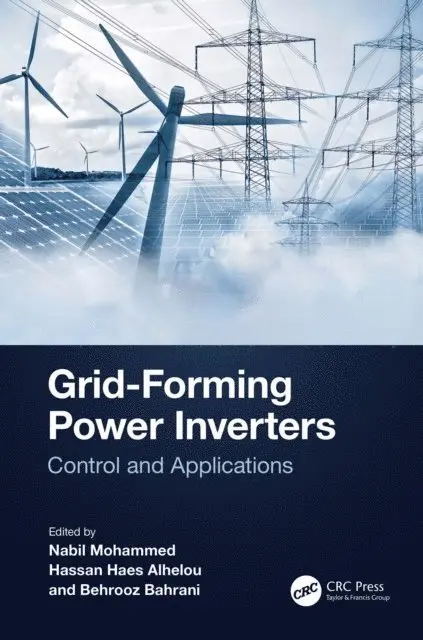
Grid-Forming Power Inverters: Control and Applications is the first book dedicated to addressing the operation principles, grid codes, modelling and control of grid-forming power inverters. The book initially discusses the need for this technology due to the substantial annual integration of inverter-based renewable energy resources. The key differences between the traditional grid-following and the emerging grid-forming inverters technologies are explained. Then, the book explores in detail various topics related to grid-forming power inverters, including requirements and grid standards, modelling, control, damping power system oscillations, dynamic stability under large fault events, virtual oscillator-controlled grid-forming inverters, grid-forming inverters interfacing battery energy storage, and islanded operation of grid-forming inverters.
Features:
Explains the key differences between grid-following and grid-forming inverters Explores the requirements and grid standards for grid-forming inverters Provides detailed modelling of virtual synchronous generators Explains various control strategies for grid-forming inverters Investigates damping of power system oscillations using grid-forming converters Elaborates on the dynamic stability of grid-forming inverters under large fault events Focuses on practical applications860 kr
Läs direkt efter köp
Grid-Forming Power Inverters: Control and Applications is the first book dedicated to addressing the operation principles, grid codes, modelling and control of grid-forming power inverters. The book initially discusses the need for this technology due to the substantial annual integration of inverter-based renewable energy resources. The key differences between the traditional grid-following and the emerging grid-forming inverters technologies are explained. Then, the book explores in detail various topics related to grid-forming power inverters, including requirements and grid standards, modelling, control, damping power system oscillations, dynamic stability under large fault events, virtual oscillator-controlled grid-forming inverters, grid-forming inverters interfacing battery energy storage, and islanded operation of grid-forming inverters.
Features:
Explains the key differences between grid-following and grid-forming inverters Explores the requirements and grid standards for grid-forming inverters Provides detailed modelling of virtual synchronous generators Explains various control strategies for grid-forming inverters Investigates damping of power system oscillations using grid-forming converters Elaborates on the dynamic stability of grid-forming inverters under large fault events Focuses on practical applications1 704 kr
Läs direkt efter köp
In the era of propelling traditional energy systems to evolve towards smart energy systems, including power generation, energy storage systems, and electricity consumption have become more dynamic. The quality and reliability of power supply are impacted by the sporadic and rising use of electric vehicles, domestic loads, and industrial loads. Similarly, with the integration of solid state devices, renewable sources, and distributed generation, power generation processes are evolving in a variety of ways. Several cutting-edge technologies are necessary for the safe and secure operation of power systems in such a dynamic setting, including load distribution, automation, energy regulation & control, and energy trading. This book covers the applications of various big data analytics,artificial intelligence, and machine learning technologies in smart grids for demand prediction, decision-making processes, policy, and energy management. The book delves into the new technologies for modern power systems such as the Internet of Things, Blockchain for smart home and smart city solutions in depth.
Technical topics discussed in the book include:
• Hybrid smart energy system technologies
• Smart meters
• Energy demand forecasting
• Use of different protocols and communication in smart energy
systems
• Power quality and allied issues and mitigation using AI
• Intelligent transportation
• Virtual power plants
• AI based smart energy business models
• Smart home solutions
• Blockchain solutions for smart grids.
1 704 kr
Läs direkt efter köp
In the era of propelling traditional energy systems to evolve towards smart energy systems, including power generation, energy storage systems, and electricity consumption have become more dynamic. The quality and reliability of power supply are impacted by the sporadic and rising use of electric vehicles, domestic loads, and industrial loads. Similarly, with the integration of solid state devices, renewable sources, and distributed generation, power generation processes are evolving in a variety of ways. Several cutting-edge technologies are necessary for the safe and secure operation of power systems in such a dynamic setting, including load distribution, automation, energy regulation & control, and energy trading. This book covers the applications of various big data analytics,artificial intelligence, and machine learning technologies in smart grids for demand prediction, decision-making processes, policy, and energy management. The book delves into the new technologies for modern power systems such as the Internet of Things, Blockchain for smart home and smart city solutions in depth.
Technical topics discussed in the book include:
• Hybrid smart energy system technologies
• Smart meters
• Energy demand forecasting
• Use of different protocols and communication in smart energy
systems
• Power quality and allied issues and mitigation using AI
• Intelligent transportation
• Virtual power plants
• AI based smart energy business models
• Smart home solutions
• Blockchain solutions for smart grids.
1 704 kr
Läs direkt efter köp
In the era of propelling traditional energy systems to evolve towards smart energy systems, including power generation, energy storage systems, and electricity consumption have become more dynamic. The quality and reliability of power supply are impacted by the sporadic and rising use of electric vehicles, and domestic & industrial loads. Similarly, with the integration of solid state devices, renewable sources, and distributed generation, power generation processes are evolving in a variety of ways. Several cutting-edge technologies are necessary for the safe and secure operation of power systems in such a dynamic setting, including load distribution automation, energy regulation and control, and energy trading.
This book covers the applications of various big data analytics, artificial intelligence, and machine learning technologies in smart grids for demand prediction, decision-making processes, policy, and energy management. The book delves into the new technologies such as the Internet of Things, blockchain, etc. for smart home solutions, and smart city solutions in depth in the context of the modern power systems.
Technical topics discussed in the book include:
• Hybrid smart energy system technologies
• Energy demand forecasting
• Use of different protocols and communication in smart energy systems
• Power quality and allied issues and mitigation using AI
• Intelligent transportation
• Virtual power plants
• AI business models.
1 704 kr
Läs direkt efter köp
In the era of propelling traditional energy systems to evolve towards smart energy systems, including power generation, energy storage systems, and electricity consumption have become more dynamic. The quality and reliability of power supply are impacted by the sporadic and rising use of electric vehicles, and domestic & industrial loads. Similarly, with the integration of solid state devices, renewable sources, and distributed generation, power generation processes are evolving in a variety of ways. Several cutting-edge technologies are necessary for the safe and secure operation of power systems in such a dynamic setting, including load distribution automation, energy regulation and control, and energy trading.
This book covers the applications of various big data analytics, artificial intelligence, and machine learning technologies in smart grids for demand prediction, decision-making processes, policy, and energy management. The book delves into the new technologies such as the Internet of Things, blockchain, etc. for smart home solutions, and smart city solutions in depth in the context of the modern power systems.
Technical topics discussed in the book include:
• Hybrid smart energy system technologies
• Energy demand forecasting
• Use of different protocols and communication in smart energy systems
• Power quality and allied issues and mitigation using AI
• Intelligent transportation
• Virtual power plants
• AI business models.