Hassen Fourati - Böcker
Visar alla böcker från författaren Hassen Fourati. Handla med fri frakt och snabb leverans.
6 produkter
6 produkter
1 685 kr
Skickas inom 10-15 vardagar
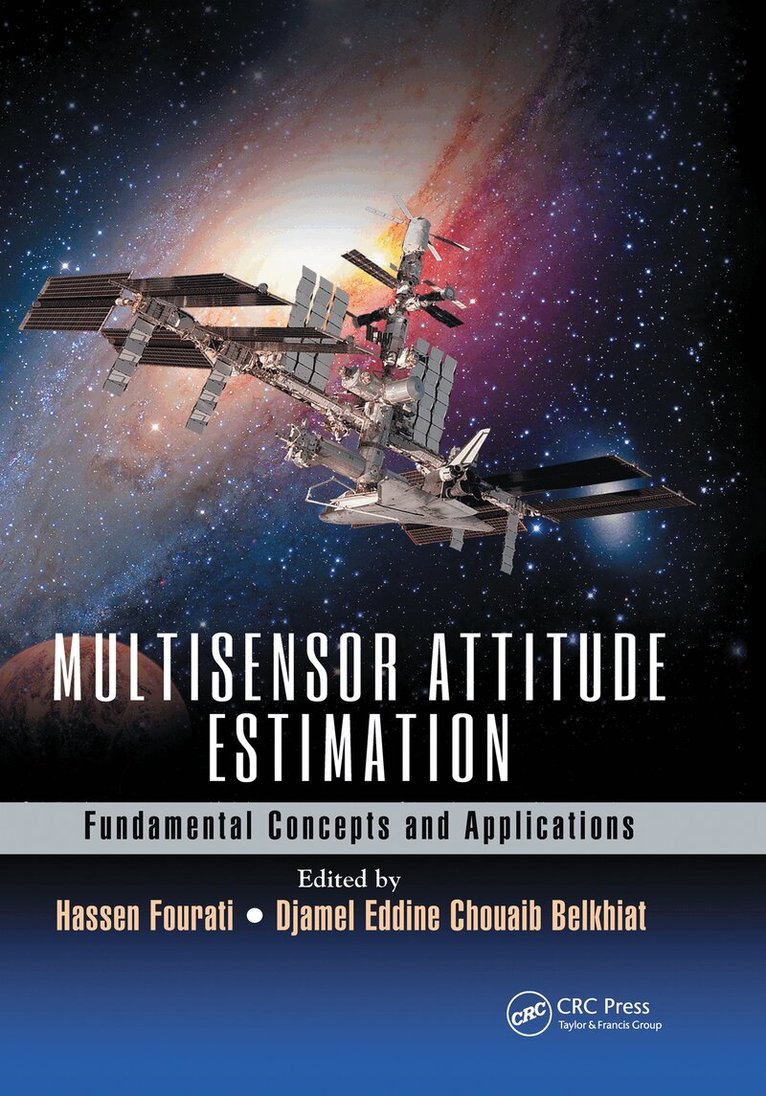
There has been an increasing interest in multi-disciplinary research on multisensor attitude estimation technology driven by its versatility and diverse areas of application, such as sensor networks, robotics, navigation, video, biomedicine, etc. Attitude estimation consists of the determination of rigid bodies’ orientation in 3D space. This research area is a multilevel, multifaceted process handling the automatic association, correlation, estimation, and combination of data and information from several sources. Data fusion for attitude estimation is motivated by several issues and problems, such as data imperfection, data multi-modality, data dimensionality, processing framework, etc. While many of these problems have been identified and heavily investigated, no single data fusion algorithm is capable of addressing all the aforementioned challenges. The variety of methods in the literature focus on a subset of these issues to solve, which would be determined based on the application in hand. Historically, the problem of attitude estimation has been introduced by Grace Wahba in 1965 within the estimate of satellite attitude and aerospace applications.This book intends to provide the reader with both a generic and comprehensive view of contemporary data fusion methodologies for attitude estimation, as well as the most recent researches and novel advances on multisensor attitude estimation task. It explores the design of algorithms and architectures, benefits, and challenging aspects, as well as a broad array of disciplines, including: navigation, robotics, biomedicine, motion analysis, etc. A number of issues that make data fusion for attitude estimation a challenging task, and which will be discussed through the different chapters of the book, are related to: 1) The nature of sensors and information sources (accelerometer, gyroscope, magnetometer, GPS, inclinometer, etc.); 2) The computational ability at the sensors; 3) The theoretical developments and convergence proofs; 4) The system architecture, computational resources, fusion level.
Multisensor Data Fusion
From Algorithms and Architectural Design to Applications
Häftad, Engelska, 2020
834 kr
Skickas inom 10-15 vardagar
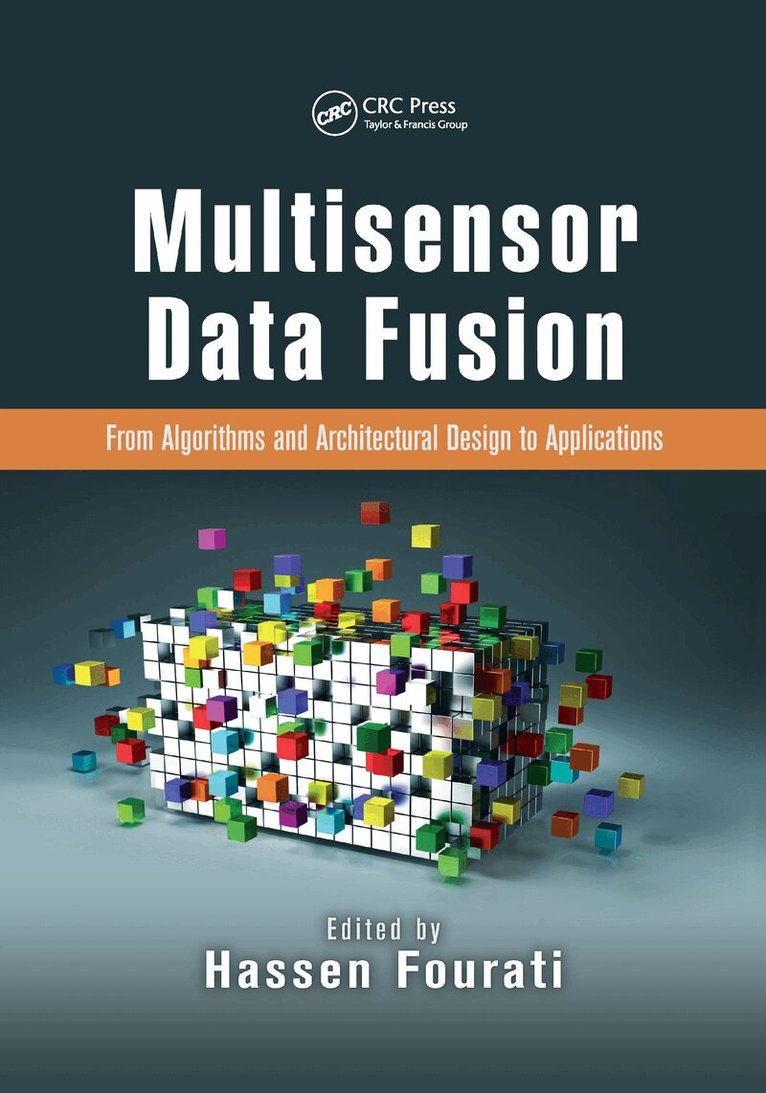
Multisensor Data Fusion: From Algorithms and Architectural Design to Applications covers the contemporary theory and practice of multisensor data fusion, from fundamental concepts to cutting-edge techniques drawn from a broad array of disciplines. Featuring contributions from the world’s leading data fusion researchers and academicians, this authoritative book:Presents state-of-the-art advances in the design of multisensor data fusion algorithms, addressing issues related to the nature, location, and computational ability of the sensorsDescribes new materials and achievements in optimal fusion and multisensor filtersDiscusses the advantages and challenges associated with multisensor data fusion, from extended spatial and temporal coverage to imperfection and diversity in sensor technologiesExplores the topology, communication structure, computational resources, fusion level, goals, and optimization of multisensor data fusion system architecturesShowcases applications of multisensor data fusion in fields such as medicine, transportation's traffic, defense, and navigationMultisensor Data Fusion: From Algorithms and Architectural Design to Applications is a robust collection of modern multisensor data fusion methodologies. The book instills a deeper understanding of the basics of multisensor data fusion as well as a practical knowledge of the problems that can be faced during its execution.
712 kr
Skickas inom 10-15 vardagar
This book captures the latest results and techniques for cooperative localization and navigation drawn from a broad array of disciplines. It provides the reader with a generic and comprehensive view of modeling, strategies, and state estimation methodologies in that fields. It discusses the most recent research and novel advances in that direction, exploring the design of algorithms and architectures, benefits, and challenging aspects, as well as a potential broad array of disciplines, including wireless communication, indoor localization, robotics, emergency rescue, motion analysis, etc.
2 356 kr
Skickas inom 10-15 vardagar
This book captures the latest results and techniques for cooperative localization and navigation drawn from a broad array of disciplines. It provides the reader with a generic and comprehensive view of modeling, strategies, and state estimation methodologies in that fields. It discusses the most recent research and novel advances in that direction, exploring the design of algorithms and architectures, benefits, and challenging aspects, as well as a potential broad array of disciplines, including wireless communication, indoor localization, robotics, emergency rescue, motion analysis, etc.
Multisensor Data Fusion
From Algorithms and Architectural Design to Applications
Inbunden, Engelska, 2015
2 356 kr
Skickas inom 10-15 vardagar
Multisensor Data Fusion: From Algorithms and Architectural Design to Applications covers the contemporary theory and practice of multisensor data fusion, from fundamental concepts to cutting-edge techniques drawn from a broad array of disciplines. Featuring contributions from the world’s leading data fusion researchers and academicians, this authoritative book:Presents state-of-the-art advances in the design of multisensor data fusion algorithms, addressing issues related to the nature, location, and computational ability of the sensorsDescribes new materials and achievements in optimal fusion and multisensor filtersDiscusses the advantages and challenges associated with multisensor data fusion, from extended spatial and temporal coverage to imperfection and diversity in sensor technologiesExplores the topology, communication structure, computational resources, fusion level, goals, and optimization of multisensor data fusion system architecturesShowcases applications of multisensor data fusion in fields such as medicine, transportation's traffic, defense, and navigationMultisensor Data Fusion: From Algorithms and Architectural Design to Applications is a robust collection of modern multisensor data fusion methodologies. The book instills a deeper understanding of the basics of multisensor data fusion as well as a practical knowledge of the problems that can be faced during its execution.
3 414 kr
Skickas inom 10-15 vardagar
There has been an increasing interest in multi-disciplinary research on multisensor attitude estimation technology driven by its versatility and diverse areas of application, such as sensor networks, robotics, navigation, video, biomedicine, etc. Attitude estimation consists of the determination of rigid bodies’ orientation in 3D space. This research area is a multilevel, multifaceted process handling the automatic association, correlation, estimation, and combination of data and information from several sources. Data fusion for attitude estimation is motivated by several issues and problems, such as data imperfection, data multi-modality, data dimensionality, processing framework, etc. While many of these problems have been identified and heavily investigated, no single data fusion algorithm is capable of addressing all the aforementioned challenges. The variety of methods in the literature focus on a subset of these issues to solve, which would be determined based on the application in hand. Historically, the problem of attitude estimation has been introduced by Grace Wahba in 1965 within the estimate of satellite attitude and aerospace applications.This book intends to provide the reader with both a generic and comprehensive view of contemporary data fusion methodologies for attitude estimation, as well as the most recent researches and novel advances on multisensor attitude estimation task. It explores the design of algorithms and architectures, benefits, and challenging aspects, as well as a broad array of disciplines, including: navigation, robotics, biomedicine, motion analysis, etc. A number of issues that make data fusion for attitude estimation a challenging task, and which will be discussed through the different chapters of the book, are related to: 1) The nature of sensors and information sources (accelerometer, gyroscope, magnetometer, GPS, inclinometer, etc.); 2) The computational ability at the sensors; 3) The theoretical developments and convergence proofs; 4) The system architecture, computational resources, fusion level.