Hayward Derrick Horton - Böcker
Visar alla böcker från författaren Hayward Derrick Horton. Handla med fri frakt och snabb leverans.
5 produkter
5 produkter
809 kr
Skickas inom 10-15 vardagar
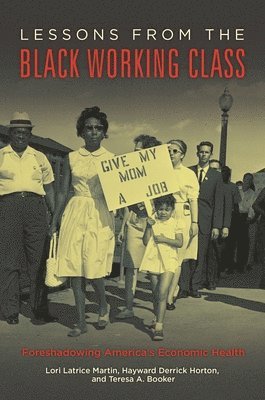
This book enables readers to better understand, explain, and predict the future of the nation's overall economic health through its examination of the black working class—especially the experiences of black women and black working-class residents outside of urban areas.How have the experiences of black working-class women and men residing in urban, suburban, and rural settings impacted U.S. labor relations and the broader American society? This book asserts that a comprehensive and critical examination of the black working class can be used to forecast whether economic troubles are on the horizon. It documents how the increasing incidence of attacks on unions, the dwindling availability of working-class jobs, and the clamoring by the working class for a minimum wage hike is proof that the atmospheric pressure in America is rising, and that efforts to prepare for the approaching financial storm require attention to the individuals and households who are often overlooked: the black working class.Presenting information of great importance to sociologists, political scientists, and economists, the authors of this work explore the impact of the recent Great Recession on working-class African Americans and argue that the intersections of race and class for this particular group uncover the state of equity and justice in America. This book will also be of interest to public policymakers as well as students in graduate-level courses in the areas of African American studies, American society and labor, labor relations, labor and the Civil Rights Movement, and studies on race, class, and gender.
After the Storm
Militarization, Occupation, and Segregation in Post-Katrina America
Inbunden, Engelska, 2016
608 kr
Skickas inom 10-15 vardagar
This book examines the state of race relations in America 10 years after one of the worst natural disasters in American history, Hurricane Katrina, and looks at the socioeconomic consequences of decades of public and private practices brought to light by the storm in cities throughout the Gulf Coast as well as in America more broadly.More than a decade ago, Hurricane Katrina served to expose a well-engineered system of oppression, one which continues to privilege some groups and disadvantage others. In the wake of the natural disaster that hit New Orleans, it became clear that institutions such as residential segregation, mass incarceration and unemployment, police brutality, political disenfranchisement, racial profiling, gentrification, community occupation, discrimination, and a prison-to-school pipeline are expressly intended to work against people of color and individuals from economically disadvantaged backgrounds. Unfortunately, very little has improved in the lives of people living in majority-minority communities since Katrina.After the Storm uses Hurricane Katrina and the aftermath of the natural disaster as a point of departure for understanding enduring racial divides in asset ownership, academic achievement, educational attainment, and mass incarceration in New Orleans and beyond. The book explores the many specific aspects of the widespread problem and considers how to move toward achieving a state where all can thrive. Readers will better appreciate the key roles of race, inequality, education, occupation, and militarization in understanding the failures in the responses to this disaster and grasp how institutionalized inequity continues to plague our nation.
Race, Population Studies, and America's Public Schools
A Critical Demography Perspective
Inbunden, Engelska, 2016
1 045 kr
Skickas inom 10-15 vardagar
The roles of race and racism in explaining current controversies related to public schools in America is both understudied and misunderstood. Part of the problem is the absence of a critical paradigm that facilitates the development and application of ideas, theories, and methods that do not fit within the confines of mainstream scholarship. Race, Population Studies, and America's Public Schools: A Critical Demography Perspective explores the paradigm of critical demography—established in the late 1990s which articulates the manner in which the social structure differentiates dominant and subordinate populations. Moreover, critical demography necessitates explicit discussions and examinations of the nature of power and how it perpetuates the existing social order. Hence, in the case of race in education, it is imperative that racism is central to the analysis. Racism elucidates that which often goes ignored or unexplained by conventional scholars. Consequently, the critical demography paradigm fills an important void in the study of public education in American schools.
256 kr
Skickas inom 7-10 vardagar
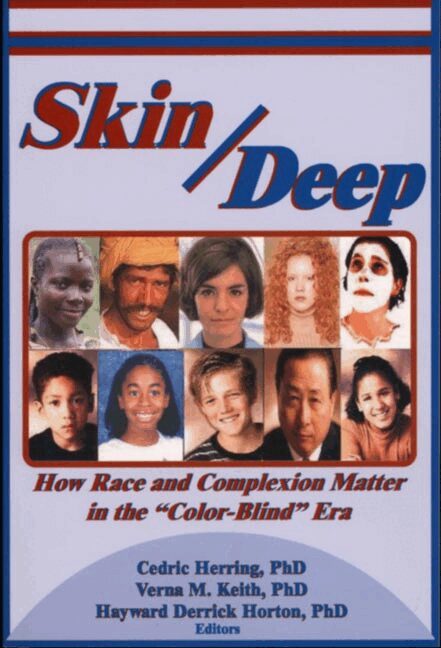
Shattering the myth of the color-blind society, the essays in Skin Deep examine skin tone stratification in America, which affects relations not only among different races and ethnic groups but also among members of individual ethnicities. Written by some of the nation's leading thinkers on race and colorism, these essays ask whether skin tone differentiation is imposed upon communities of color from the outside or is an internally-driven process aided and abetted by community members themselves. They also question whether the stratification process is the same for African Americans, Hispanics, and Asian Americans. Skin Deep addresses such issues as the relationship between skin tone and self esteem, marital patterns, interracial relationships, socioeconomic attainment, and family racial identity and composition. The essays also grapple with emerging issues such as biracialism, color-blind racism, and 21st century notions of race.
305 kr
Skickas inom 7-10 vardagar
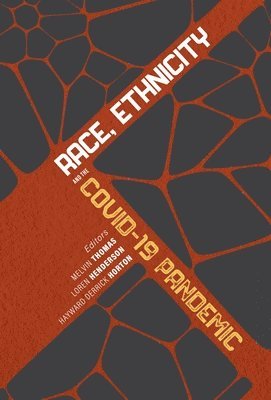
The first authoritative source on the consequences of the COVID-19 pandemic for racial and ethnic minorities.To understand racial disparities in COVID-19 infections and deaths, we must first understand how they are linked to racial inequality. In the United States, the material advantages afforded by whiteness lead to lower rates of infections and deaths from COVID-19 when compared to the rates among Black, Latino, and Native American populations. Most experts point to differences in population density, underlying health conditions, and proportions of essential workers as the primary determinants in the levels of COVID-19 deaths.The national response to the pandemic has laid bare the fundamentals of a racialized social structure. Assembled by a prestigious group of sociologists, this volume examines how particularly during the first year of COVID-19, the socioeconomic impact of the pandemic led to different and poorer outcomes for Black, Latino, and Native American populations. While color-blindness shaped national discussions on essential workers, charity, and differential mortality, minorities were overwhelmingly affected. The essays in this collection provide a mix of critical examination of the progress and direction of our COVID-19 response, personal accounts of the stark difference in care and outcomes for minorities throughout the United States, and offer recommendations to create a foundation for future response and research during the critical early days.