Hazel Johnson - Böcker
Visar alla böcker från författaren Hazel Johnson. Handla med fri frakt och snabb leverans.
4 produkter
4 produkter
922 kr
Skickas inom 7-10 vardagar
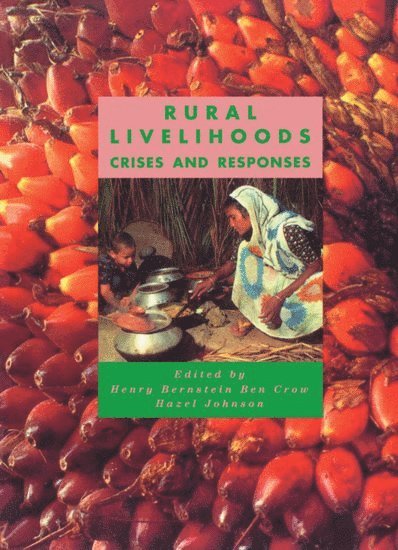
This book is concerned with the question of how people in developing countries survive, and how their lives have been affected by the great changes since the Second World War. Throughout large parts of the developing world rural livelihoods are in crisis. Even in those parts of the third world where there has been growth of food output, that growth has rarely been translated into a commensurate expansion of livelihoods. Frequently, both economic stagnation and economic growth are translated into suffering for those who live in the countryside. Many people are aware that there is a crisis of livelihoods in sub-Saharan Africa, but the understanding of that crisis rarely transcends simple conceptions of food or environmental crisis or the inadequacy of states: the ubiquity of crisis is rarely comprehended. This book addresses the pressing question of rural poverty. It examines the diverse human implications of rural change, the various crises of rural livelihoods which arise from change, and the survival strategies of individuals and households. It describes the great processes of agrarian transformation which have fundamentally altered rural livelihoods in developing countries and identifies some of the dilemmas for public action which arise from agrarian transformation and the crises of rural livelihoods. The contributors draw upon a range of disciplinary approaches to the subject, including anthropology, sociology, economics, political economy, agricultural science, and development studies.
1 483 kr
Skickas inom 10-15 vardagar
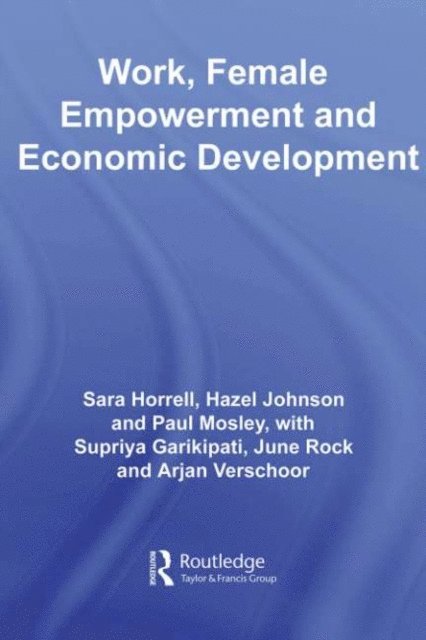
Accumulation of assets to enable the diversification of activities has been established as crucial in helping the rural poor escape poverty. The empowerment of women has been identified as a way to overcome inefficiencies in the allocation of resources within the family and so improve agrarian households’ productivity. However, achieving diversification is not necessarily empowering for women and some initiatives may worsen their position.This book uses the information collected in original household surveys conducted in rural areas in four countries to investigate the links between women’s position in the household, diversification strategies, labour market participation and poverty reduction. The book centres on country-specific chapters that provide an in-depth focus on an issue of relevance to the location and that tease out the interplay between female empowerment and development in that context. In particular, the chapters examine: Landlessness in Ethiopia Feminization of the agricultural labour market in Andhra Pradesh, India Female labour supply and women’s power within the household in Uganda Disadvantages faced by female-headed households in ZimbabweThe analysis calls for caution in assuming that labour market expansion necessarily acts to empower women and emphasizes the role female access to assets can have in facilitating diversification and escaping poverty. It will appeal to all those studying development economics, with particular interest in areas such as diversification, poverty and female empowerment.
444 kr
Skickas inom 10-15 vardagar
Accumulation of assets to enable the diversification of activities has been established as crucial in helping the rural poor escape poverty. The empowerment of women has been identified as a way to overcome inefficiencies in the allocation of resources within the family and so improve agrarian households’ productivity. However, achieving diversification is not necessarily empowering for women and some initiatives may worsen their position.This book uses the information collected in original household surveys conducted in rural areas in four countries to investigate the links between women’s position in the household, diversification strategies, labour market participation and poverty reduction. The book centres on country-specific chapters that provide an in-depth focus on an issue of relevance to the location and that tease out the interplay between female empowerment and development in that context. In particular, the chapters examine: Landlessness in Ethiopia Feminization of the agricultural labour market in Andhra Pradesh, India Female labour supply and women’s power within the household in Uganda Disadvantages faced by female-headed households in ZimbabweThe analysis calls for caution in assuming that labour market expansion necessarily acts to empower women and emphasizes the role female access to assets can have in facilitating diversification and escaping poverty. It will appeal to all those studying development economics, with particular interest in areas such as diversification, poverty and female empowerment.
1 851 kr
Skickas inom 3-6 vardagar