H.D. Osiewacz – författare
Visar alla böcker från författaren . Handla med fri frakt och snabb leverans.
4 produkter
4 produkter
Inbunden, Engelska, 2003
1 619 kr
Skickas inom 10-15 vardagar
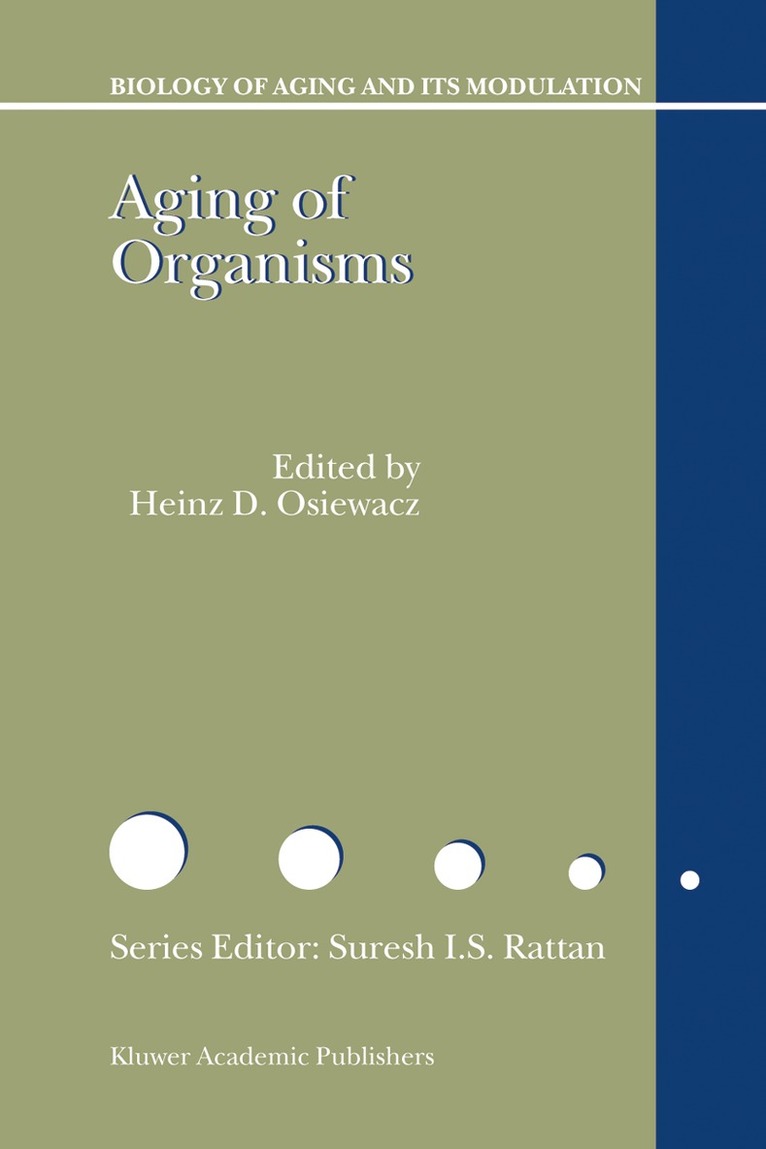
This volume is devoted to aging at the organismic level. Different levels of organisation, ranging from single cell organisms (yeast) to humans are included. In addition to the currently most important model systems like yeast, filamentous fungi, Caenorabditis elegans, flies and mice other systems like sponges and plants are discussed. Most importantly, research using different aging models can be expected to unravel the most important basic mechanisms of aging that are conserved in all species. In addition, a critical discussion of what can be expected from this kind of strategy for the understanding of aging in humans is included.
E-bok
PDF, Engelska, 20131 174 kr
Läs direkt efter köp
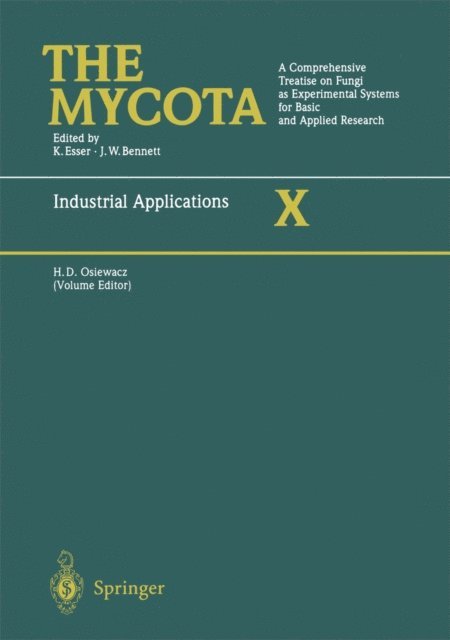
Mycology, the study of fungi, originated as a subdiscipline of botany and was a descrip tive discipline, largely neglected as an experimental science until the early years of this century. A seminal paper by Blakeslee in 1904 provided evidence for self incompatibility, termed "heterothallism", and stimulated interest in studies related to the control of sexual reproduction in fungi by mating-type specificities. Soon to follow was the demonstration that sexually reproducing fungi exhibit Mendelian inheritance and that it was possible to conduct formal genetic analysis with fungi. The names Burgeff, Kniep and Lindegren are all associated with this early period of fungal genetics research. These studies and the discovery of penicillin by Fleming, who shared a Nobel Prize in 1945, provided further impetus for experimental research with fungi. Thus began a period of interest in mutation induction and analysis of mutants for biochemical traits. Such fundamental research, conducted largely with Neurospora crassa, led to the one gene: one enzyme hypothesis and to a second Nobel Prize for fungal research awarded to Beadle and Tatum in 1958. Fundamental research in biochemical genetics was extended to other fungi, especially to Saccharomyces cerevisiae, and by the mid-1960s fungal systems were much favored for studies in eukaryotic molecular biology and were soon able to compete with bacterial systems in the molecular arena.
Del 4 - Biology of Aging and its Modulation
Aging of Organisms
Häftad, Engelska, 2010
1 619 kr
Skickas inom 10-15 vardagar
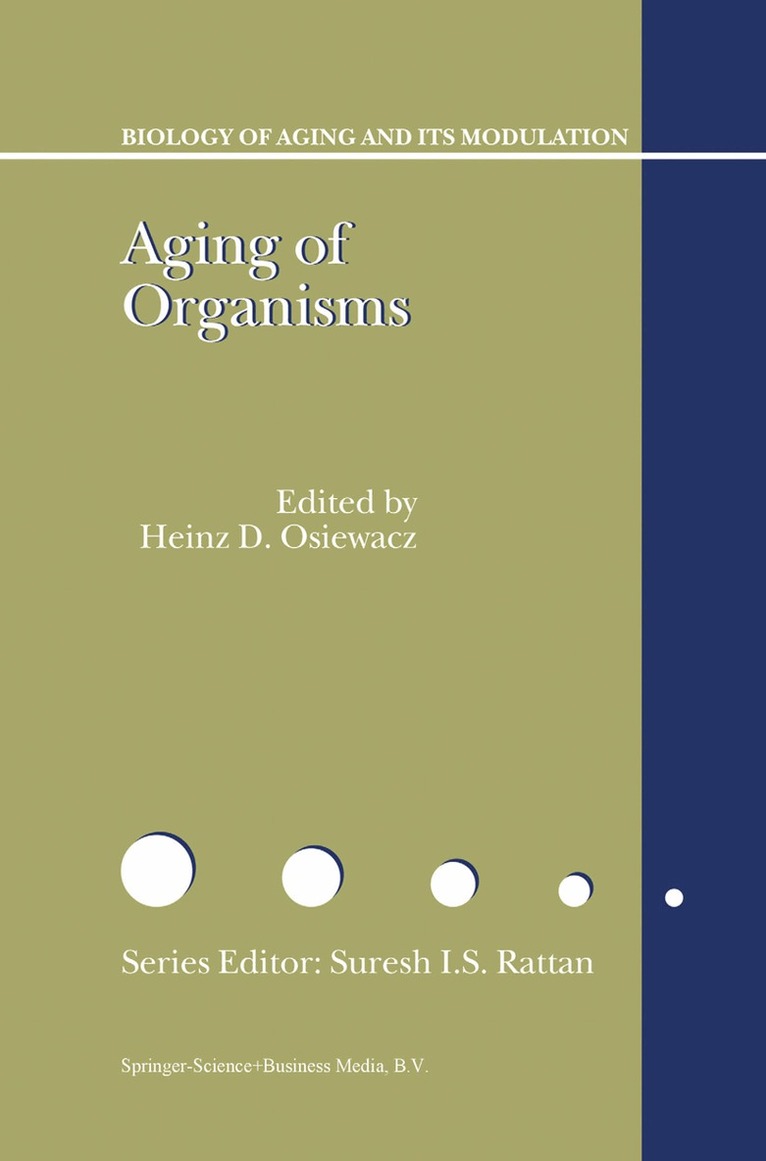
Biological aging as the time-depending general decline of biological systems associated with a progressively increasing mortality risk is a general phenomenom of great significance. The underlying processes are very complex and depending on genetic and environment factors. These factors encode or affect a network of interconnected cellular pathways. In no system this network has been deciphered in greater detail. However, the strategy of studying various biological systems has let to the identification of pathways and specific modules and makes it obvious that aging is the result of different overlapping mechanisms and pathways. Some of these appear to be conserved ("public") among species, others are specific or "private" and only of significance in one or a few organisms. This volume in the series on "Biology of aging and its modulation" specifically focuses on organismic aging. The book covers research on organisms from lower to higher complexity representing examples from very diverse taxa like photosynthetic plants, fungi, sponges, nematodes, flies, birds and mammals. Such a broad treatise of this complex topic provides a comprehensive "flavor" about the current issues dealt with in this rapidly growing scientific discipline.
E-bok
PDF, Engelska, 20132 049 kr
Läs direkt efter köp
Biological aging as the time-depending general decline of biological systems associated with a progressively increasing mortality risk is a general phenomenom of great significance. The underlying processes are very complex and depending on genetic and environment factors. These factors encode or affect a network of interconnected cellular pathways. In no system this network has been deciphered in greater detail. However, the strategy of studying various biological systems has let to the identification of pathways and specific modules and makes it obvious that aging is the result of different overlapping mechanisms and pathways. Some of these appear to be conserved ("public") among species, others are specific or "private" and only of significance in one or a few organisms. This volume in the series on "Biology of aging and its modulation" specifically focuses on organismic aging. The book covers research on organisms from lower to higher complexity representing examples from very diverse taxa like photosynthetic plants, fungi, sponges, nematodes, flies, birds and mammals. Such a broad treatise of this complex topic provides a comprehensive "flavor" about the current issues dealt with in this rapidly growing scientific discipline.