Heather Hendershot – författare
Visar alla böcker från författaren . Handla med fri frakt och snabb leverans.
14 produkter
14 produkter
E-bok
Engelska, 2016169 kr
Läs direkt efter köp
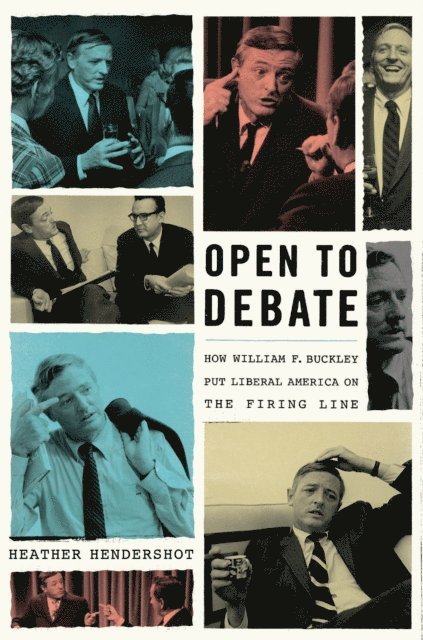
A unique and compelling portrait of William F. Buckley as the champion of conservative ideas in an age of liberal dominance, taking on the smartest adversaries he could find while singlehandedly reinventing the role of public intellectual in the network television era.When Firing Line premiered on American television in 1966, just two years after Barry Goldwater''s devastating defeat, liberalism was ascendant. Though the left seemed to have decisively won the hearts and minds of the electorate, the show''s creator and host, William F. Buckley—relishing his role as a public contrarian—made the case for conservative ideas, believing that his side would ultimately win because its arguments were better. As the founder of the right''s flagship journal, National Review, Buckley spoke to likeminded readers. With Firing Line, he reached beyond conservative enclaves, engaging millions of Americans across the political spectrum.Each week on Firing Line, Buckley and his guests—the cream of America''s intellectual class, such as Tom Wolfe, Noam Chomsky, Norman Mailer, Henry Kissinger, and Milton Friedman—debated the urgent issues of the day, bringing politics, culture, and economics into American living rooms as never before. Buckley himself was an exemplary host; he never appealed to emotion and prejudice; he engaged his guests with a unique and entertaining combination of principle, wit, fact, a truly fearsome vocabulary, and genuine affection for his adversaries.Drawing on archival material, interviews, and transcripts, Open to Debate provides a richly detailed portrait of this widely respected ideological warrior, showing him in action as never before. Much more than just the story of a television show, Hendershot''s book provides a history of American public intellectual life from the 1960s through the 1980s—one of the most contentious eras in our history—and shows how Buckley led the way in drawing America to conservatism during those years.
701 kr
Läs direkt efter köp
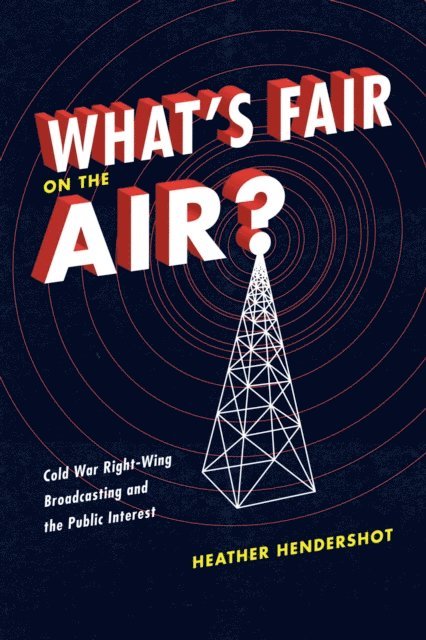
The rise of right-wing broadcasting during the Cold War has been mostly forgotten today. But in the 1950s and ’60s you could turn on your radio any time of the day and listen to diatribes against communism, civil rights, the United Nations, fluoridation, federal income tax, Social Security, or JFK, as well as hosannas praising Barry Goldwater and Jesus Christ. Half a century before the rise of Rush Limbaugh and Glenn Beck, these broadcasters bucked the FCC’s public interest mandate and created an alternate universe of right-wing political coverage, anticommunist sermons, and pro-business bluster. A lively look back at this formative era, What’s Fair on the Air? charts the rise and fall of four of the most prominent right-wing broadcasters: H. L. Hunt, Dan Smoot, Carl McIntire, and Billy James Hargis. By the 1970s, all four had been hamstrung by the Internal Revenue Service, the FCC’s Fairness Doctrine, and the rise of a more effective conservative movement. But before losing their battle for the airwaves, Heather Hendershot reveals, they purveyed ideological notions that would eventually triumph, creating a potent brew of religion, politics, and dedication to free-market economics that paved the way for the rise of Ronald Reagan, the Moral Majority, Fox News, and the Tea Party.
Inbunden, Engelska, 2011
1 046 kr
Skickas inom 5-8 vardagar
The rise of right-wing broadcasting during the Cold War has been mostly forgotten today. But in the 1950s and '60s you could turn on your radio any time of the day and listen to diatribes against communism, civil rights, the United Nations, fluoridation, federal income tax, Social Security, or JFK, as well as hosannas praising Barry Goldwater and Jesus Christ. Half a century before the rise of Rush Limbaugh and Glenn Beck, these broadcasters bucked the FCC's public interest mandate and created an alternate universe of right-wing political coverage, anticommunist sermons, and pro-business bluster. A lively look back at this formative era, "What's Fair on the Air?" charts the rise and fall of four of the most prominent right-wing broadcasters: H.L. Hunt, Dan Smoot, Carl McIntire, and Billy James Hargis. By the 1970s, all four had been hamstrung by the Internal Revenue Service, the FCC's Fairness Doctrine, and the rise of a more effective conservative movement.But before losing their battle for the airwaves, Heather Hendershot reveals, they purveyed ideological notions that would eventually triumph, creating a potent brew of religion, politics, and dedication to free-market economics that paved the way for the rise of Ronald Reagan, the Moral Majority, Fox News, and the Tea Party.
Häftad, Engelska, 2011
315 kr
Skickas inom 5-8 vardagar
The rise of right-wing broadcasting during the Cold War has been mostly forgotten today. But in the 1950s and '60s you could turn on your radio any time of the day and listen to diatribes against communism, civil rights, the United Nations, fluoridation, federal income tax, Social Security, or JFK, as well as hosannas praising Barry Gold-water and Jesus Christ. Half a century before the rise of Rush Limbaugh and Glenn Beck, these broadcasters bucked the FCC's public interest mandate and created an alternate universe of right-wing political coverage, anticommunist sermons, and pro-business bluster. A lively look back at this formative era, "What's Fair on the Air?" charts the rise and fall of four of the most prominent right-wing broadcasters: H.L. Hunt, Dan Smoot, Carl McIntire, and Billy James Hargis. By the 1970s, all four had been hamstrung by the Internal Revenue Service, the FCC's Fairness Doctrine, and the rise of a more effective conservative movement.But before losing their battle for the airwaves, Heather Hendershot reveals, they purveyed ideological notions that would eventually triumph, creating a potent brew of religion, politics, and dedication to free-market economics that paved the way for the rise of Ronald Reagan, the Moral Majority, Fox News, and the Tea Party.
E-bok
PDF, Engelska, 2010736 kr
Läs direkt efter köp
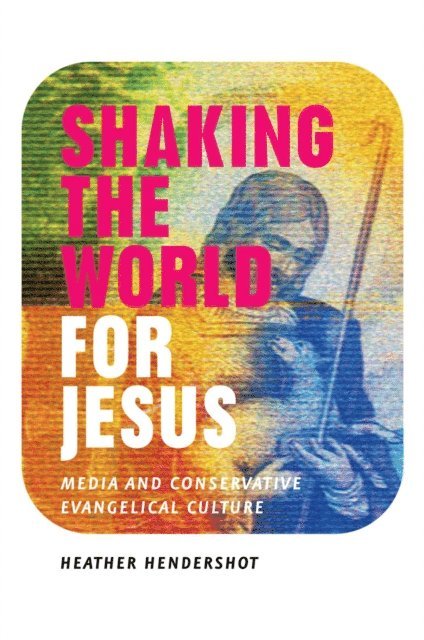
In 1999, the Reverend Jerry Falwell outed Tinky-Winky, the purple character from TV''s Teletubbies. Events such as this reinforced in many quarters the common idea that evangelicals are reactionary, out of touch, and just plain paranoid. But reducing evangelicals to such caricatures does not help us understand their true spiritual and political agendas and the means they use to advance them. Shaking the World for Jesus moves beyond sensationalism to consider how the evangelical movement has effectively targeted Americans—as both converts and consumers—since the 1970s. Thousands of products promoting the Christian faith are sold to millions of consumers each year through the Web, mail order catalogs, and even national chains such as Kmart and Wal-Mart. Heather Hendershot explores in this book the vast industry of film, video, magazines, and kitsch that evangelicals use to spread their message. Focusing on the center of conservative evangelical culture—the white, middle-class Americans who can afford to buy "Christian lifestyle" products—she examines the industrial history of evangelist media, the curious subtleties of the products themselves, and their success in the religious and secular marketplace. To garner a wider audience, Hendershot argues, evangelicals have had to carefully temper their message. But in so doing, they have painted themselves into a corner. In the postwar years, evangelical media wore the message of salvation on its sleeve, but as the evangelical media industry has grown, many of its most popular products have been those with heavily diluted Christian messages. In the eyes of many followers, the evangelicals who purvey such products are sellouts—hucksters more interested in making money than spreading the word of God. Working to understand evangelicalism rather than pass judgment on it, Shaking the World for Jesus offers a penetrating glimpse into a thriving religious phenomenon.
Inbunden, Engelska, 2023
264 kr
Skickas inom 5-8 vardagar
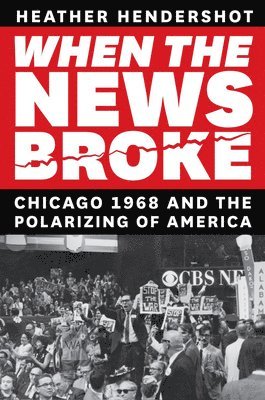
A riveting, blow-by-blow account of how the network broadcasts of the 1968 Democratic convention shattered faith in American media. “The whole world is watching!” cried protestors at the 1968 Democratic convention as Chicago police beat them in the streets. When some of that violence was then aired on network television, another kind of hell broke loose. Some viewers were stunned and outraged; others thought the protestors deserved what they got. No one—least of all Chicago mayor Richard J. Daley—was happy with how the networks handled it. In When the News Broke, Heather Hendershot revisits TV coverage of those four chaotic days in 1968—not only the violence in the streets but also the tumultuous convention itself, where Black citizens and others forcefully challenged southern delegations that had excluded them, anti-Vietnam delegates sought to change the party’s policy on the war, and journalists and delegates alike were bullied by both Daley’s security forces and party leaders. Ultimately, Hendershot reveals the convention as a pivotal moment in American political history, when a distorted notion of “liberal media bias” became mainstreamed and nationalized. At the same time, she celebrates the values of the network news professionals who strived for fairness and accuracy. Despite their efforts, however, Chicago proved to be a turning point in the public’s trust in national news sources. Since those critical days, the political Right in the United States has amplified distrust of TV news, to the point where even the truest and most clearly documented stories can be deemed “fake.” As Hendershot demonstrates, it doesn’t matter whether the “whole world is watching” if people don’t believe what they see.
Häftad, Engelska, 2024
179 kr
Skickas inom 5-8 vardagar
A riveting, blow-by-blow account of how the network broadcasts of the 1968 Democratic convention shattered faith in American media. “The whole world is watching!” cried protestors at the 1968 Democratic convention as Chicago police beat them in the streets. When some of that violence was then aired on network television, another kind of hell broke loose. Some viewers were stunned and outraged; others thought the protestors deserved what they got. No one—least of all Chicago mayor Richard J. Daley—was happy with how the networks handled it. In When the News Broke, Heather Hendershot revisits TV coverage of those four chaotic days in 1968—not only the violence in the streets but also the tumultuous convention itself, where Black citizens and others forcefully challenged southern delegations that had excluded them, anti-Vietnam delegates sought to change the party’s policy on the war, and journalists and delegates alike were bullied by both Daley’s security forces and party leaders. Ultimately, Hendershot reveals the convention as a pivotal moment in American political history, when a distorted notion of “liberal media bias” became mainstreamed and nationalized. At the same time, she celebrates the values of the network news professionals who strived for fairness and accuracy. Despite their efforts, however, Chicago proved to be a turning point in the public’s trust in national news sources. Since those critical days, the political Right in the United States has amplified distrust of TV news, to the point where even the truest and most clearly documented stories can be deemed “fake.” As Hendershot demonstrates, it doesn’t matter whether the “whole world is watching” if people don’t believe what they see.
Inbunden, Engelska, 2004
1 199 kr
Skickas inom 10-15 vardagar
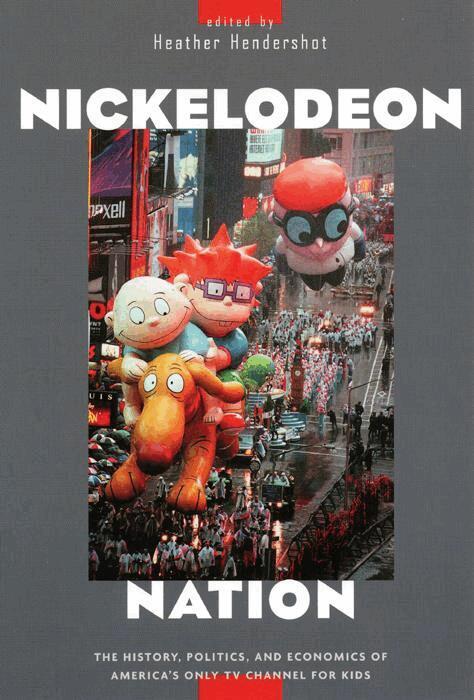
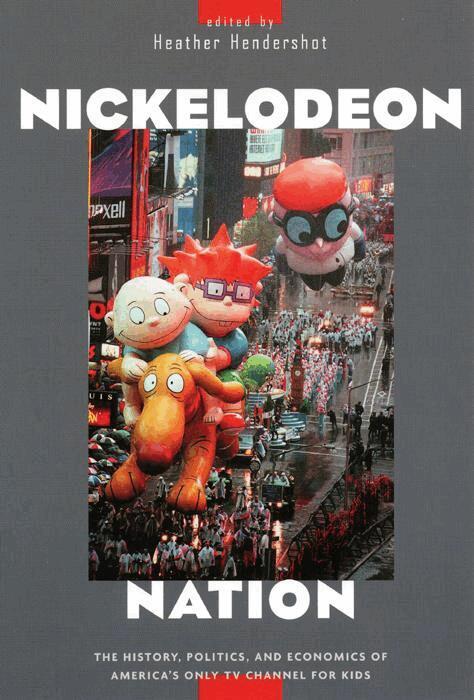
Nickelodeon is the highest rated daytime channel in the country, and its cultural influence has grown at an astounding pace. Why are Nickelodeon shows so popular? How are they developed and marketed? And where do they fit in the economic picture of the children's media industry? Nickelodeon Nation, the first major study of the only TV channel just for children, investigates these questions.Intended for a wide range of readers and illustrated thorughout, the essays in Nickelodeon Nation are grouped into four sections: economics and marketing; the production process; programs and politics; and viewers. The contributors—who include a former employee in Nick's animation department, an investigative journalist, a developmental pyschologist who helped develop Blue's Clues, and television and cultural studies scholors—show how Nickelodeon succeeds, in large part, by simultaneously satisfying both children and adults. For kids, Nick offers gross-out jokes and no-holds-barred goofiness, while for adults it offers a violence-free world, ethnic and racial diversity, and gender parity. Nick gives kids the fun they want by gently violating adult ideas of propriety, and satisfies adults by conforming to their vision of "quality" children's programming.Nickelodeon Nation shows how, in only twenty years, Nickelodeon has transformed itself from the "green vegetable network"—distasteful for kids but "good for them," according to parents—into a super-cool network with some of the most successful shows on the air. This ground-breaking collection fills a major gap in our understanding of both contemporary children's culture and the television industry.Contributors include: Daniel R. Anderson, Sarah Banet-Weiser, Henry Jenkins, Mark Langer, Vicki Mayer, Susan Murray, Heather Hendershot, Norma Pecora, Kevin S. Sandler, Ellen Seiter, Linda Simensky, and Mimi Swartz.
Häftad, Engelska, 2004
376 kr
Skickas inom 5-8 vardagar
Nickelodeon is the highest rated daytime channel in the country, and its cultural influence has grown at an astounding pace. Why are Nickelodeon shows so popular? How are they developed and marketed? And where do they fit in the economic picture of the children's media industry? Nickelodeon Nation, the first major study of the only TV channel just for children, investigates these questions.Intended for a wide range of readers and illustrated thorughout, the essays in Nickelodeon Nation are grouped into four sections: economics and marketing; the production process; programs and politics; and viewers. The contributors—who include a former employee in Nick's animation department, an investigative journalist, a developmental pyschologist who helped develop Blue's Clues, and television and cultural studies scholors—show how Nickelodeon succeeds, in large part, by simultaneously satisfying both children and adults. For kids, Nick offers gross-out jokes and no-holds-barred goofiness, while for adults it offers a violence-free world, ethnic and racial diversity, and gender parity. Nick gives kids the fun they want by gently violating adult ideas of propriety, and satisfies adults by conforming to their vision of "quality" children's programming.Nickelodeon Nation shows how, in only twenty years, Nickelodeon has transformed itself from the "green vegetable network"—distasteful for kids but "good for them," according to parents—into a super-cool network with some of the most successful shows on the air. This ground-breaking collection fills a major gap in our understanding of both contemporary children's culture and the television industry.Contributors include: Daniel R. Anderson, Sarah Banet-Weiser, Henry Jenkins, Mark Langer, Vicki Mayer, Susan Murray, Heather Hendershot, Norma Pecora, Kevin S. Sandler, Ellen Seiter, Linda Simensky, and Mimi Swartz.
Häftad, Engelska, 1999
551 kr
Skickas inom 3-6 vardagar
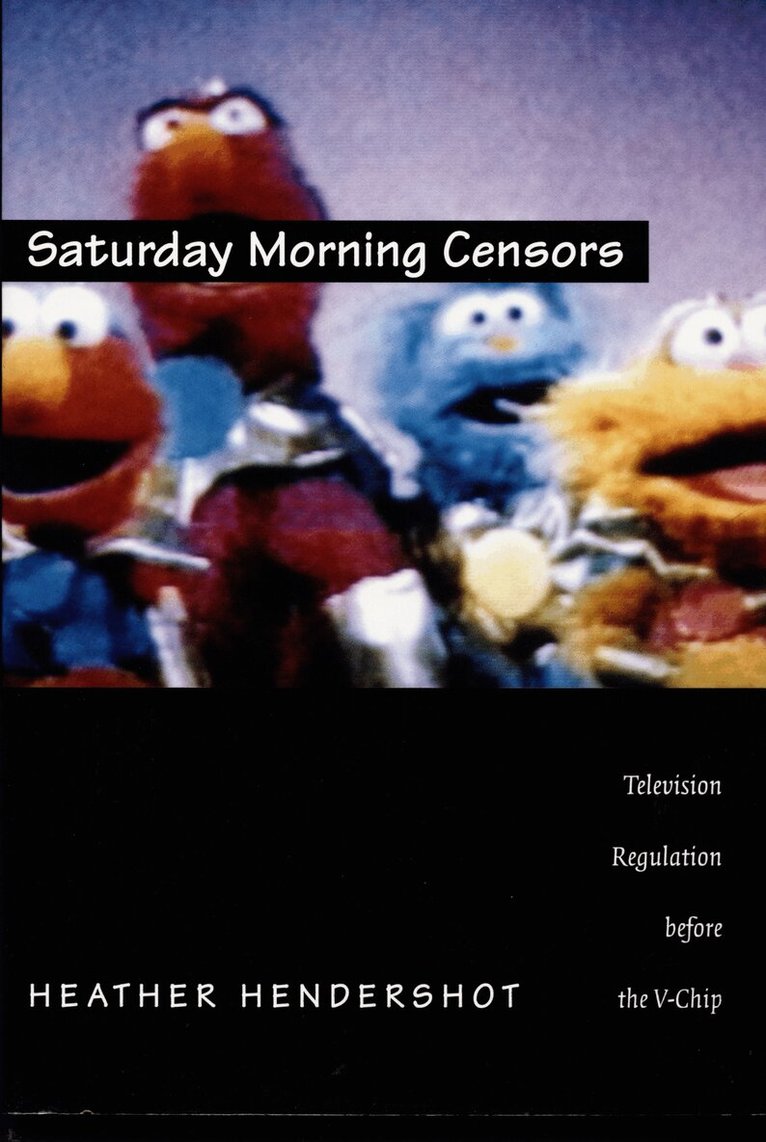
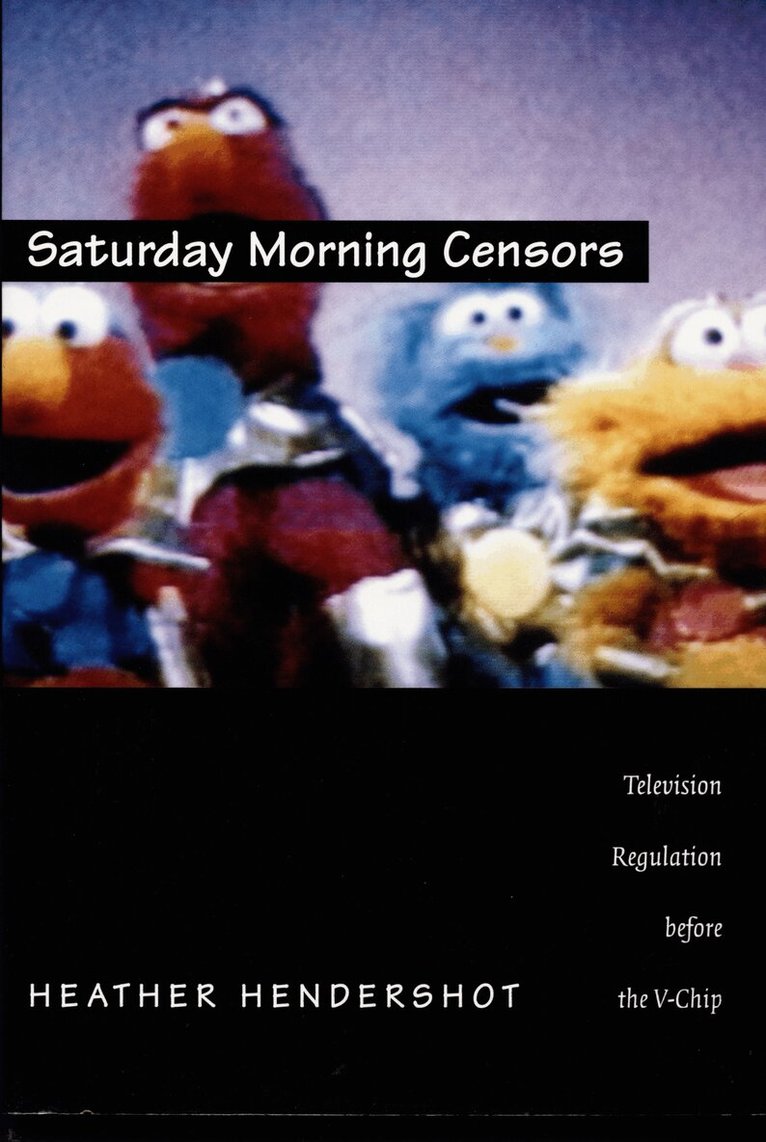
Many parents, politicians, and activists agree that there’s too much violence and not enough education on children’s television. Current solutions range from the legislative (the Children’s Television Act of 1990) to the technological (the V-chip). Saturday Morning Censors examines the history of adults’ attempts to safeguard children from the violence, sexism, racism, and commercialism on television since the 1950s. By focusing on what censorship and regulation are and how they work-rather than on whether they should exist-Heather Hendershot shows how adults use these processes to reinforce their own ideas about childhood innocence.Drawing on archival studio material, interviews with censors and animators, and social science research, Hendershot analyzes media activist strategies, sexism and racism at the level of cartoon manufacture, and the product-linked cartoons of the 1980s, such as Strawberry Shortcake and Transformers. But in order to more fully examine adult reception of children’s TV, she also discusses “good” programs like Sesame Street and Fat Albert and the Cosby Kids. Providing valuable historical context for debates surrounding such current issues as the V-chip and the banning of Power Rangers toys in elementary schools, Saturday Morning Censors demonstrates how censorship can reveal more fears than it hides.Saturday Morning Censors will appeal to educators, parents, and media activists, as well as to those in cultural studies, television studies, gender studies, and American social history.
E-bok
PDF, Engelska, 20121 629 kr
Läs direkt efter köp
Many parents, politicians, and activists agree that there’s too much violence and not enough education on children’s television. Current solutions range from the legislative (the Children’s Television Act of 1990) to the technological (the V-chip). Saturday Morning Censors examines the history of adults’ attempts to safeguard children from the violence, sexism, racism, and commercialism on television since the 1950s. By focusing on what censorship and regulation are and how they work—rather than on whether they should exist—Heather Hendershot shows how adults use these processes to reinforce their own ideas about childhood innocence.Drawing on archival studio material, interviews with censors and animators, and social science research, Hendershot analyzes media activist strategies, sexism and racism at the level of cartoon manufacture, and the product-linked cartoons of the 1980s, such as Strawberry Shortcake and Transformers. But in order to more fully examine adult reception of children’s TV, she also discusses “good” programs like Sesame Street and Fat Albert and the Cosby Kids. Providing valuable historical context for debates surrounding such current issues as the V-chip and the banning of Power Rangers toys in elementary schools, Saturday Morning Censors demonstrates how censorship can reveal more fears than it hides.Saturday Morning Censors will appeal to educators, parents, and media activists, as well as to those in cultural studies, television studies, gender studies, and American social history.
Häftad, Engelska, 2025
171 kr
Skickas
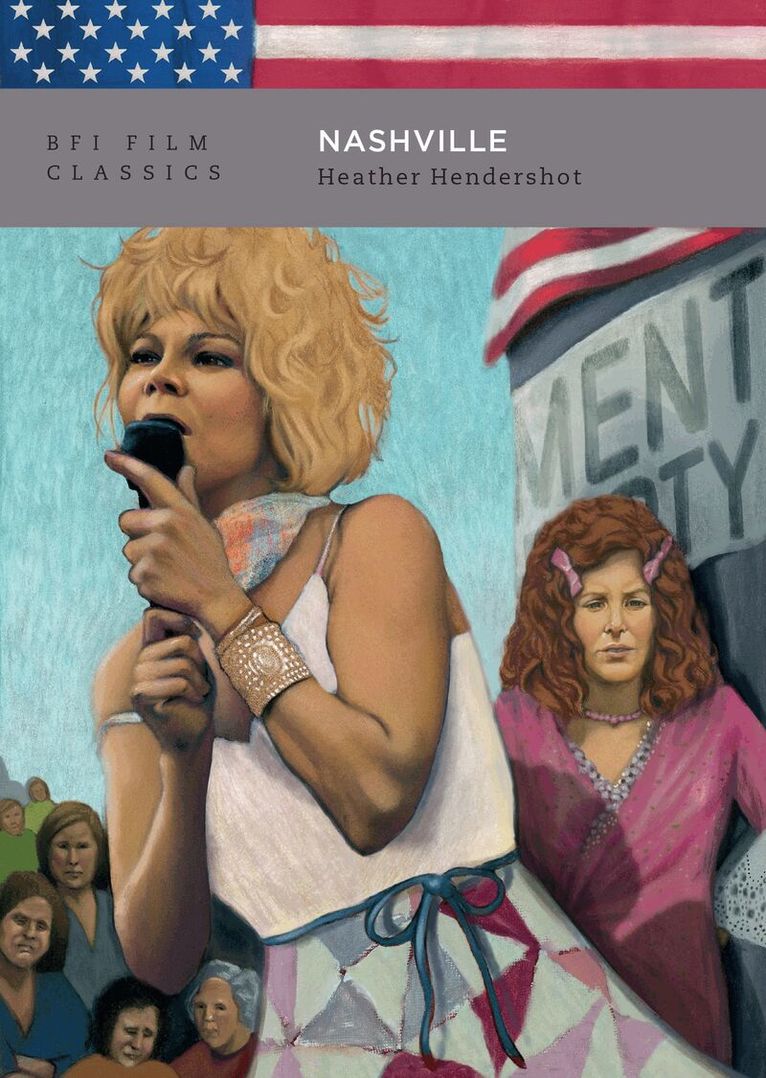
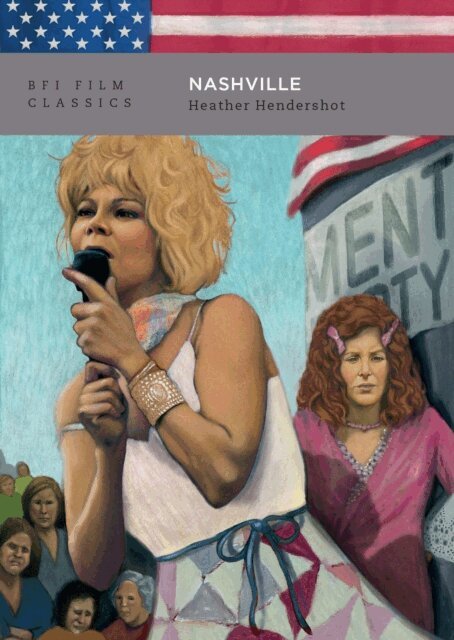
Robert Altman’s Nashville (1975) is simultaneously an intimate film about interpersonal connection and disconnection, and a sprawling, meandering portrait of American societal exhaustion in the wake of Vietnam, Watergate and a spate of political assassinations. Despite its pessimistic, satirical viewpoint, the film suggests a carefully guarded optimism: ‘life may be a one-way street’, but one has no choice but to ‘keep a’ goin’.Heather Hendershot places Nashville in the context of the New Hollywood of the 1970s, which offered a post-censorship anti-hero, the perennial loser. Embracing the new pessimism, Altman’s work fits with those of contemporaries such as Martin Scorsese and Peter Bogdanovich, but it also stands apart for its innovative sound design, improvisatory drive, and loose genre commitments.Through a close reading of the five days over which the film takes place, Hendershot unpacks both its political dynamics and the characters’ interrelationships and motivations. She highlights Nashville’s criticism of the suffering of its female characters, an engagement that springs from Joan Tewkesbury’s screenplay, Altman’s sensitivity to gendered exploitation (here, if not in all of his pictures), and the role the performers themselves played by improvising and scripting some of their own material.
E-bok
Engelska, 2025185 kr
Läs direkt efter köp
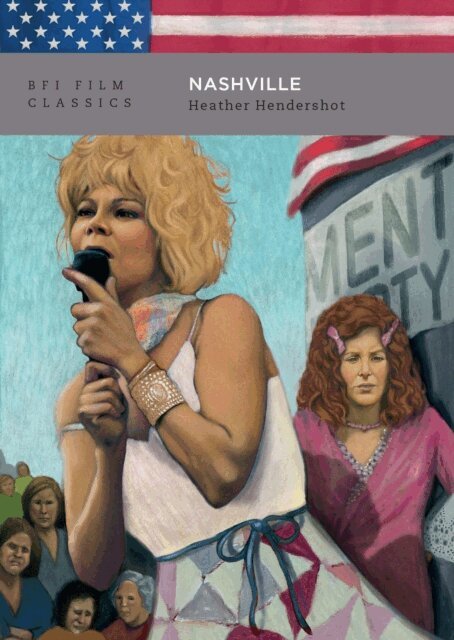
Robert Altman's Nashville (1975) is simultaneously an intimate film about interpersonal connection and disconnection, and a sprawling, meandering portrait of American societal exhaustion in the wake of Vietnam, Watergate and a spate of political assassinations. Despite its pessimistic, satirical viewpoint, the film suggests a carefully guarded optimism: 'life may be a one-way street', but one has no choice but to 'keep a' goin'.Heather Hendershot places Nashville in the context of the New Hollywood of the 1970s, which offered a post-censorship anti-hero, the perennial loser. Embracing the new pessimism, Altman's work fits with those of contemporaries such as Martin Scorsese and Peter Bogdanovich, but it also stands apart for its innovative sound design, improvisatory drive, and loose genre commitments.Through a close reading of the five days over which the film takes place, Hendershot unpacks both its political dynamics and the characters' interrelationships and motivations. She highlights Nashville's criticism of the suffering of its female characters, an engagement that springs from Joan Tewkesbury's screenplay, Altman's sensitivity to gendered exploitation (here, if not in all of his pictures), and the role the performers themselves played by improvising and scripting some of their own material.
E-bok
PDF, Engelska, 2025185 kr
Läs direkt efter köp
Robert Altman's Nashville (1975) is simultaneously an intimate film about interpersonal connection and disconnection, and a sprawling, meandering portrait of American societal exhaustion in the wake of Vietnam, Watergate and a spate of political assassinations. Despite its pessimistic, satirical viewpoint, the film suggests a carefully guarded optimism: 'life may be a one-way street', but one has no choice but to 'keep a' goin'.Heather Hendershot places Nashville in the context of the New Hollywood of the 1970s, which offered a post-censorship anti-hero, the perennial loser. Embracing the new pessimism, Altman's work fits with those of contemporaries such as Martin Scorsese and Peter Bogdanovich, but it also stands apart for its innovative sound design, improvisatory drive, and loose genre commitments.Through a close reading of the five days over which the film takes place, Hendershot unpacks both its political dynamics and the characters' interrelationships and motivations. She highlights Nashville's criticism of the suffering of its female characters, an engagement that springs from Joan Tewkesbury's screenplay, Altman's sensitivity to gendered exploitation (here, if not in all of his pictures), and the role the performers themselves played by improvising and scripting some of their own material.