Heidi Rolland Unruh – författare
Visar alla böcker från författaren . Handla med fri frakt och snabb leverans.
5 produkter
5 produkter
Inbunden, Engelska, 2005
664 kr
Skickas inom 5-8 vardagar
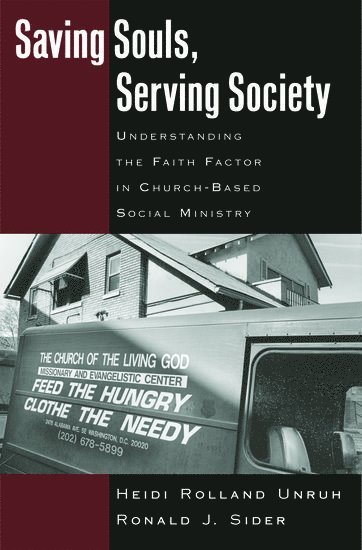
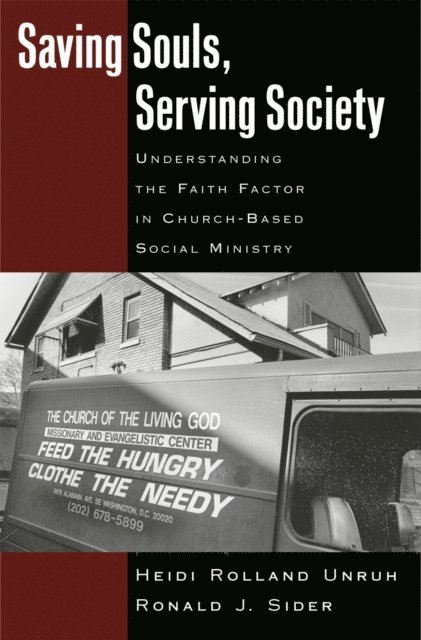
As public funding for social services has been slashed, there has arisen an unprecedented interest in the potential (and dangers) of faith-based institutions as agents of social change. Now, as President Bush begins his second term, he has placed government funding of faith-based programs at the top of his domestic agenda. What distinguishes church-based from secular social activism? What is particularly religious about church-based social services? How do churches express their religious identity in the context of social services, and how does this affect their access to resources and partners? This book, based on a Lilly-funded study of fifteen Philadelphia churches with active outreach, seeks to answer these and other pressing questions surrounding this important and controversial issue. Providing a far more objective understanding of faith-based initiatives than previously available, this study will be of interest not only to scholars of sociology of religion, social work, and social policy, but to denominational leaders, non-profit professionals, social policy analysts, community development practitioners, and others with the common goal of aiding struggling communities.
E-bok
PDF, Engelska, 2005588 kr
Läs direkt efter köp
Recent years have seen unprecedented attention to faith-based institutions as agents of social change, spurred in part by cuts in public funding for social services and accompanied by controversy about the separation of church and state. The debate over faith-based initiatives has highlighted a small but growing segment of churches committed to both saving souls and serving society. What distinguishes faith-based from secular activism? How do religious organizations express their religious identity in the context of social services? How do faith-based service providers interpret the connection between spiritual methodologies and socioeconomic outcomes? How does faith motivate and give meaning to social ministry? Drawing on case studies of fifteen Philadelphia-area Protestant churches with active outreach, Saving Souls, Serving Society seeks to answer these and other pressing questions surrounding the religious dynamics of social ministry. While church-based programs often look similar to secular ones in terms of goods or services rendered, they may show significant differences in terms of motivations, desired outcomes, and interpretations of meaning. Church-based programs also differ from one another in terms of how they relate evangelism to their social outreach agenda. Heidi Rolland Unruh and Ronald J. Sider explore how churches navigate the tension between their spiritual mission and the constraints on evangelism in the context of social services. The authors examine the potential contribution of religious dynamics to social outcomes as well as the relationship between mission orientations and social capital. Unruh and Sider introduce a new vocabulary for describing the religious components and spiritual meanings embedded in social action, and provide a typology of faith-based organizations and programs. Their analysis yields a framework for Protestant mission orientations that makes room for the diverse ways that churches interrelate spiritual witness and social compassion. Based on their observations, the authors offer a constructive approach to church-state partnerships and provide a far more objective understanding of faith-based social services than previously available.
E-bok
Engelska, 2005588 kr
Läs direkt efter köp
Recent years have seen unprecedented attention to faith-based institutions as agents of social change, spurred in part by cuts in public funding for social services and accompanied by controversy about the separation of church and state. The debate over faith-based initiatives has highlighted a small but growing segment of churches committed to both saving souls and serving society. What distinguishes faith-based from secular activism? How do religious organizations express their religious identity in the context of social services? How do faith-based service providers interpret the connection between spiritual methodologies and socioeconomic outcomes? How does faith motivate and give meaning to social ministry? Drawing on case studies of fifteen Philadelphia-area Protestant churches with active outreach, Saving Souls, Serving Society seeks to answer these and other pressing questions surrounding the religious dynamics of social ministry. While church-based programs often look similar to secular ones in terms of goods or services rendered, they may show significant differences in terms of motivations, desired outcomes, and interpretations of meaning. Church-based programs also differ from one another in terms of how they relate evangelism to their social outreach agenda. Heidi Rolland Unruh and Ronald J. Sider explore how churches navigate the tension between their spiritual mission and the constraints on evangelism in the context of social services. The authors examine the potential contribution of religious dynamics to social outcomes as well as the relationship between mission orientations and social capital. Unruh and Sider introduce a new vocabulary for describing the religious components and spiritual meanings embedded in social action, and provide a typology of faith-based organizations and programs. Their analysis yields a framework for Protestant mission orientations that makes room for the diverse ways that churches interrelate spiritual witness and social compassion. Based on their observations, the authors offer a constructive approach to church-state partnerships and provide a far more objective understanding of faith-based social services than previously available.
Häftad, Engelska, 2002
227 kr
Skickas inom 5-8 vardagar
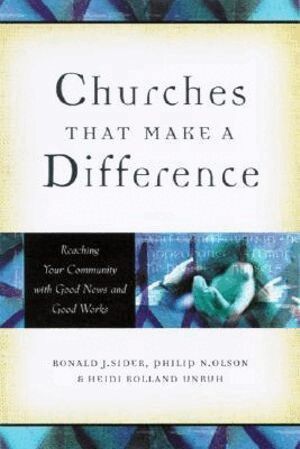
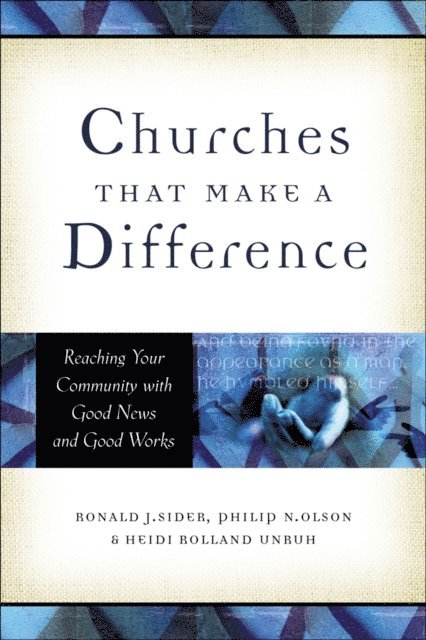
Churches over the past generations have been weakened by a failure to meet both the physical and spiritual needs of their communities. Many have adopted a narrow vision, focusing on only one aspect of ministry. But in today's environment of faith-based opportunities many Christians are eager to start reaching out to their world with both Good News and good works, and therefore they are searching for appropriate ways to integrate both into their ministry. In Churches That Make a Difference, best-selling author Ron Sider and his coauthors give those involved in community outreach a comprehensive resource for developing holistic ministry--a balance of evangelism and social outreach. Illustrations and helpful organizational tips detail the how-to's of an effective holistic ministry. Case studies that show how different churches across the United States reach out to their communities provide a variety of ideas and practical applications. User-friendly tools are included as well for congregational studies, surveys, evaluations, and community assessments. The authors draw on extensive experience with church ministries and faith-based organizations as they share the life-changing vision and biblical mandate for living the whole gospel. Church leaders will be encouraged in their process of developing and maintaining a holistic ministry, and local churches will rediscover a passion for loving the whole person the way Jesus did.
E-bok
Engelska, 2002238 kr
Läs direkt efter köp
Churches over the past generations have been weakened by a failure to meet both the physical and spiritual needs of their communities. Many have adopted a narrow vision, focusing on only one aspect of ministry. But in today''s environment of faith-based opportunities many Christians are eager to start reaching out to their world with both Good News and good works, and therefore they are searching for appropriate ways to integrate both into their ministry. In Churches That Make a Difference, best-selling author Ron Sider and his coauthors give those involved in community outreach a comprehensive resource for developing holistic ministry--a balance of evangelism and social outreach. Illustrations and helpful organizational tips detail the how-to''s of an effective holistic ministry. Case studies that show how different churches across the United States reach out to their communities provide a variety of ideas and practical applications. User-friendly tools are included as well for congregational studies, surveys, evaluations, and community assessments. The authors draw on extensive experience with church ministries and faith-based organizations as they share the life-changing vision and biblical mandate for living the whole gospel. Church leaders will be encouraged in their process of developing and maintaining a holistic ministry, and local churches will rediscover a passion for loving the whole person the way Jesus did.