Heidi White – Författare
Visar alla böcker från författaren Heidi White. Handla med fri frakt och snabb leverans.
4 produkter
4 produkter
2 127 kr
Skickas inom 3-6 vardagar
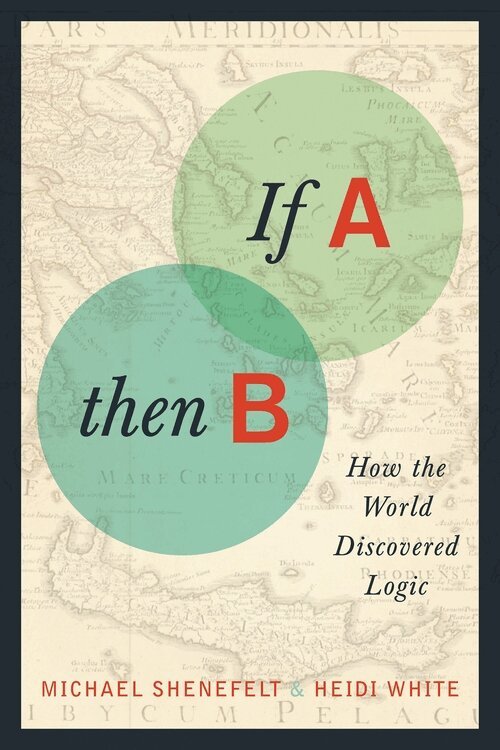
While logical principles seem timeless, placeless, and eternal, their discovery is a story of personal accidents, political tragedies, and broad social change. If A, Then B begins with logic's emergence twenty-three centuries ago and tracks its expansion as a discipline ever since. It explores where our sense of logic comes from and what it really is a sense of. It also explains what drove human beings to start studying logic in the first place. Logic is more than the work of logicians alone. Its discoveries have survived only because logicians have also been able to find a willing audience, and audiences are a consequence of social forces affecting large numbers of people, quite apart from individual will. This study therefore treats politics, economics, technology, and geography as fundamental factors in generating an audience for logic-grounding the discipline's abstract principles in a compelling material narrative.The authors explain the turbulent times of the enigmatic Aristotle, the ancient Stoic Chrysippus, the medieval theologian Peter Abelard, and the modern thinkers Rene Descartes, David Hume, Jeremy Bentham, George Boole, Augustus De Morgan, John Stuart Mill, Gottlob Frege, Bertrand Russell, and Alan Turing. Examining a variety of mysteries, such as why so many branches of logic (syllogistic, Stoic, inductive, and symbolic) have arisen only in particular places and periods, If A, Then B is the first book to situate the history of logic within the movements of a larger social world. If A, Then B is the 2013 Gold Medal winner of Foreword Reviews' IndieFab Book of the Year Award for Philosophy.
276 kr
Skickas inom 7-10 vardagar
While logical principles seem timeless, placeless, and eternal, their discovery is a story of personal accidents, political tragedies, and broad social change. If A, Then B begins with logic's emergence twenty-three centuries ago and tracks its expansion as a discipline ever since. It explores where our sense of logic comes from and what it really is a sense of. It also explains what drove human beings to start studying logic in the first place. Logic is more than the work of logicians alone. Its discoveries have survived only because logicians have also been able to find a willing audience, and audiences are a consequence of social forces affecting large numbers of people, quite apart from individual will. This study therefore treats politics, economics, technology, and geography as fundamental factors in generating an audience for logic-grounding the discipline's abstract principles in a compelling material narrative.The authors explain the turbulent times of the enigmatic Aristotle, the ancient Stoic Chrysippus, the medieval theologian Peter Abelard, and the modern thinkers Rene Descartes, David Hume, Jeremy Bentham, George Boole, Augustus De Morgan, John Stuart Mill, Gottlob Frege, Bertrand Russell, and Alan Turing. Examining a variety of mysteries, such as why so many branches of logic (syllogistic, Stoic, inductive, and symbolic) have arisen only in particular places and periods, If A, Then B is the first book to situate the history of logic within the movements of a larger social world. If A, Then B is the 2013 Gold Medal winner of Foreword Reviews' IndieFab Book of the Year Award for Philosophy.
1 745 kr
Skickas inom 10-15 vardagar
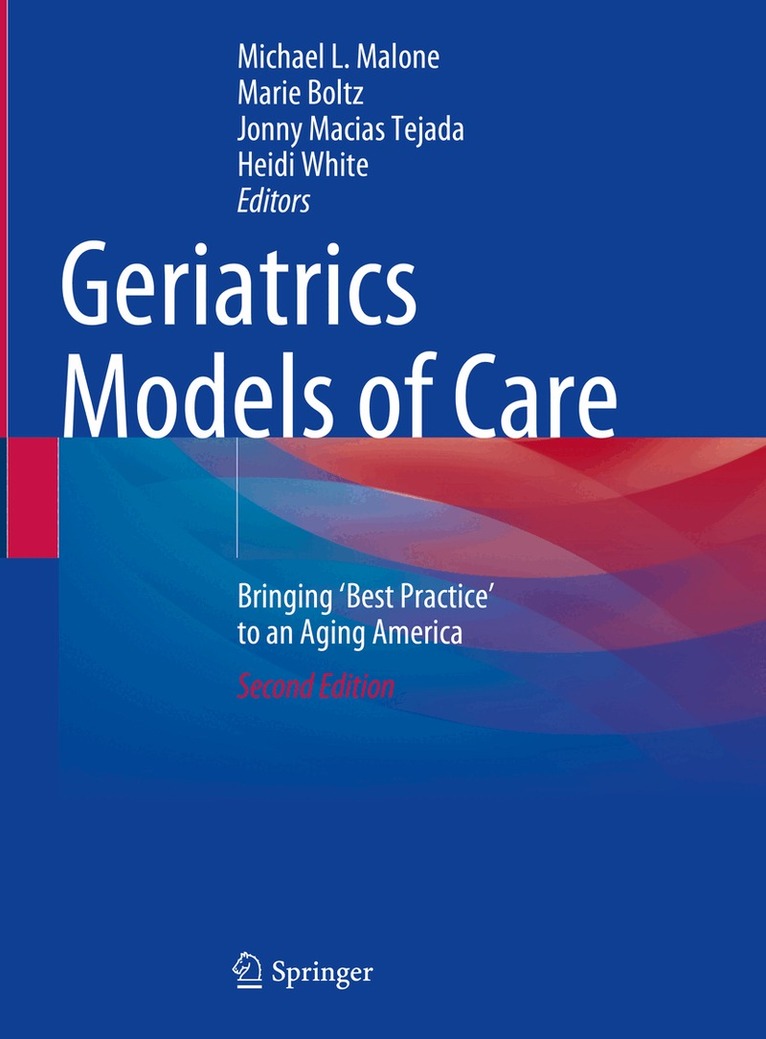
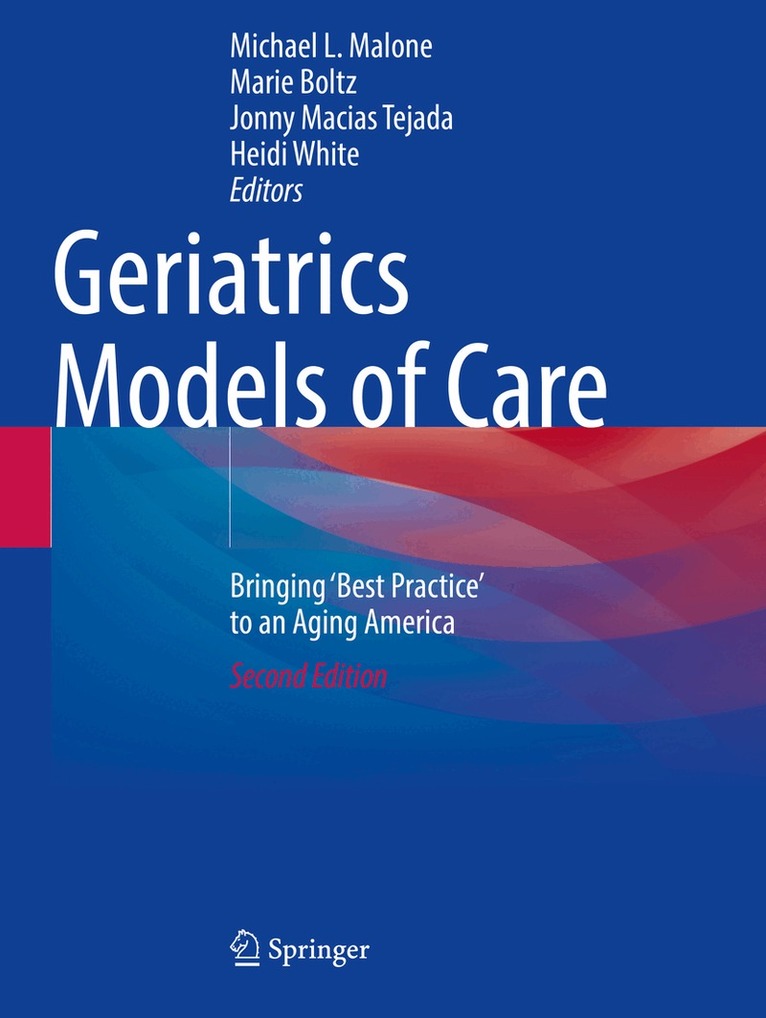
Following the success of the previous edition, the second edition of Geriatrics Models of Care is the definitive resource for systems-based practice improvement for the care of older adults.
1 311 kr
Skickas inom 10-15 vardagar
Following the success of the previous edition, the second edition of Geriatrics Models of Care is the definitive resource for systems-based practice improvement for the care of older adults. Several new models of care have been published in the last eight years, new outcomes have emerged to better understand the impact of existing models, and with the rise of the Age-Friendly Health Systems movement, promoting organized efforts to prepare our health care settings for older individuals is of more importance than ever. The second edition is organized based on the practice setting along a continuum of care: hospital, transitions from hospital to home, outpatient settings, and the emergency department. This book also highlights long-term care models, which is an important part of the continuum of care for older Americans. Further, this edition features models that address the needs of vulnerable populations. This new section will describe a spectrum of programs for older adults who have Alzheimer’s disease or Parkinson’s disease. Other models describe best practices for older adults undergoing surgery or those who want to remain functioning independently in their home. A defining feature of this book is that each chapter follows a standard template: 1) the challenge which led to the model; 2) the patient population served; 3) core components of the intervention; 4) the role of interdisciplinary health professionals; 5) evidence to support the intervention; 6) lessons learned in the implementation and dissemination of the model; 7) implications for family caregivers, and communities (particularly underserved and diverse communities); and 8) how each model will provide care across the continuum during an entire episode of care. In addition, each chapter features a “call out” box with practical tips for implementing the model.