Heike Mayer – författare
661 kr
Skickas inom 10-15 vardagar
757 kr
Läs direkt efter köp
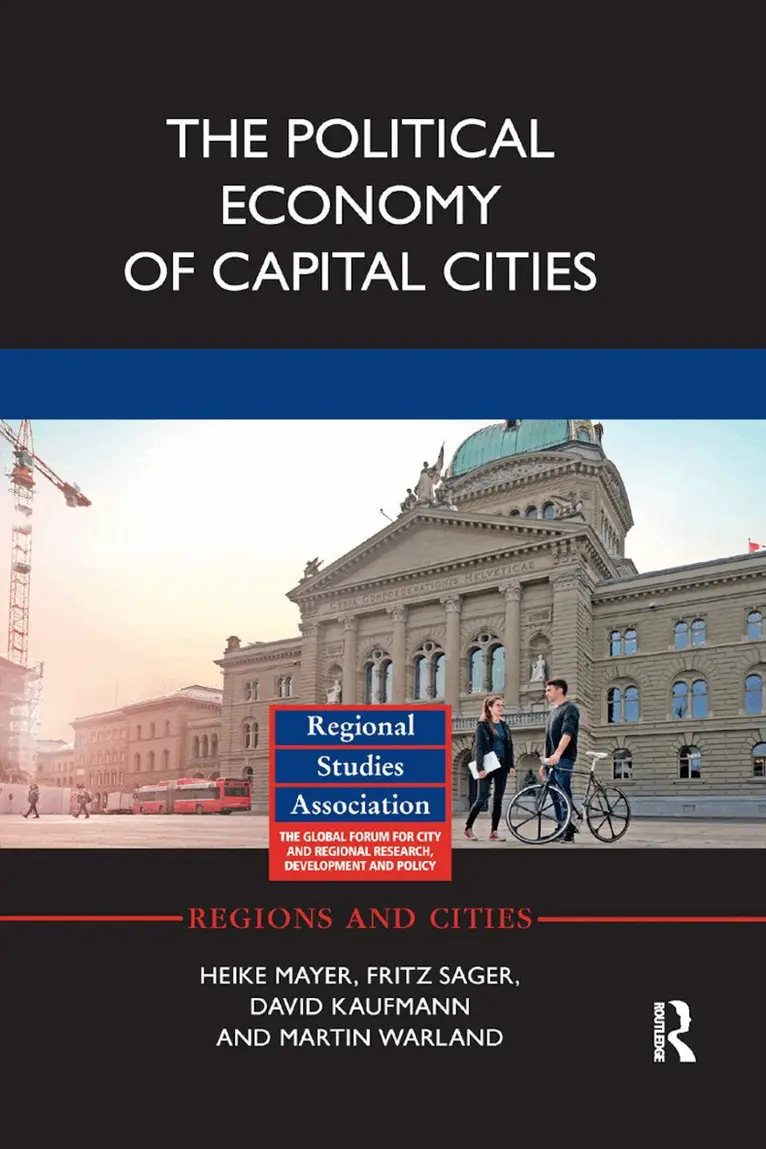
Capital cities that are not the dominant economic centers of their nations – so-called ‘secondary capital cities’ (SCCs) – tend to be overlooked in the fields of economic geography and political science. Yet, capital cities play an important role in shaping the political, economic, social and cultural identity of a nation. As the seat of power and decision-making, capital cities represent a nation’s identity not only through their symbolic architecture but also through their economies and through the ways in which they position themselves in national urban networks.
The Political Economy of Capital Cities aims to address this gap by presenting the dynamics that influence policy and economic development in four in-depth case studies examining the SCCs of Bern, Ottawa, The Hague and Washington, D.C. In contrast to traditional accounts of capital cities, this book conceptualizes the modern national capital as an innovation-driven economy influenced by national, local and regional actors. Nationally, overarching trends in the direction of outsourcing and tertiarization of the public-sector influence the fate of capital cities. Regional policymakers in all four of the highlighted cities leverage the presence of national government agencies and stimulate the economy by way of various locational policy strategies.
While accounting for their secondary status, this book illustrates how capital-city actors such as firms, national, regional and local governments, policymakers and planning practitioners are keenly aware of the unique status of their city. The conclusion provides practical recommendations for policymakers in SCCs and highlights ways in which they can help to promote economic development.
757 kr
Läs direkt efter köp
Capital cities that are not the dominant economic centers of their nations – so-called ‘secondary capital cities’ (SCCs) – tend to be overlooked in the fields of economic geography and political science. Yet, capital cities play an important role in shaping the political, economic, social and cultural identity of a nation. As the seat of power and decision-making, capital cities represent a nation’s identity not only through their symbolic architecture but also through their economies and through the ways in which they position themselves in national urban networks.
The Political Economy of Capital Cities aims to address this gap by presenting the dynamics that influence policy and economic development in four in-depth case studies examining the SCCs of Bern, Ottawa, The Hague and Washington, D.C. In contrast to traditional accounts of capital cities, this book conceptualizes the modern national capital as an innovation-driven economy influenced by national, local and regional actors. Nationally, overarching trends in the direction of outsourcing and tertiarization of the public-sector influence the fate of capital cities. Regional policymakers in all four of the highlighted cities leverage the presence of national government agencies and stimulate the economy by way of various locational policy strategies.
While accounting for their secondary status, this book illustrates how capital-city actors such as firms, national, regional and local governments, policymakers and planning practitioners are keenly aware of the unique status of their city. The conclusion provides practical recommendations for policymakers in SCCs and highlights ways in which they can help to promote economic development.
2 193 kr
Skickas inom 10-15 vardagar
1 792 kr
Skickas inom 5-8 vardagar
26 kr
Läs direkt efter köp
Exploring current debates on the topic, this book maps out an agenda for theory, research and practice about the role and function of small and medium-sized towns in various contexts and at different territorial scales. Chapters highlight new insights and approaches to studying small and medium-sized towns, moving beyond the ‘urban bias’ to provide nuanced thought on these spaces both in terms of their relation to larger cities, and in terms of implications related to their size.
Contributions from top scholars in the field across a number of disciplines cover a broad range of relevant areas of study, including: socio-spatial identities, urbanization, suburbanization, resilience, innovation, entrepreneurship, industrial and tourism development and digitalization. The book concludes with an outline of the road ahead and a call for further theorizing.
Urban planning and human geography scholars will find this to be an invigorating read with contributions from scholars across urban planning, economic geography, tourism and public policy providing a holistic understanding of the topic.
1 876 kr
Skickas inom 5-8 vardagar
478 kr
Läs direkt efter köp
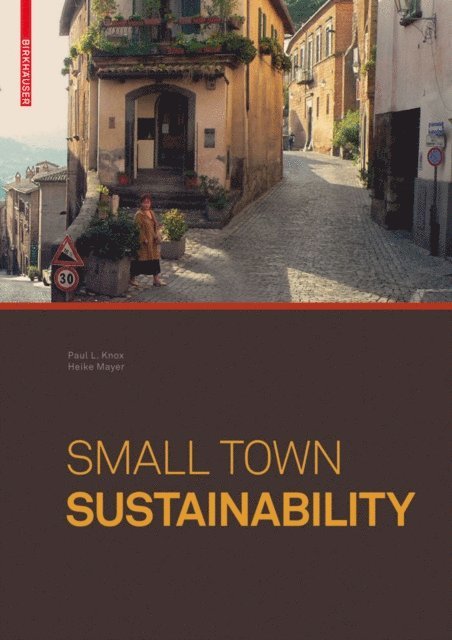
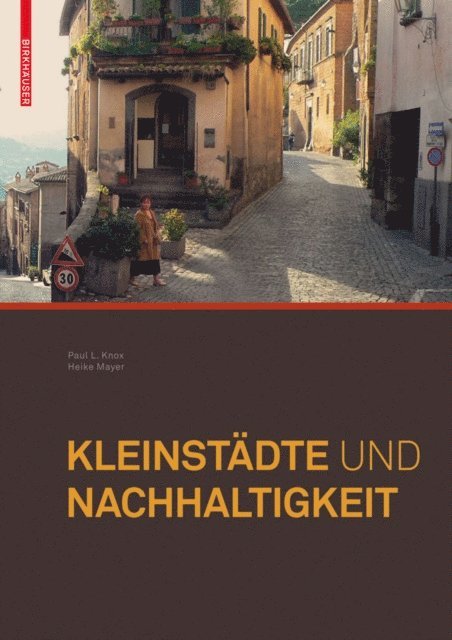
In an era in which the individuality and vitality of small towns are under threat from globalization, and city planning discussions tend to center on topics like metropolitan regions, megaregions, and global cities, the authors of this volume see a need to reflect critically on the potential of small towns. They show how small towns can meet the challenge of a fast-paced, globalized world, and they use case studies to introduce movements, programs, and strategies capable of effectively promoting local cultures, traditions, identities, and sustainability.
Small towns often play critical roles in regional economic systems. When small towns focus on their specific characteristics and take advantage of their opportunities, they can become stable niches within regional, national, and global economies and take on an important role in shaping a sustainable future.
In einer Zeit, in der der Prozess der Globalisierung die Besonderheiten kleiner Städte und ihre Vitalität bedroht, und in der sich die meisten stadtplanerischen Diskussionen um Themen wie Metropolregionen oder Mega-Regionen und Weltstädte drehen, sehen die Autoren die Notwendigkeit, das Potenzial kleiner Ortschaften kritisch zu reflektieren. Sie veranschaulichen wie Kleinstädte die Herausforderung einer schnelllebigen und globalisierten Welt annehmen können, und stellen anhand von Fallbeispielen Bewegungen, Programme und Strategien vor, die örtliche Kulturen, Traditionen, Identitäten und Nachhaltigkeit effektiv zu fördern wissen.
Kleinstädte spielen oftmals eine entscheidende Rolle innerhalb regionaler Wirtschaftssysteme. Wenn Kleinstädte sich auf ihre spezifischen Eigenschaften konzentrieren und ihre Möglichkeiten nutzen, können sie zu stabilen Nischen in regionalen, nationalen und globalen Ökonomien werden und wesentlich dazu beitragen, eine nachhaltige Zukunft zu gestalten.
471 kr
Läs direkt efter köp
In einer Zeit, in der der Prozess der Globalisierung die Besonderheiten kleiner Städte und ihre Vitalität bedroht, und in der sich die meisten stadtplanerischen Diskussionen um Themen wie Metropolregionen oder Mega-Regionen und Weltstädte drehen, sehen die Autoren die Notwendigkeit, das Potenzial kleiner Ortschaften kritisch zu reflektieren. Sie veranschaulichen, wie Kleinstädte die Herausforderung einer schnelllebigen und globalisierten Welt annehmen können, und stellen anhand von Fallbeispielen Bewegungen, Programme und Strategien vor, die örtliche Kulturen, Traditionen, Identitäten und Nachhaltigkeit effektiv zu fördern wissen.Kleinstädte spielen oftmals eine entscheidende Rolle innerhalb regionaler Wirtschaftssysteme. Wenn Kleinstädte sich auf ihre spezifischen Eigenschaften konzentrieren und ihre Möglichkeiten nutzen, können sie zu stabilen Nischen in regionalen, nationalen und globalen Ökonomien werden und wesentlich dazu beitragen, eine nachhaltige Zukunft zu gestalten.
358 kr
Läs direkt efter köp
In an age where the globalization process is threatening the uniqueness and vitality of small towns, and where most urban planning discourse is directed at topics such as metropol-regions or mega-regions and world cities, the authors here emphasize the need to critically reflect on the potential of small towns.They illustrate how small towns can meet the challenge of a fast-paced, globalized world, and based on case studies, movements, programs, and strategies, present the local cultures that effectively and sustainably promote traditions and identities. Small towns often play a critical role in regional economies. When small towns focus on their specific characteristics and exploit their opportunities, they can become stable niches within regional, national, and global economies, and thus contribute significantly to shaping their future. The second edition is expanded to cover the intensive development of small towns in China and Korea. In addition, the authors examine the impact of the economic crisis on small towns and the recent development of the Slow City movement.
3 814 kr
Läs direkt efter köp
3 814 kr
Läs direkt efter köp
192 kr
Läs direkt efter köp
117 kr
Skickas inom 3-6 vardagar
155 kr
Skickas inom 3-6 vardagar
142 kr
Skickas inom 3-6 vardagar
91 kr
Läs direkt efter köp
91 kr
Läs direkt efter köp
57 kr
Läs direkt efter köp
111 kr
Skickas inom 3-6 vardagar
68 kr
Läs direkt efter köp