Heikki Patomäki – författare
Visar alla böcker från författaren Heikki Patomäki. Handla med fri frakt och snabb leverans.
18 produkter
18 produkter
Inbunden, Engelska, 2022
2 151 kr
Skickas inom 10-15 vardagar
The Three Fields of Global Political Economy provides a systematic and future-oriented account of global political economy dynamics since the Industrial Revolution and argues that major changes and conflicting processes can be understood through the concept of these three fields.The first field is constituted by the circuit of capital and is characterised by a tendency towards economic liberalism. The second field is brought about by reactions to, and learning from, cycles and crises and various negative experiences. The third field is the field of reason of state. It is evoked by struggles within and among states and has its own inner generative structures. This book analyses the generic dynamics of these three fields of global political economy and explores their most significant causal effects, such as growth, employment, distribution of income and wealth, wars, and ecological effects. Together, the prevailing three fields, as well as the ideas and causal forces which generate them, constitute the "holomovement" of the global political economy.This book will appeal to advanced students and scholars of global studies, international relations, international political economy, economic theory, and governance, as well as those working in social theory and sociology, and to a broader audience interested in socioeconomics.
Häftad, Engelska, 2023
648 kr
Skickas inom 10-15 vardagar
The Three Fields of Global Political Economy provides a systematic and future-oriented account of global political economy dynamics since the Industrial Revolution and argues that major changes and conflicting processes can be understood through the concept of these three fields.The first field is constituted by the circuit of capital and is characterised by a tendency towards economic liberalism. The second field is brought about by reactions to, and learning from, cycles and crises and various negative experiences. The third field is the field of reason of state. It is evoked by struggles within and among states and has its own inner generative structures. This book analyses the generic dynamics of these three fields of global political economy and explores their most significant causal effects, such as growth, employment, distribution of income and wealth, wars, and ecological effects. Together, the prevailing three fields, as well as the ideas and causal forces which generate them, constitute the "holomovement" of the global political economy.This book will appeal to advanced students and scholars of global studies, international relations, international political economy, economic theory, and governance, as well as those working in social theory and sociology, and to a broader audience interested in socioeconomics.
Inbunden, Engelska, 2001
1 736 kr
Skickas inom 10-15 vardagar
After International Relations articulates a systematic critical realist response to a quest for more emancipatory methodologies in International Relations. Heikki Patomäki here establishes a way out of the international relations problematic which has puzzled so many great thinkers and scholars for the last two hundred years. After International Relations shows how and why theories based on the international problematic have failed; articulates an alternative, critical realist research programme; and illustrates how this research programme can be put to work to enable better research and ethico-political practices.
Häftad, Engelska, 2001
574 kr
Skickas inom 10-15 vardagar
After International Relations articulates a systematic critical realist response to a quest for more emancipatory methodologies in International Relations. Heikki Patomäki here establishes a way out of the international relations problematic which has puzzled so many great thinkers and scholars for the last two hundred years. After International Relations shows how and why theories based on the international problematic have failed; articulates an alternative, critical realist research programme; and illustrates how this research programme can be put to work to enable better research and ethico-political practices.
Inbunden, Engelska, 2007
2 289 kr
Skickas inom 10-15 vardagar
What are the possibilities for and conditions of global security in the 21st century?This book provides an innovative study of future wars, crises and transformations of the global political economy. It brings together economic theory, political economy, peace and conflict research, philosophy and historical analogy to explore alternatives for the future.Patomäki develops a bold, original and thought provoking political economy analysis of the late 20th century neo-liberalisation and globalisation and their real effects, which he describes as a 21st century version imperialism. In order for us to understand global security and to anticipate the potential threats and crises, he argues that a holistic understanding and explanation of history is necessary and demonstrates that a systematic causal analysis of structures and processes is required. Putting this theory into practice, Patomäki constructs a comparative explanatory model which traces the rise of imperialism in the late 19th century and culminated in the First World War. He argues that even a partial return to the 19th century ideals and practices is very likely to be highly counterproductive in the 21st century world and could become a recipe for a major global catastrophe. This book will be of interest to students and scholars of international relations, globalization studies, politics, economics and security studies.
Häftad, Engelska, 2008
685 kr
Skickas inom 10-15 vardagar
What are the possibilities for and conditions of global security in the 21st century?This book provides an innovative study of future wars, crises and transformations of the global political economy. It brings together economic theory, political economy, peace and conflict research, philosophy and historical analogy to explore alternatives for the future.Patomäki develops a bold, original and thought provoking political economy analysis of the late 20th century neo-liberalisation and globalisation and their real effects, which he describes as a 21st century version imperialism. In order for us to understand global security and to anticipate the potential threats and crises, he argues that a holistic understanding and explanation of history is necessary and demonstrates that a systematic causal analysis of structures and processes is required. Putting this theory into practice, Patomäki constructs a comparative explanatory model which traces the rise of imperialism in the late 19th century and culminated in the First World War. He argues that even a partial return to the 19th century ideals and practices is very likely to be highly counterproductive in the 21st century world and could become a recipe for a major global catastrophe. This book will be of interest to students and scholars of international relations, globalization studies, politics, economics and security studies.
Inbunden, Engelska, 1997
1 082 kr
Skickas inom 10-15 vardagar
If the plans concerning EMU are realized by 2002, national currencies will be replaced by the Euro and national central banks will be partially replaced by the European Central Bank. This text starts with the argument that EMU is more a political than an economic project. It develops this theme by addressing five different questions. First, precisely what is the general role of EMU in the globalising political economy? Second, how EMU will change the power relations and the relationship between 'political' and 'economic'? Third, what effects will EMU have on generally accepted values, including for example efficiency, self-determination, and democracy? Fourth, how does the EMU-related politics of symbols, including money, take part in constructing political identities? And last, but certainly not least, what effects EMU will have on the social and political dimension of the Union and thus also on its legitimacy? The politics of EMU includes many dimensions. The book tries to explain the hegemony of the neoliberal and German vision of Europe in the context of recent development in the global political economy.It assesses the consequences of this hegemony and the possibility for alternatives from a variety of perspectives. In many chapters, it is also argued that the legitimation problems of the Union may turn into an acute crisis also because of EMU. We should expect an actualised crisis to lead to a transformation of the Union.
Inbunden, Engelska, 2022
712 kr
Skickas inom 10-15 vardagar
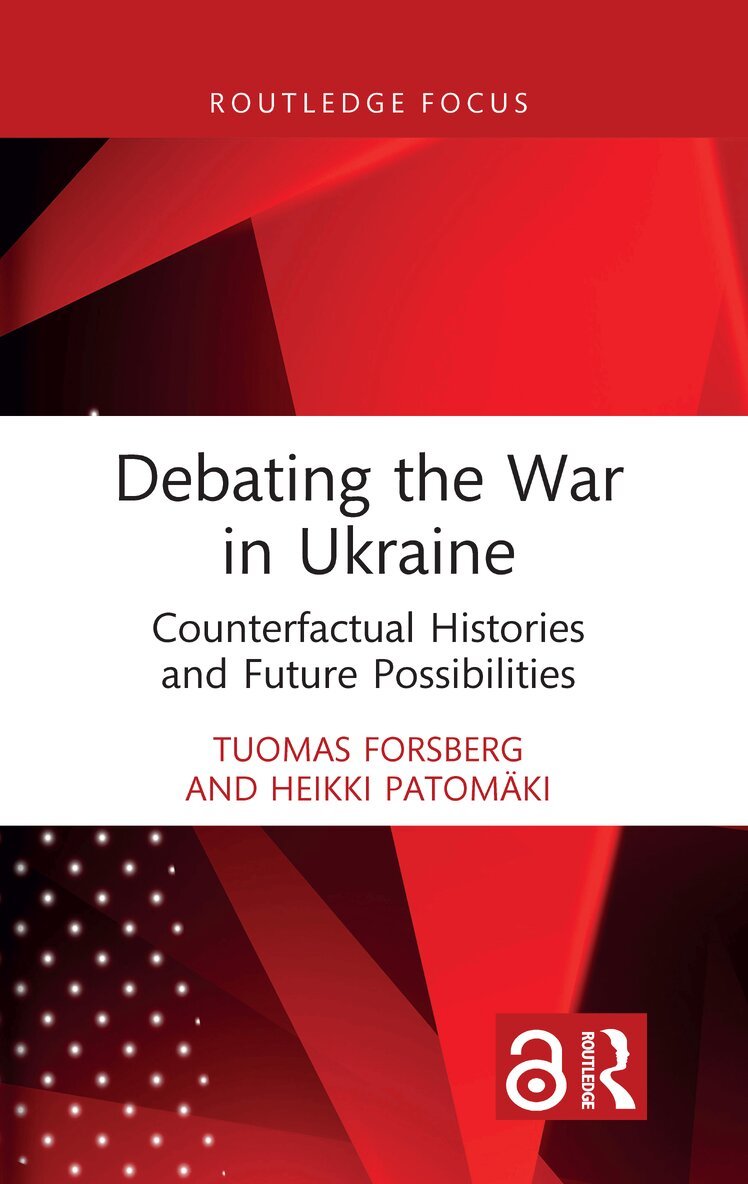
Debating the War in Ukraine discusses whether the war could have been avoided, and, if so, how? In this dialogical book, the authors discuss nodal points of history in terms of counterfactuals and contrastive explanations, concluding by considering future possibilities.They start in the 1990s where several causal elements of the war originate involving Russia’s economic developments and Europe’s security arrangements. Moving on to the next decade, they focus on the Iraq war, colour revolutions, and NATO’s 2008 announcement that Ukraine and Georgia will become members. Finally, they explore the past decade including the Ukrainian crisis of 2013–2014, the annexation of Crimea, and the consecutive war in east Ukraine. The current war can also be seen as a continuum of that war. The authors agree that NATO’s 2008 announcement on Ukraine’s and Georgia’s NATO membership was an unnecessary provocation, and that the implementation of the Minsk agreement could have prevented the current war, but otherwise their analysis of counterfactual possibilities differs, especially when it comes to the action-possibilities of the West (including diverse actors). These differences are not just dependent on different readings of relevant evidence but, importantly, stem from dissimilar contrast spaces and divergent theoretical understandings of the nature of states and mechanisms of international relations and political economy.This short, highly accessible book will be of great interest to all those studying and working in international relations and its various subfields such as peace and conflict studies and security studies, as well as all those wishing to understand more about the backdrop of Russia’s invasion of Ukraine in February 2022.The Open Access version of this book, available at http://www.taylorfrancis.com, has been made available under a Creative Commons Attribution-Non Commercial-No Derivatives (CC-BY-NC-ND) 4.0 license. The Open Access version of this book was funded by University of Helsinki Library.
Häftad, Engelska, 2024
297 kr
Skickas inom 10-15 vardagar
Debating the War in Ukraine discusses whether the war could have been avoided, and, if so, how? In this dialogical book, the authors discuss nodal points of history in terms of counterfactuals and contrastive explanations, concluding by considering future possibilities.They start in the 1990s where several causal elements of the war originate involving Russia’s economic developments and Europe’s security arrangements. Moving on to the next decade, they focus on the Iraq war, colour revolutions, and NATO’s 2008 announcement that Ukraine and Georgia will become members. Finally, they explore the past decade including the Ukrainian crisis of 2013–2014, the annexation of Crimea, and the consecutive war in east Ukraine. The current war can also be seen as a continuum of that war. The authors agree that NATO’s 2008 announcement on Ukraine’s and Georgia’s NATO membership was an unnecessary provocation, and that the implementation of the Minsk agreement could have prevented the current war, but otherwise their analysis of counterfactual possibilities differs, especially when it comes to the action-possibilities of the West (including diverse actors). These differences are not just dependent on different readings of relevant evidence but, importantly, stem from dissimilar contrast spaces and divergent theoretical understandings of the nature of states and mechanisms of international relations and political economy.This short, highly accessible book will be of great interest to all those studying and working in international relations and its various subfields such as peace and conflict studies and security studies, as well as all those wishing to understand more about the backdrop of Russia’s invasion of Ukraine in February 2022.The Open Access version of this book, available at http://www.taylorfrancis.com, has been made available under a Creative Commons Attribution-Non Commercial-No Derivatives (CC-BY-NC-ND) 4.0 license. The Open Access version of this book was funded by University of Helsinki Library.
Inbunden, Engelska, 2025
2 151 kr
Skickas inom 10-15 vardagar
What can we say about the shape of things to come in world politics, the probability of different possibilities, and the reflexivity of our anticipations? Building on post-Keynesian economic theory and classical theories of imperialism, the book discusses anticipations that neoliberalism will push the world into a new era of insecurity, confrontations, armaments, and wars.Part I of this volume delves into the acute geopolitical landscape, especially the war in Ukraine. Through the analysis of the lessons from the OSCE process, the focus moves to political economy. Part II “Political Economy” focuses on the dynamics of the world political economy and concludes with discussions on connections between economic and normative theory. Part III concerns global political theory, ending with a cosmopolitan vision of the university’s future. The volume also investigates partial failures of and limits to anticipating the future in open systems. Normative assessments and priorities have also changed in some respects with the world-historical context. The comprehensive introduction addresses the question “what can we learn from all this, and how do these lessons help us anticipate the future better?”.This book will be of great interest to students, scholars, and researchers of International Relations, International Political Economy, Economic History, Development Studies, and Futures Studies. The chapters in this book, except for chapters 3 and 6, were originally published in Globalizations. This volume comes with a new introduction.
Häftad, Engelska, 2026
665 kr
Kommande
What can we say about the shape of things to come in world politics, the probability of different possibilities, and the reflexivity of our anticipations? Building on post-Keynesian economic theory and classical theories of imperialism, the book discusses anticipations that neoliberalism will push the world into a new era of insecurity, confrontations, armaments, and wars.Part I of this volume delves into the acute geopolitical landscape, especially the war in Ukraine. Through the analysis of the lessons from the OSCE process, the focus moves to political economy. Part II “Political Economy” focuses on the dynamics of the world political economy and concludes with discussions on connections between economic and normative theory. Part III concerns global political theory, ending with a cosmopolitan vision of the university’s future. The volume also investigates partial failures of and limits to anticipating the future in open systems. Normative assessments and priorities have also changed in some respects with the world-historical context. The comprehensive introduction addresses the question “what can we learn from all this, and how do these lessons help us anticipate the future better?”.This book will be of great interest to students, scholars, and researchers of International Relations, International Political Economy, Economic History, Development Studies, and Futures Studies. The chapters in this book, except for chapters 3 and 6, were originally published in Globalizations. This volume comes with a new introduction.
Häftad, Engelska, 2012
1 114 kr
Skickas inom 10-15 vardagar
If the plans concerning EMU will be realised, by 2002 national currencies will be replaced by the Euro and national central banks will be partially replaced by the European Central Bank. The Politics of Economic and Monetary Union starts with the argument that EMU is more a political than an economic project. It develops this theme by addressing five different questions. First, precisely what is the general role of EMU in the globalising political economy? Second, how EMU will change the power relations and the relationship between `political' and `economic'? Third, what effects will EMU have on generally accepted values - including for example efficiency, self-determination, and democracy? Fourth, how does the EMU-related politics of symbols - including money - take part in constructing political identities? And last, but certainly not least, what effects EMU will have on the social and political dimension of the Union and thus also on its legitimacy? The politics of EMU includes many dimensions. The book tries to explain the hegemony of the neoliberal and German vision of Europe in the context of recent development in the global political economy. It assesses the consequences of this hegemony and the possibility for alternatives from a variety of perspectives. In many chapters, it is also argued that the legitimation problems of the Union may turn into an acute crisis also because of EMU. We should expect an actualised crisis to lead to a transformation of the Union.
Inbunden, Engelska, 2023
1 512 kr
Skickas inom 10-15 vardagar
Developing a processual understanding of world statehood, this book combines history, political philosophy, explanatory social science, and critical-reflexive futures studies. While doing so, it poses essential questions about world political integration, especially (i) whether and to what degree elements of world statehood exist today, (ii) whether the development of further elements of world statehood in some stronger sense can be seen as a tendential direction of history, and (iii) whether, and under what conditions, a world state could be viable?The book is organised into three parts. The first part, “Cosmopolitical processes”, explores whether world history as a whole is directed towards planetary integration, focusing on the emergence of cosmopolitanism, the world economy, and the peace problematic. The second part of the book, “Reflexive futures and agency”, focuses on the contemporary 21st-century processes of world history in terms of how non-fixed pasts, changingcontexts, and anticipations of the future interact. The author explains how certain rational directionality is compatible with the possibility of deglobalisation, disintegrative tendencies, and “gridlock” in global governance in the key areas of the economy, security, and environment. In the final part of the book, “World statehood and beyond”, the author develops further the processual and open-ended account of the formation of interconnected elements of world statehood by discussing the cases of a global greenhouse gas tax and world parliament. He also analyses the feasibility of different paths towards global-scale integration and the potential for conflicts, divisions, and disintegration.This book is a must-read for students and scholars of political science, international relations, history, sociology, political philosophy, and futures studies interested in a better understanding of world statehood, world political integration, as well as the future of world politics.
Engelska, 2023
625 kr
Skickas inom 5-8 vardagar
Häftad, Engelska, 2024
1 512 kr
Skickas inom 10-15 vardagar
Developing a processual understanding of world statehood, this book combines history, political philosophy, explanatory social science, and critical-reflexive futures studies. While doing so, it poses essential questions about world political integration, especially (i) whether and to what degree elements of world statehood exist today, (ii) whether the development of further elements of world statehood in some stronger sense can be seen as a tendential direction of history, and (iii) whether, and under what conditions, a world state could be viable?The book is organised into three parts. The first part, “Cosmopolitical processes”, explores whether world history as a whole is directed towards planetary integration, focusing on the emergence of cosmopolitanism, the world economy, and the peace problematic. The second part of the book, “Reflexive futures and agency”, focuses on the contemporary 21st-century processes of world history in terms of how non-fixed pasts, changingcontexts, and anticipations of the future interact. The author explains how certain rational directionality is compatible with the possibility of deglobalisation, disintegrative tendencies, and “gridlock” in global governance in the key areas of the economy, security, and environment. In the final part of the book, “World statehood and beyond”, the author develops further the processual and open-ended account of the formation of interconnected elements of world statehood by discussing the cases of a global greenhouse gas tax and world parliament. He also analyses the feasibility of different paths towards global-scale integration and the potential for conflicts, divisions, and disintegration.This book is a must-read for students and scholars of political science, international relations, history, sociology, political philosophy, and futures studies interested in a better understanding of world statehood, world political integration, as well as the future of world politics.
E-bok
Finska, 2019169 kr
Läs direkt efter köp
Suomen talouspolitiikan pääkäsitteet ja teoriat saavat Heikki Patomäen kirjassa professionaalisen käsittelyn. Kirjassa käydään kriittisesti läpi tärkeät termit kannustimista kilpailukykyyn ja uusklassisesta talousteoriasta globaaliin poliittiseen taloustieteeseen.Kirjan päätavoite on kuitenkin kehittää vaihtoehtoinen ja kokonaisvaltainen talouspoliittinen ohjelma. Ytimessä on professori Patomäen julkisten investointien ohjelma, jonka seuraukset voivat olla dramaattiset niin työllisyydelle kuin kasvulle. Parhaassa tapauksessa aiempaakin velkaa voidaan maksaa pois myös absoluuttisesti, koska investoinnit lisäävät talouskasvua ja verotuloja.Nykyiselle kilpailukyky- ja deflaatiokehitykselle on siis olemassa vaihtoehto. Megayhtiöt ja -pankit ovat konservatiivisia ja pyrkivät turvaamaan voittonsa ja valta-asemansa. Innovaatiot syntyvät siellä, missä ihmiset ovat vapaita ja voivat tavoitella hyvää elämää.
E-bok
PDF, Finska, 2024149 kr
Läs direkt efter köp
Yliopistoissa on tapahtunut monia muutoksia 1990-luvun alusta alkaen. Yhteisenä nimittäjänä on tulosjohtaminen ja tulosvastuu. Rahaa tutkimukseen ja opetukseen on alettu jakaa sen mukaan, miten paljon kukin yliopistoyksikkö tuottaa opetusta, tutkimusta ja miten se kykenee vaikuttamaan yhteiskunnassa. Tulosjohtamisessa siirryttiin uuteen vaiheeseen talvella 2005, kun uutta palkkajärjestelmää alettiin valmistella ja ottaa käyttöön. Tutkijoista ja opettajista halutaan tulosvastuullisia akateemisia yrittäjiä. Takana on New Public Management -oppi, jota on tehty Suomessa tunnetuksi "uutena julkisjohtamisena". Tämä vapaata tiedettä ja opetusta uhkaava uusi järjestelmä on lakkauttamassa yliopistojen itsehallinnon. Uudistuksen kaikkia seurauksia ei vielä tiedetä: Minkä verran tulosvastuu ohjaa tutkimus- ja opetusaiheiden valintaa? Kärsiikö tutkimuksen laatu, kun vaaditaan "tehokkuutta" - nopeutta ja määrää? Miten kiristyvä kilpailu rahoituksesta vaikuttaa työilmapiiriin? Tai voidaanko enää ylipäänsä puhua sivistysyliopistosta? Yliopisto Oyj on painava puheenvuoro työelämän, koulutuksen ja tieteen viimeaikaisesta kehityksestä. Siinä analysoidaan kriittisesti tulosjohtamisen ja uuden palkkajärjestelmän seurauksia. Teoksessa hahmotetaan myös kriittinen ehdotus yliopistojen kehittämisestä, jossa korostetaan Suomen kilpailukyky- ja globalisaatiopolitiikkaa. Heikki Patomäki on valtio-opin professori Helsingin yliopistossa. Hän on kirjoittanut useita kirjoja mm. globalisaatiosta ja Tobinin verosta.
E-bok
PDF, Finska, 2019256 kr
Läs direkt efter köp
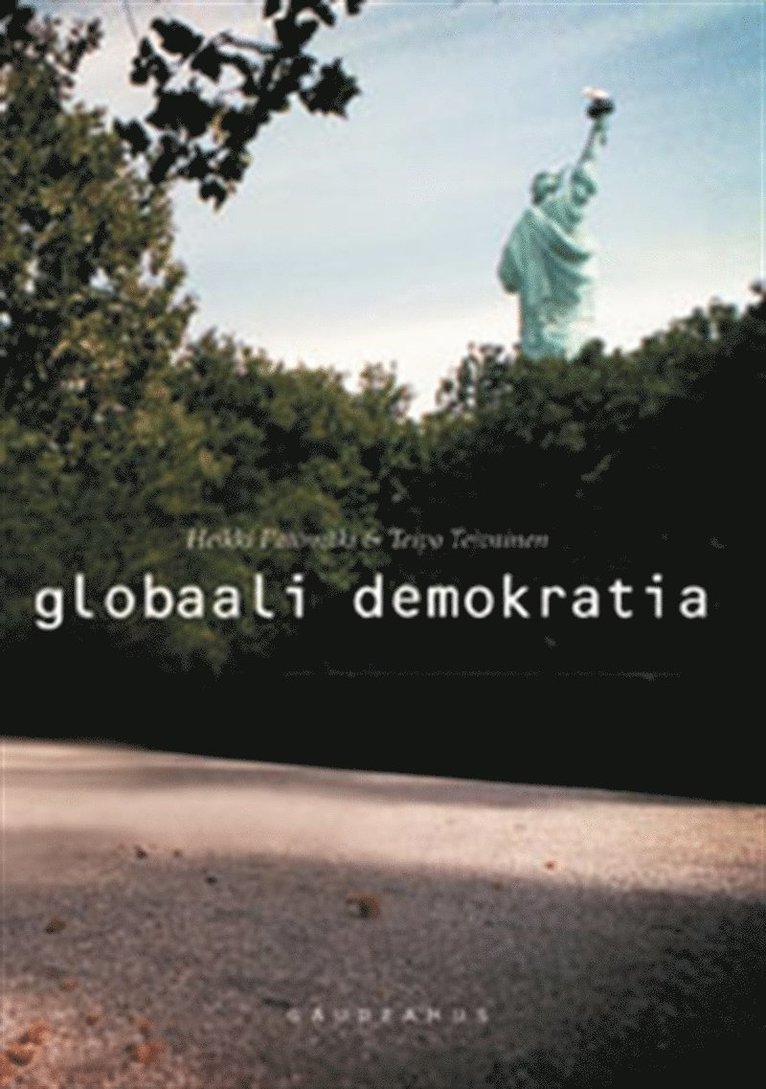
Globaali demokratia tarjoaa analyyttisen katsauksen globaalin hallinnan ongelmiin ja muutosmahdollisuuksiin. Aluksi keskitytään nykyjärjestelmiin, joista tärkeimmät ovat YK, monikansalliset rahoituslaitokset, Maailman kauppajärjestö ja kansainväliset tuomioistuimet. Edelleen teoksessa punnitaan mahdollisuuksia luoda uusia instituutioita. Siinä tutkitaan ehdotuksia maailmanlaajuisesta totuuskomissiosta, maailmanparlamentista, globaalin kansalaisyhteiskunnan vahvistamisesta, velkasovittelumekanismista ja globaaleista vero-organisaatioista. Teoksessa tehdään tekee myös ehdotus siitä, miten globaalia demokratiaa voitaisiin toteuttaa. Globaali demokratia tarjoaa tarpeellista tietoa aikaansa seuraaville. Se soveltuu myös aineistoksi demokratisaatiota, globalisaatiota tai kansainvälisiä organisaatioita käsitteleviin opintoihin.