Heiko Borchert - Böcker
Visar alla böcker från författaren Heiko Borchert. Handla med fri frakt och snabb leverans.
3 produkter
3 produkter
536 kr
Skickas inom 7-10 vardagar
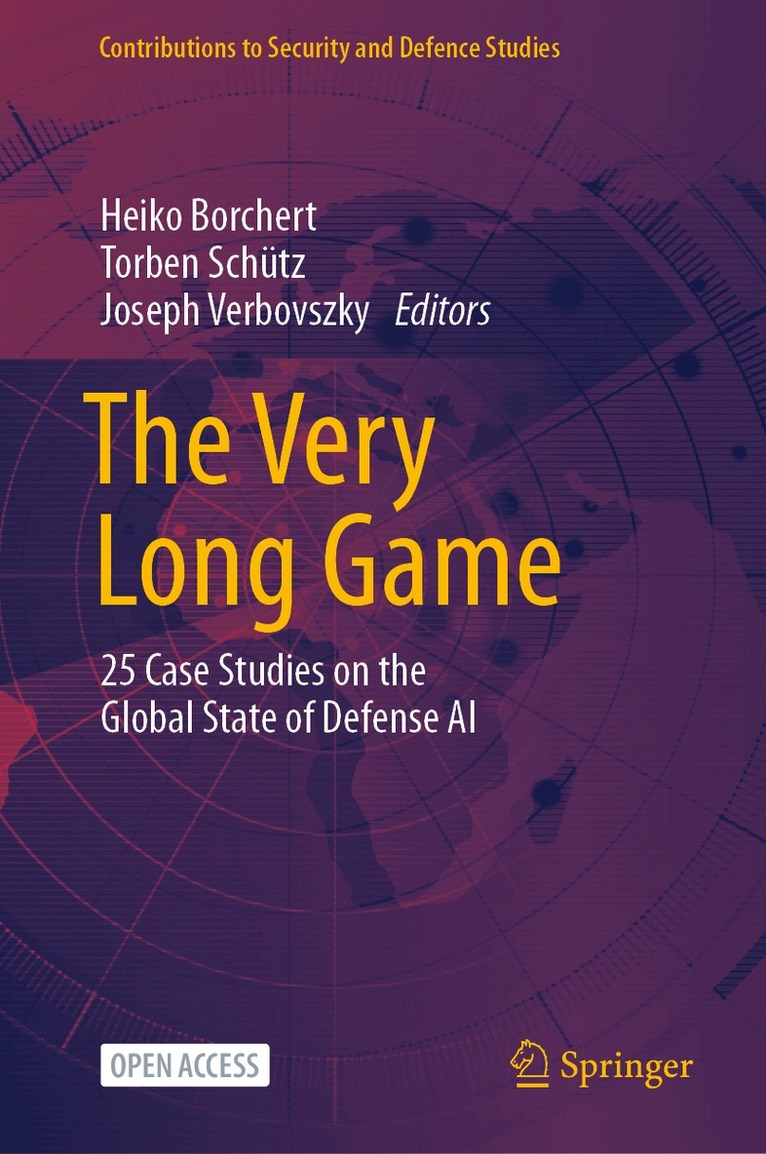
This open access book is the outcome of a unique multinational effort organized by the Hamburg-based Defense AI Observatory (DAIO) to portray the current state of affairs regarding the use of artificial intelligence (AI) by armed forces around the world.
430 kr
Skickas inom 10-15 vardagar
This open access book is the outcome of a unique multinational effort organized by the Hamburg-based Defense AI Observatory (DAIO) to portray the current state of affairs regarding the use of artificial intelligence (AI) by armed forces around the world. The contributions span a diverse range of geostrategic contexts by providing in-depth case studies on Australia, Canada, China, Denmark, Estonia, Finland, France, Germany, Greece, India, Iran, Israel, Italy, Japan, the Netherlands, Russia, Singapore, South Korea, Spain, Sweden, Taiwan, Turkey, Ukraine, the UK, and the United States. The book does not speculate about the future implications of AI on armed forces, but rather discusses how armed forces are currently exploring the potential of this emerging technology. By adopting a uniform analytical framework, each case study discusses how armed forces view defense AI; how they are developing AI-enhanced solutions, adapting existing structures and processes, and funding their defense AI endeavors; to what extent defense AI is already fielded and operated; and how soldiers and officers are being trained to work with AI.
353 kr
Skickas inom 10-15 vardagar
Das anspruchsvolle und wegweisende Konzept der Vernetzten Sicherheit befindet sich seit dem Tag seiner Vorstellung im Jahr 2006 in schwerem Fahrwasser. Das ZFAS-Sonderheft zieht eine Zwischenbilanz des bisher Erreichten, benennt klar die erzielten Erfolge sowie die bestehenden Schwächen und unterbreitet konkrete Vorschläge zur Weiterentwicklung des Konzepts. Dabei stellen die Autoren die Vernetzte Sicherheit in den größeren Zusammenhang der außen- und sicherheitspolitischen Strategiefähigkeit und betonen die engen Wechselwirkungen im „goldenen Dreieck“ zwischen strategischen Leitlinien, vorhandenen Sicherheitsinstitutionen und sicherheitspolitischer Kultur.