Heiner Deubel – författare
Visar alla böcker från författaren Heiner Deubel. Handla med fri frakt och snabb leverans.
5 produkter
5 produkter
E-bok
PDF, Engelska, 20031 855 kr
Läs direkt efter köp
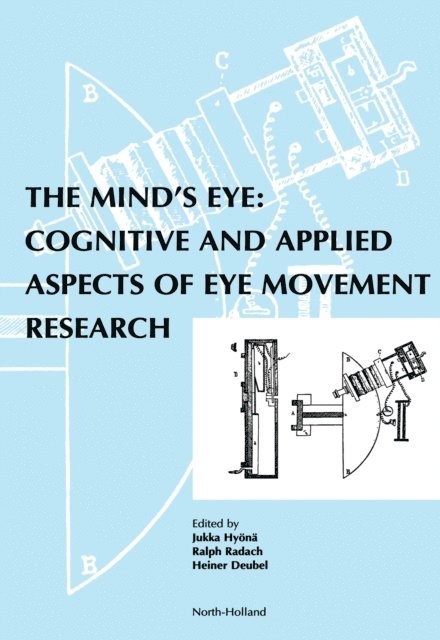
The book provides a comprehensive state-of-the-art overview of current research on cognitive and applied aspects of eye movements. The contents include peer-reviewed chapters based on a selection of papers presented at the 11th European Conference on Eye Movements (Turku, Finland 2001), supplemented by invited contributions. The ECEM conference series brings together researchers from various disciplines with an interest to use eye-tracking to study perceptual and higher order cognitive functions. The contents of the book faithfully reflect the scope and diversity of interest in eye-tracking as a fruitful tool both in basic and applied research. It consists of five sections: visual information processing and saccadic eye movements; empirical studies of reading and language production; computational models of eye movements in reading; eye-tracking as a tool to study human-computer interaction; and eye movement applications in media and communication research. Each section is concluded by a commentary chapter by one of the leading authorities in the field. These commentaries discuss and integrate the contributions in the section and provide an expert view on the most significant present and future developments in the respective areas. The book is a reference volume including a large body of new empirical work but also principal theoretical viewpoints of leading research groups in the field.
Inbunden, Engelska, 1999
2 216 kr
Skickas inom 10-15 vardagar
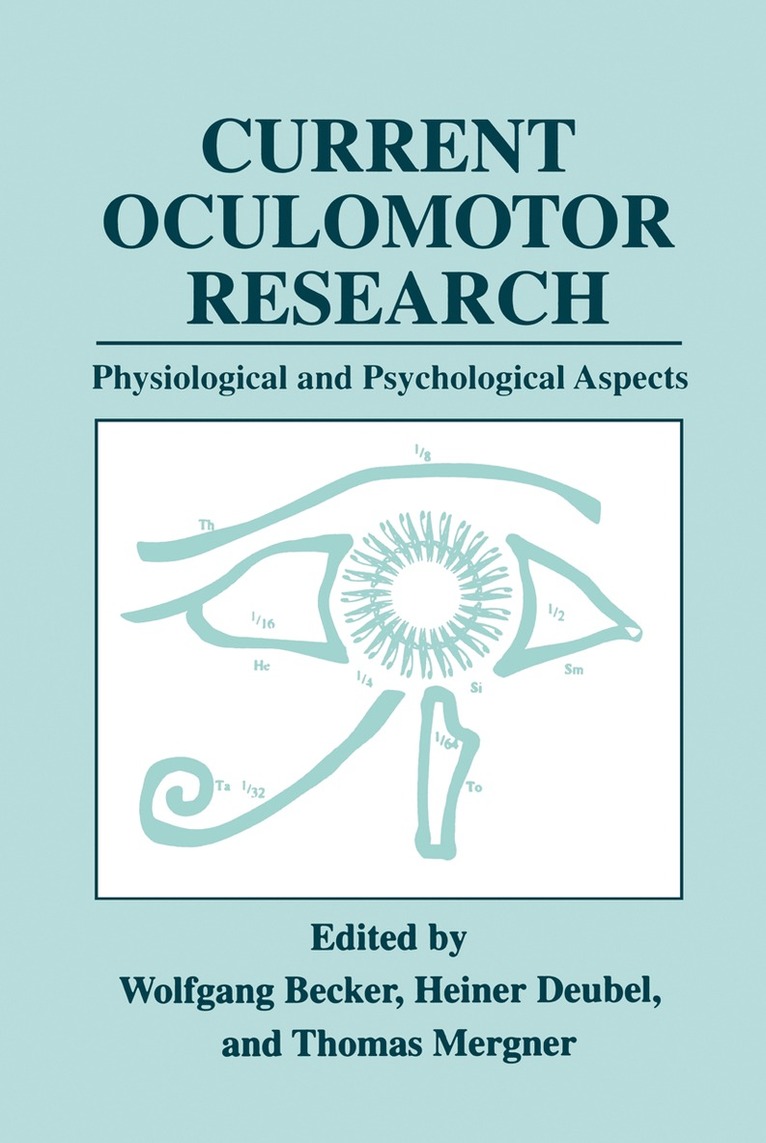
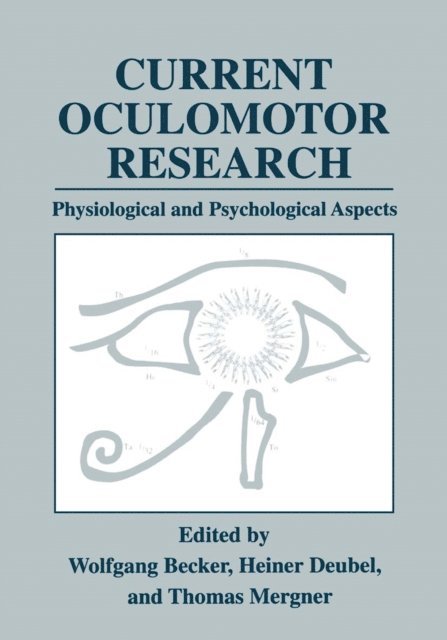
This volume contains the proceedings of the Ninth European Conference on Eye Movements (ECEM 9), held in Ulm, Germany, on September 23-26, 1997. ECEM 9 con tinued a series of conferences initiated by Rudolf Groner of Bern, Switzerland, in 1981 which, from its very beginning, has brought together scientists from very diverse fields with a common interest in eye movements. About 40 of the papers presented at ECEM 9 have been selected for presentation in full length while others are rendered in condensed form. There is a broad spectrum of motives why people have become involved in, and fas cinated by, eye movement research. Neuroscientists have been allured by the prospect of understanding anatomical findings, single unit recordings, and the sequels of experimental lesions in terms of the clearly defined system requirements and the well documented be havioural repertoire of the oculomotor system. Others have been attracted by the richness of this repertoire and its dependence on an intricate hierarchy of factors spanning from "simple" reflexes to visual pattern recognition and spatio-temporal prediction. Neurolo gists, neuro-ophthalmologists and neuro-otologists have long standing experience with eye movements as sensitive indicators of lesions in the brain stem, the midbrain, and the cere bellum. By studying oculomotor malfunctions they have made, and are continuing to make, important contributions to our understanding of oculomotor functions.
Inbunden, Engelska, 2003
2 138 kr
Skickas inom 5-8 vardagar
The book provides a comprehensive state-of-the-art overview of current research on cognitive and applied aspects of eye movements. The contents include peer-reviewed chapters based on a selection of papers presented at the 11th European Conference on Eye Movements (Turku, Finland 2001), supplemented by invited contributions. The ECEM conference series brings together researchers from various disciplines with an interest to use eye-tracking to study perceptual and higher order cognitive functions. The contents of the book faithfully reflect the scope and diversity of interest in eye-tracking as a fruitful tool both in basic and applied research. It consists of five sections: visual information processing and saccadic eye movements; empirical studies of reading and language production; computational models of eye movements in reading; eye-tracking as a tool to study human-computer interaction; and eye movement applications in media and communication research. Each section is concluded by a commentary chapter by one of the leading authorities in the field. These commentaries discuss and integrate the contributions in the section and provide an expert view on the most significant present and future developments in the respective areas. The book is a reference volume including a large body of new empirical work but also principal theoretical viewpoints of leading research groups in the field.
Häftad, Engelska, 2010
2 222 kr
Skickas inom 10-15 vardagar
This volume contains the proceedings of the Ninth European Conference on Eye Movements (ECEM 9), held in Ulm, Germany, on September 23-26, 1997. ECEM 9 con tinued a series of conferences initiated by Rudolf Groner of Bern, Switzerland, in 1981 which, from its very beginning, has brought together scientists from very diverse fields with a common interest in eye movements. About 40 of the papers presented at ECEM 9 have been selected for presentation in full length while others are rendered in condensed form. There is a broad spectrum of motives why people have become involved in, and fas cinated by, eye movement research. Neuroscientists have been allured by the prospect of understanding anatomical findings, single unit recordings, and the sequels of experimental lesions in terms of the clearly defined system requirements and the well documented be havioural repertoire of the oculomotor system. Others have been attracted by the richness of this repertoire and its dependence on an intricate hierarchy of factors spanning from "simple" reflexes to visual pattern recognition and spatio-temporal prediction. Neurolo gists, neuro-ophthalmologists and neuro-otologists have long standing experience with eye movements as sensitive indicators of lesions in the brain stem, the midbrain, and the cere bellum. By studying oculomotor malfunctions they have made, and are continuing to make, important contributions to our understanding of oculomotor functions.
E-bok
PDF, Engelska, 20132 925 kr
Läs direkt efter köp
This volume contains the proceedings of the Ninth European Conference on Eye Movements (ECEM 9), held in Ulm, Germany, on September 23-26, 1997. ECEM 9 con tinued a series of conferences initiated by Rudolf Groner of Bern, Switzerland, in 1981 which, from its very beginning, has brought together scientists from very diverse fields with a common interest in eye movements. About 40 of the papers presented at ECEM 9 have been selected for presentation in full length while others are rendered in condensed form. There is a broad spectrum of motives why people have become involved in, and fas cinated by, eye movement research. Neuroscientists have been allured by the prospect of understanding anatomical findings, single unit recordings, and the sequels of experimental lesions in terms of the clearly defined system requirements and the well documented be havioural repertoire of the oculomotor system. Others have been attracted by the richness of this repertoire and its dependence on an intricate hierarchy of factors spanning from "simple" reflexes to visual pattern recognition and spatio-temporal prediction. Neurolo gists, neuro-ophthalmologists and neuro-otologists have long standing experience with eye movements as sensitive indicators of lesions in the brain stem, the midbrain, and the cere bellum. By studying oculomotor malfunctions they have made, and are continuing to make, important contributions to our understanding of oculomotor functions.