Heinrich. Fries – författare
Visar alla böcker från författaren Heinrich. Fries. Handla med fri frakt och snabb leverans.
3 produkter
3 produkter
Häftad, Engelska, 1996
380 kr
Skickas inom 10-15 vardagar
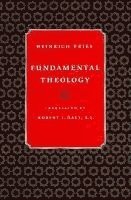
Praise for the German edition:""A master listener, a master arguer, a master of ecumenical sensitivity, [Fries] is concerned to hand on an existential and reflected experience of the faith, and to make it comprehensible to other men and women as an answer to their questions about the meaning and direction of life . . . thus Fundamental Theology is not just a textbook, but also a book of faith."" --Herder Korrespondenz -------------------------------------------------------------------------------- Fundamental theology--with its traditional divisions of faith, revelation, and Church--studies the basic anthropological, philosophical, biblical, and historical foundations of theology. It is the place where theology's religious, intellectual, and cultural presuppositions are mapped out and where individuals can gain an understanding of what is at stake as Catholic theology moves toward its future. Unfortunately, however, theology is seldom taught today in this carefully structured way. Many students and readers of theology have little access to the philosophy and theology of the modern neoscholastic revival that made possible the achievements of the Second Vatican Council and its current reforms. Addressing this need, renowned theologian Heinrich Fries offers what is both a traditionally structured treatment of the basic issues of fundamental theology as they have been modified by Vatican II, and a study of the major ethical, religious, and cultural issues of the late twentieth century. In discussing the many influences at work in Catholic theology, Fries provides the background needed for understanding a bewildering variety of developments and movements, such as neothomism; transcendental thomism; Church reform under Vatican II and liturgical reform; liberation and political theology, and their sibling movements of feminist, womanist, and mujerista theology; inculturation and Christianity's shift from a Eurocentric to a World Church; ecumenism and interreligious dialogue; the tensions between traditionalists and progressives; and, finally, Catholicism's rapproachment with modernity and the challenges of postmodernism. Fries is uniquely qualified to write a fundamental theology. He personally contributed to the great achievements of the Second Vatican Council and since that time has played a leading role in the contemporary development of the theology of revelation and ecumenism.Fundamental Theology was originally published in German in 1985. Now available for the first time in English, it will be an important reference for all theological students and an interesting historical study on Catholic theology for general readers. Born in Germany in 1911, Heinrich Fries was professor at Tubingen and Munich. He resides in Germany and continues to work as a writer and speaker.
Häftad, Engelska, 2008
271 kr
Skickas inom 3-6 vardagar
E-bok
Spanska, 2011108 kr
Läs direkt efter köp
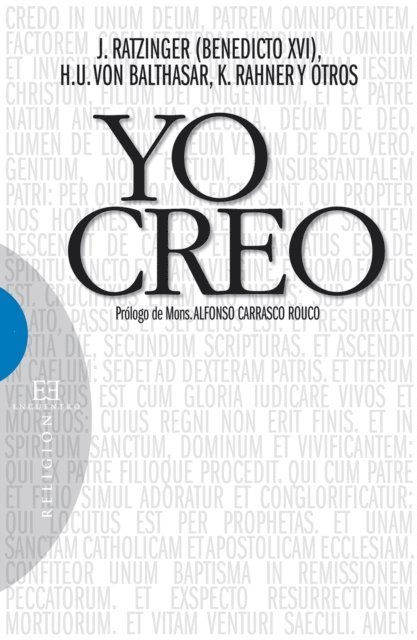
En los tiempos convulsos del Postconcilio una radio alemana invitó a catorce teólogos para comentar los artículos del Credo, destacando más allá de las modas teológicas el elemento permanente del patrimonio de la fe, radicando tales afirmaciones en los acontecimientos que narran los Evangelios y subrayando su significado para el individuo y para la comunidad. Muchos de aquellos hombres son hoy considerados los mayores teólogos del siglo XX, y algunos de ellos (destacadamente Joseph Ratzinger, actual Benedicto XVI) han sido llamados a servir a la Iglesia universal. Aquellas intervenciones han dado lugar a un libro de plena vigencia para comprender nuestra fe, escrito con espíritu divulgativo por los mayores especialistas. "No sólo siguen siendo válidos los motivos que llevaron a la preparación de este libro, sino que resultan cada vez más actuales. Sigue siendo urgente expresar en lenguaje actualizado y hacer accesible a todos el contenido de la fe cristiana, y más en una época en que crece rápidamente su desconocimiento y en que múltiples presentaciones, apoyadas en la fuerza de grandes medios de comunicación, distorsionan la imagen de Cristo y de la Iglesia a los ojos del gran público. Y, por otra parte, se hace necesario hoy día justificar incluso el acto del hombre creyente, la rotunda afirmación de la propia persona y de las propias convicciones profundas implicada en las breves palabras ''yo creo''" (del prólogo de Mons. Alfonso Carrasco)