Heinrich Niemann – författare
Visar alla böcker från författaren Heinrich Niemann. Handla med fri frakt och snabb leverans.
8 produkter
8 produkter
Inbunden, Engelska, 1997
1 653 kr
Skickas inom 10-15 vardagar
An assembly scene There seems to be a small open place between the group of houses in the foreground and the store in the background". First of all, it can be stated that the image does not show an everyday scene. The image shows a snapshot of an assembly line.
Inbunden, Engelska, 2000
1 619 kr
Skickas inom 10-15 vardagar
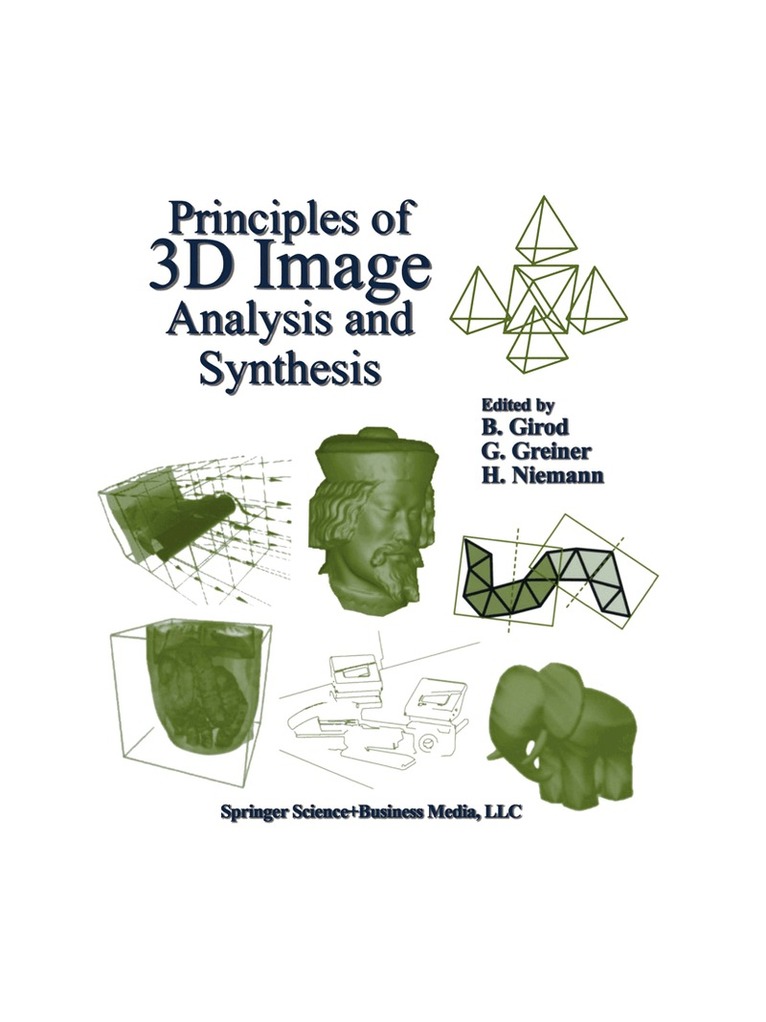
Traditionally, three-dimensional image analysis ( computer vision) and three-dimensional image synthesis (computer graphics) were separate fields. Rarely were experts working in one area interested in and aware of the advances in the other. Since the 1990s, this has changed dramatically, reflecting the growing maturity of each of these areas. The vision and graphics communities are today engaged in a mutually beneficial exchange, learning from each other and coming up with new ideas and techniques that build on the state of the art in both fields. This book is the result of a collaboration between scientists at the University of Nurnberg, Germany, who, coming from diverse fields, are working together propelled by the vision of a unified area of three-dimensional image analysis and synthesis. Principles of 3D Image Analysis and Synthesis starts out at the image acquisition end of a hypothetical processing chain, proceeds with analysis, recognition and interpretation of images, towards the representation of scenes by 3D geometry, then back to images via rendering and visualization techniques.Coverage includes discussion of range cameras, multiview image processing, the structure-from-motion problem, object recognition, knowledge-based image analysis, active vision, geometric modeling with meshes and splines, and reverse engineering. Also included is cutting-edge coverage of texturing techniques, global illumination, image-based rendering, volume visualization, flow visualization techniques, and acoustical imaging including object localization from audio and video. This volume should be useful for scientists, engineers, graduate students and educators working in image processing, vision, computer graphics or visualization.
Häftad, Engelska, 2010
1 667 kr
Skickas inom 10-15 vardagar
Traditionally, three-dimensional image analysis (a.k.a. computer vision) and three-dimensional image synthesis (a.k.a. computer graphics) were separate fields. Rarely were experts working in one area interested in and aware of the advances in the other. Over the last decade this has changed dramatically, reflecting the growing maturity of each of these areas. The vision and graphics communities are today engaged in a mutually beneficial exchange, learning from each other and coming up with new ideas and techniques that build on the state of the art in both fields. This book is the result of a fruitful collaboration between scientists at the University of Nurnberg, Germany, who, coming from diverse fields, are working together propelled by the vision of a unified area of three-dimensional image analysis and synthesis. Principles of 3D Image Analysis and Synthesis starts out at the image acquisition end of a hypothetical processing chain, proceeds with analysis, recognition and interpretation of images, towards the representation of scenes by 3D geometry, then back to images via rendering and visualization techniques.Coverage includes discussion of range cameras, multiview image processing, the structure-from-motion problem, object recognition, knowledge-based image analysis, active vision, geometric modeling with meshes and splines, and reverse engineering. Also included is cutting-edge coverage of texturing techniques, global illumination, image-based rendering, volume visualization, flow visualization techniques, and acoustical imaging including object localization from audio and video. This state-of-the-art volume is a concise and readable reference for scientists, engineers, graduate students and educators working in image processing, vision, computer graphics, or visualization.
E-bok
PDF, Engelska, 20131 977 kr
Läs direkt efter köp
Traditionally, say 15 years ago, three-dimensional image analysis (aka computer vi sion) and three-dimensional image synthesis (aka computer graphics) were separate fields. Rarely were expert
E-bok
PDF, Engelska, 20132 036 kr
Läs direkt efter köp
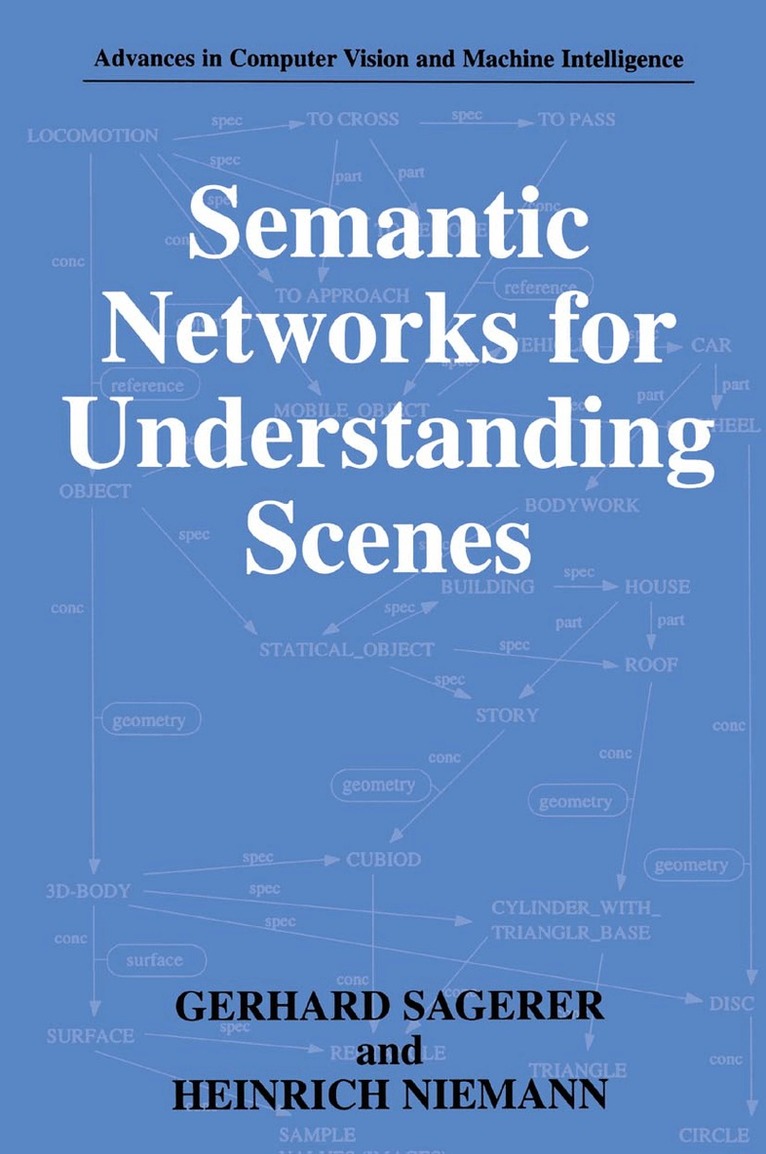
Figure 1.1. An outdoor scene "A bus is passing three cars which are parking between trees at the side of the road. Houses having two storeys are lined up at the street. 3 4 Introduction Figure 1.2. An assembly scene There seems to be a small open place between the group of houses in the foreground and the store in the background". In such or a similar way the content of the natural scene shown above can be described. It is quite easy to give such a short description. The problem is somewhat more complex for the second image. First of all, it can be stated that the image does not show an everyday scene. It appears as a kind of man made surrounding. But everyone can accept the following statements about this image: 1. The image shows a snapshot of an assembly line. 2. The robot in front is screwing. 3. There is no person in the working area of the robots. 4. All objects on the conveyor belt are worked on by robots. There are no free objects on the belt.
Häftad, Engelska, 2013
1 667 kr
Skickas inom 10-15 vardagar
An assembly scene There seems to be a small open place between the group of houses in the foreground and the store in the background". First of all, it can be stated that the image does not show an everyday scene. The image shows a snapshot of an assembly line.
Del 4 - Springer Series in Information Sciences
Pattern Analysis and Understanding
Häftad, Engelska, 1990
561 kr
Skickas inom 10-15 vardagar
This text treats the problem of pattern analysis, that is, the automatic interpretation of sensor signals, in particular images, image sequences, and continuous speech. The emphasis of the book is on an integrated view covering the initial preprocessing and segmentation, the classification of individual objects, the representation of relevant data, the automatic determination of control strategy, and knowledge-based understanding of the input with respect to an internal model of the task domain. The view is based on the idea that pattern analysis proceeds from the sensor data via different levels of abstraction to the desired final representation. In this second edition, every chapter has been revised and partly rewritten. Material has been added to the chapters on segmentation, classification, and knowledge, and the chapters on preprocessing and control have been updated. The book is meant as an introductory text for the researcher and student specializing in this field.
E-bok
PDF, Engelska, 2013687 kr
Läs direkt efter köp
In this second edition every chapter of the first edition of Pattern Analysis has been updated and expanded. The general view of a system for pattern analysis and understanding has remained unchanged, but many details have been revised. A short account of light and sound has been added to the introduction, some normalization techniques and a basic introduction to morphological operations have been added to the second chapter. Chapter 3 has been expanded significantly by topics like motion, depth, and shape from shading; additional material has also been added to the already existing sections of this chapter. The old sections of Chap. 4 have been reorganized, a general view of the classification problem has been added and material provided to incorporate techniques of word and object recognition and to give a short account of some types of neural nets. Almost no changes have been made in Chap. 5. The part on representation of control structures in Chap. 6 has been shortened, a section on the judgement of results has been added. Chapter 7 has been rewritten almost completely; the section on formal grammars has been reduced, the sections on production systems, semantic networks, and knowledge acquisition have been expanded, and sections on logic and explanation added. The old Chaps. 8 and 9 have been omitted. In summary, the new edition is a thorough revision and extensive update of the first one taking into account the progress in the field during recent years.