Hèla Yousfi – författare
Visar alla böcker från författaren Hèla Yousfi. Handla med fri frakt och snabb leverans.
6 produkter
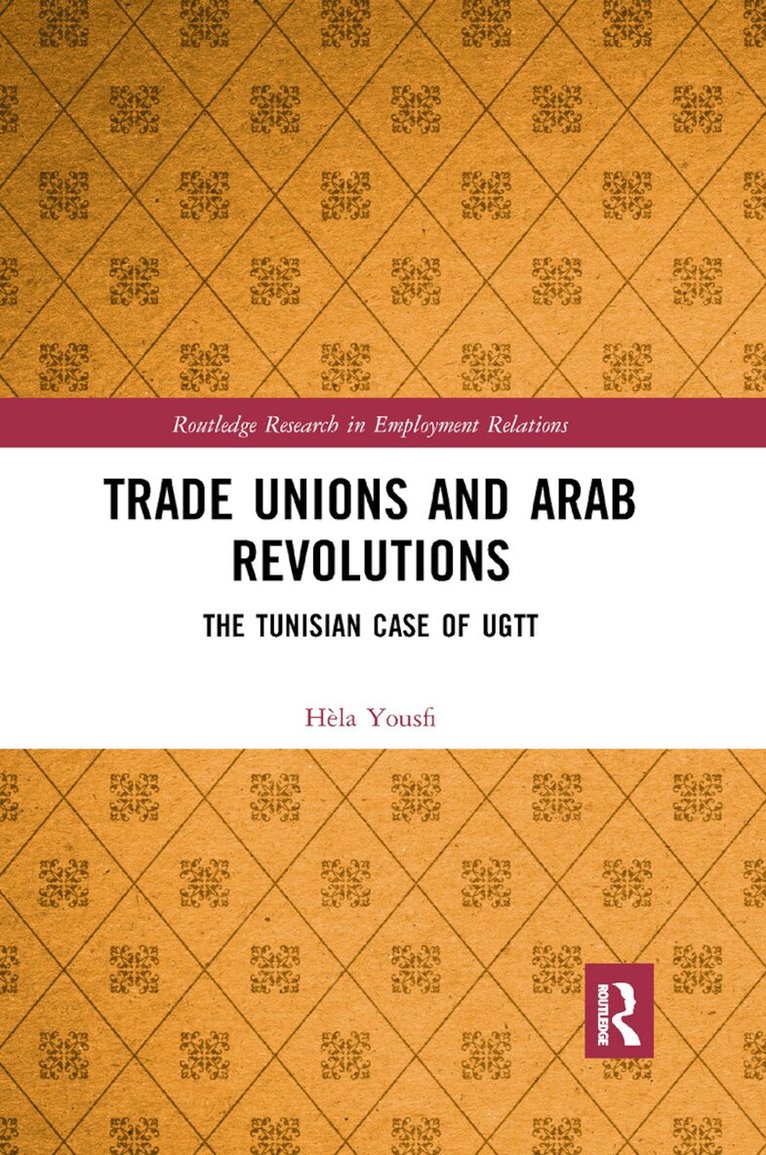
Trade Unions and Arab Revolutions
The Tunisian Case of UGTT
Av Hèla Yousfi
Häftad, 2019
710 kr
Lägg i varukorg
This book traces the role of the UGTT (the Tunisian General Labour Union) during Tunisia’s 2011 revolution and the transition period that ensued – Tunisia being the Arab country where trade unionism was the strongest and most influential in shaping the outcomes of the uprising. The UGTT; From its …
Trade Unions and Arab Revolutions
The Tunisian Case of UGTT
Av Hèla Yousfi
Inbunden, 2017
2594 kr
Lägg i varukorg
This book traces the role of the UGTT (the Tunisian General Labour Union) during Tunisia’s 2011 revolution and the transition period that ensued – Tunisia being the Arab country where trade unionism was the strongest and most influential in shaping the outcomes of the uprising. The UGTT; From its …
Trade Unions and Arab Revolutions
The Tunisian Case of UGTT
Av Hela Yousfi
E-bok, 2017
814 kr
Lägg i varukorg
This book traces the role of the UGTT (the Tunisian General Labour Union) during Tunisia’s 2011 revolution and the transition period that ensued – Tunisia being the Arab country where trade unionism was the strongest and most influential in shaping the outcomes of the uprising. The UGTT; From …
Trade Unions and Arab Revolutions
The Tunisian Case of UGTT
Av Hela Yousfi
E-bok, 2017
814 kr
Lägg i varukorg
This book traces the role of the UGTT (the Tunisian General Labour Union) during Tunisia’s 2011 revolution and the transition period that ensued – Tunisia being the Arab country where trade unionism was the strongest and most influential in shaping the outcomes of the uprising. The UGTT; From …
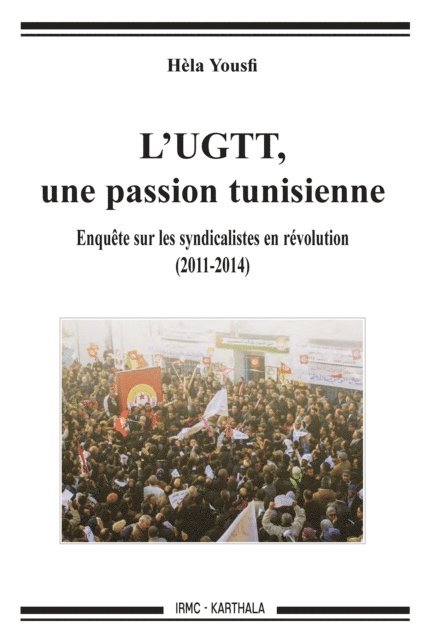
L'UGTT, une passion tunisienne
Enquête sur les syndicalistes en révolution (2011-2014)
Av Hela Yousfi
E-bok, 2015
393 kr
Lägg i varukorg
L’Union générale tunisienne du travail (UGTT) est la première force syndicale tunisienne et a longtemps aussi été la seule. Pierre angulaire du mouvement national du temps de la colonisation, l’UGTT a toujours joué un rôle cardinal dans la vie politique tunisienne. Poussée par le puissant …
Les dimensions oubliées de la gestion
Mélanges en l''honneur de Jean-François Chanlat
Av Gregor Bouville, Hela Yousfi
E-bok, 2022
403 kr
Lägg i varukorg
En 1990 paraissait l’ouvrage fondateur en sciences de gestion intitulé L’individu dans l’organisation : les dimensions oubliées et coordonné par Jean-François Chanlat, cet ouvrage mettait en lumière des dimensions de l’être humain qui ont été dans une large mesure mises de côté par les sciences de …