

Inbunden, Engelska, 2023
388 kr
Skickas inom 5-8 vardagar
388 kr
Skickas inom 5-8 vardagar

244 kr
Skickas inom 5-8 vardagar
1 537 kr
Skickas inom 10-15 vardagar
478 kr
Skickas inom 10-15 vardagar
1 030 kr
Läs direkt efter köp
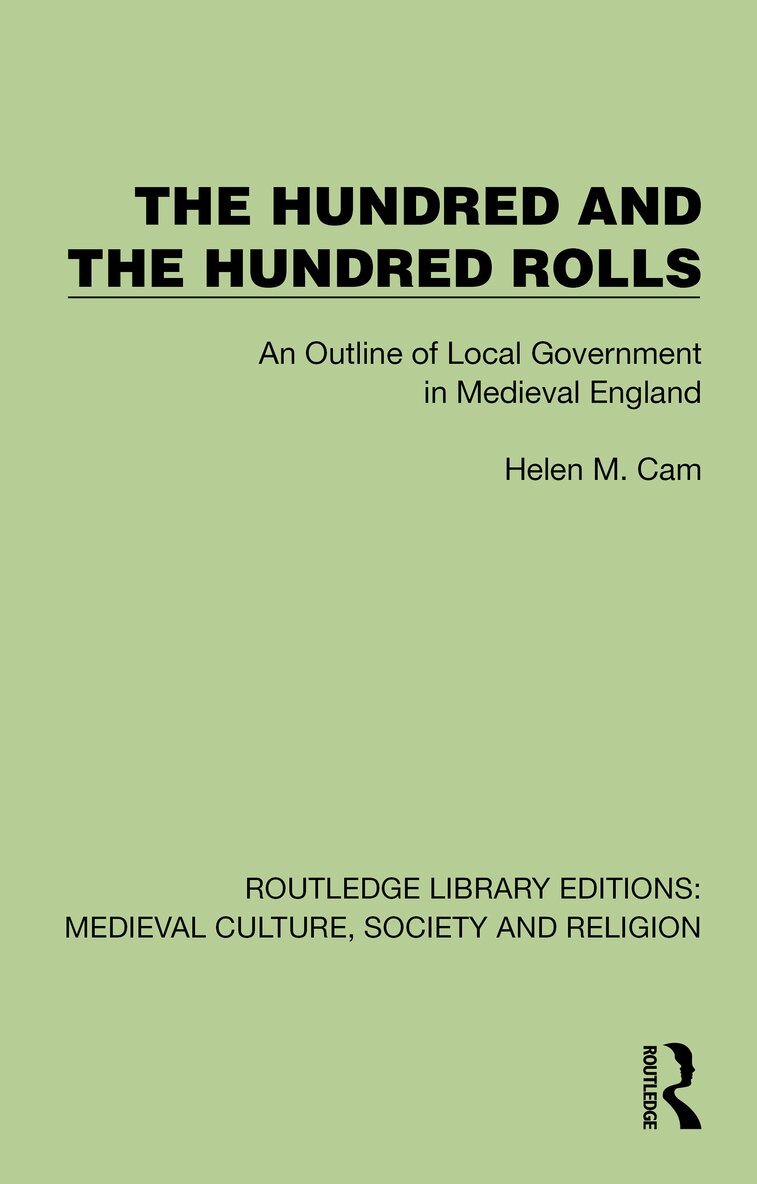
Originally published in 1930, this book outlines the system of local government at work in the reign of Edward I and provides a guide to the study of the 3 volumes of the Rotuli Hundredorum and Placita Quo Warranto which were printed early in the nineteenth century. The Hundreds were the districts of England into which every county was subdivided. They varied in size and shape but formed an indispensable part of the system of local government. For taxation, justice, police, law and military defence, the Hundred came into play. The Hundred Rolls were a complete statement as to the administration of the counties of England and the Hundred Rolls of 1274-75 are the starting point of this book. In interpreting them one can understand not only the England of Edward I, but the whole system of local government of the early Middle Ages in England.
1 030 kr
Läs direkt efter köp
Originally published in 1930, this book outlines the system of local government at work in the reign of Edward I and provides a guide to the study of the 3 volumes of the Rotuli Hundredorum and Placita Quo Warranto which were printed early in the nineteenth century. The Hundreds were the districts of England into which every county was subdivided. They varied in size and shape but formed an indispensable part of the system of local government. For taxation, justice, police, law and military defence, the Hundred came into play. The Hundred Rolls were a complete statement as to the administration of the counties of England and the Hundred Rolls of 1274-75 are the starting point of this book. In interpreting them one can understand not only the England of Edward I, but the whole system of local government of the early Middle Ages in England.

1 344 kr
Läs direkt efter köp
Originally published in 1950 and as a third edition in 1967, this volume traces the evolution of the English nation – the amalgamation of differing races and the unification of warring tribal princedoms into one monarchy under the stress of competition for power, the disciplinary influence of Christianity, the stimulus of foreign invasion, the compression of conquest, the centralisation of government, the standardisation of institutions, the interchange of trade, and the triumph of one common tongue in the rivalry of languages and dialects.

1 344 kr
Läs direkt efter köp
Originally published in 1950 and as a third edition in 1967, this volume traces the evolution of the English nation – the amalgamation of differing races and the unification of warring tribal princedoms into one monarchy under the stress of competition for power, the disciplinary influence of Christianity, the stimulus of foreign invasion, the compression of conquest, the centralisation of government, the standardisation of institutions, the interchange of trade, and the triumph of one common tongue in the rivalry of languages and dialects.
1 243 kr
Skickas inom 10-15 vardagar

478 kr
Skickas inom 10-15 vardagar
388 kr
Skickas inom 5-8 vardagar
244 kr
Skickas inom 5-8 vardagar
1 537 kr
Skickas inom 10-15 vardagar
478 kr
Skickas inom 10-15 vardagar
1 030 kr
Läs direkt efter köp
Originally published in 1930, this book outlines the system of local government at work in the reign of Edward I and provides a guide to the study of the 3 volumes of the Rotuli Hundredorum and Placita Quo Warranto which were printed early in the nineteenth century. The Hundreds were the districts of England into which every county was subdivided. They varied in size and shape but formed an indispensable part of the system of local government. For taxation, justice, police, law and military defence, the Hundred came into play. The Hundred Rolls were a complete statement as to the administration of the counties of England and the Hundred Rolls of 1274-75 are the starting point of this book. In interpreting them one can understand not only the England of Edward I, but the whole system of local government of the early Middle Ages in England.
1 030 kr
Läs direkt efter köp
Originally published in 1930, this book outlines the system of local government at work in the reign of Edward I and provides a guide to the study of the 3 volumes of the Rotuli Hundredorum and Placita Quo Warranto which were printed early in the nineteenth century. The Hundreds were the districts of England into which every county was subdivided. They varied in size and shape but formed an indispensable part of the system of local government. For taxation, justice, police, law and military defence, the Hundred came into play. The Hundred Rolls were a complete statement as to the administration of the counties of England and the Hundred Rolls of 1274-75 are the starting point of this book. In interpreting them one can understand not only the England of Edward I, but the whole system of local government of the early Middle Ages in England.
1 344 kr
Läs direkt efter köp
Originally published in 1950 and as a third edition in 1967, this volume traces the evolution of the English nation – the amalgamation of differing races and the unification of warring tribal princedoms into one monarchy under the stress of competition for power, the disciplinary influence of Christianity, the stimulus of foreign invasion, the compression of conquest, the centralisation of government, the standardisation of institutions, the interchange of trade, and the triumph of one common tongue in the rivalry of languages and dialects.
1 344 kr
Läs direkt efter köp
Originally published in 1950 and as a third edition in 1967, this volume traces the evolution of the English nation – the amalgamation of differing races and the unification of warring tribal princedoms into one monarchy under the stress of competition for power, the disciplinary influence of Christianity, the stimulus of foreign invasion, the compression of conquest, the centralisation of government, the standardisation of institutions, the interchange of trade, and the triumph of one common tongue in the rivalry of languages and dialects.
1 243 kr
Skickas inom 10-15 vardagar
478 kr
Skickas inom 10-15 vardagar