Helen Kitchen - Böcker
Visar alla böcker från författaren Helen Kitchen. Handla med fri frakt och snabb leverans.
6 produkter
6 produkter
368 kr
Skickas inom 10-15 vardagar
368 kr
Skickas inom 10-15 vardagar
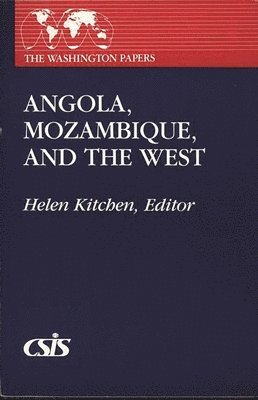
Helen Kitchen has drawn on the expertise of a trio of respected U.S., British, and West German analysts to assist in what she does best--explaining the diversity and complexity of African political dynamics. As this book ably demonstrates, U.S. policy choices will go awry if they are made on the assumption that Africa is a collection of immutably labeled ideological boxes. David D. Newsom, Director of the Institute for the Study of Diplomacy, Georgetown UniversityIn this latest of her contributions to the unsimplification of African politics and the U.S. policymaking process, Helen Kitchen brings together in this volume the observations of three of the West's most perceptive analysts of post-colonial Angola and Mozambique. Contributor John Marcum's discussion on Angola appraises the effects of A Quarter Century of War, the saga of Jonas Savimbi's UNITA, and U.S. policy options in the late 1980s. Gillian Gunn, with extensive recent field experience in both countries, assesses The Angola Economy, Cuba and Angola, Post-Nkomati Mozambique, and Mozambique After Machel. Finally Winrich Kuhne, a distinguished West German scholar of Africa and the Soviet policy process, considers What the Case of Mozambique Tells Us About Soviet Ambivalence in Africa.
324 kr
Skickas inom 10-15 vardagar
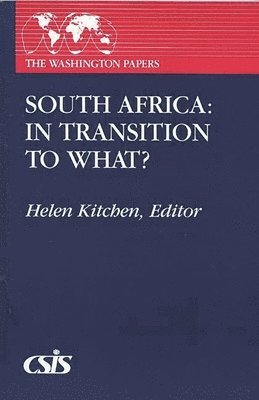
The contributors come from a range of backgrounds, but meet one imperative qualification: residence or repeated physical presence in South Africa. By bringing together this notable collection of authors, Kitchen impresses upon readers (especially Americans) that the South Africa that will emerge from today's strife will be determined primarily by internal factors. As this volume notes, recent evidence suggests that externally devised initiatives such as Eminent Persons interlocutors, constructive engagement, disinvestment, and economic sanctions can affect but not mandate how or whether South Africa's fractured society can find a way to avoid a lemmings scenario. Policy makers, policy analysts, and other actors both in the U.S. government and policy community concerned with what is going on inside South Africa today will find South Africa to be provocative reading.
901 kr
Skickas inom 10-15 vardagar
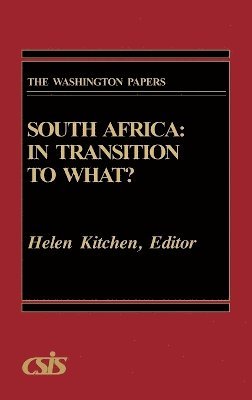
The contributors come from a range of backgrounds, but meet one imperative qualification: residence or repeated physical presence in South Africa. By bringing together this notable collection of authors, Kitchen impresses upon readers (especially Americans) that the South Africa that will emerge from today's strife will be determined primarily by internal factors. As this volume notes, recent evidence suggests that externally devised initiatives such as Eminent Persons interlocutors, constructive engagement, disinvestment, and economic sanctions can affect but not mandate how or whether South Africa's fractured society can find a way to avoid a lemmings scenario. Policy makers, policy analysts, and other actors both in the U.S. government and policy community concerned with what is going on inside South Africa today will find South Africa to be provocative reading.
1 009 kr
Skickas inom 10-15 vardagar
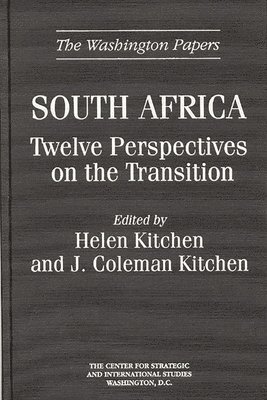
Following the format of the first volume South Africa: In Transition to What? (1988), each of the chapters in this new volume focuses on a segment of the jigsaw puzzle from which South Africa's future will be assembled and is datelined to emphasize how the situation, event, or issue being addressed appeared through a particular set of lenses at a particular time. This collection seeks to impress upon readers (especially Americans) that the shape of the post-apartheid South Africa now emerging is being determined primarily by internal factors. Eminent Persons interlocutors, distinguished advisory committees, economic and diplomatic sanctions, and other externally devised initiatives affected, but could not mandate how South Africa's long-fractured society would find its way. The contributors to this volume come from a range of geographical and professional bases, but share one important qualification: residence or repeated physical presence in South Africa.
474 kr
Skickas inom 10-15 vardagar
Following the format of the first volume South Africa: In Transition to What? (1988), each of the chapters in this new volume focuses on a segment of the jigsaw puzzle from which South Africa's future will be assembled and is datelined to emphasize how the situation, event, or issue being addressed appeared through a particular set of lenses at a particular time. This collection seeks to impress upon readers (especially Americans) that the shape of the post-apartheid South Africa now emerging is being determined primarily by internal factors. Eminent Persons interlocutors, distinguished advisory committees, economic and diplomatic sanctions, and other externally devised initiatives affected, but could not mandate how South Africa's long-fractured society would find its way. The contributors to this volume come from a range of geographical and professional bases, but share one important qualification: residence or repeated physical presence in South Africa.