Helena Marques – författare
Visar alla böcker från författaren Helena Marques. Handla med fri frakt och snabb leverans.
3 produkter
3 produkter
2 249 kr
Skickas inom 10-15 vardagar
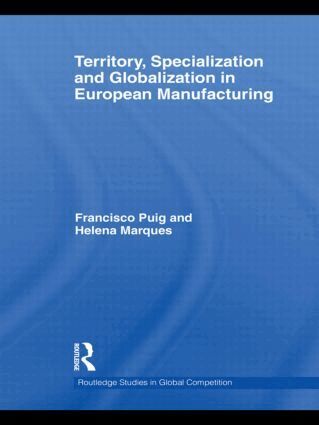
Although traditional manufacturing (textiles, clothing, footwear, furniture, etc) has been in decline in developed countries, it still represents an important part of European employment due to its labour-intensive character. Moreover, its geographical concentration particularly exposes certain regions of Europe to job loss as the industry declines. This book provides an explanation for the differences observed in the impact of globalization which is based on the influence of the territory and of the production specialization of the firms. The conclusions presented in the book are withdrawn from a detailed study of the Spanish textile-clothing sector.The book highlights the intensity of the relationship between the organizational model of the territory where the firms are located (high concentration of interrelated firms in a well-defined geographical area called "industrial district"), the specialization strategy implemented and the globalization of the economy. It also suggests the need to consider those factors as interdependent determinants of firm performance, particularly given the current trend for firms to simultaneously concentrate geographically and multilocalize domestically and internationally. The proposed methodology of analysis can be used to study other manufacturing sectors in other European countries.
727 kr
Skickas inom 10-15 vardagar
Although traditional manufacturing (textiles, clothing, footwear, furniture, etc) has been in decline in developed countries, it still represents an important part of European employment due to its labour-intensive character. Moreover, its geographical concentration particularly exposes certain regions of Europe to job loss as the industry declines. This book provides an explanation for the differences observed in the impact of globalization which is based on the influence of the territory and of the production specialization of the firms. The conclusions presented in the book are withdrawn from a detailed study of the Spanish textile-clothing sector.The book highlights the intensity of the relationship between the organizational model of the territory where the firms are located (high concentration of interrelated firms in a well-defined geographical area called "industrial district"), the specialization strategy implemented and the globalization of the economy. It also suggests the need to consider those factors as interdependent determinants of firm performance, particularly given the current trend for firms to simultaneously concentrate geographically and multilocalize domestically and internationally. The proposed methodology of analysis can be used to study other manufacturing sectors in other European countries.
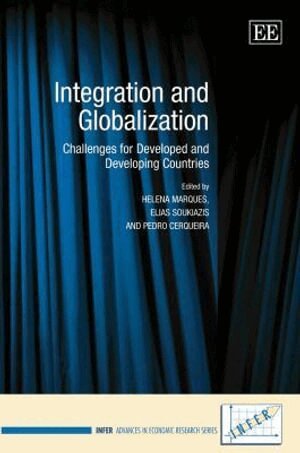
Integration and Globalization
Challenges for Developed and Developing Countries
Inbunden, Engelska, 2009
1 695 kr
Skickas inom 7-10 vardagar
The main challenges the European Single Market is facing in the 21st century result from the enlargement to Central and Eastern Europe, the EMU, and the globalization of trade and investment that has aided the rise of competitive emerging markets. This state-of-the-art book provides fresh theoretical and empirical evidence on the challenges presented by integration and globalization for both developed and developing countries. The authors demonstrate how the European Single Market remains a work in progress with many critical issues still to be addressed. These include the rigidities in product and labor markets, the need for innovation and quality upgrading, and the rapid catch-up of new member countries. They go on to show how firms use the opportunities provided by integration and globalization to fragment their production processes internationally, which brings gains but also requires structural adjustment. The book also argues that global environmental coordination may be less detrimental to the growth prospects of developing countries than is commonly believed. Illustrating a number of methodologies, this book will be a great resource tool for postgraduates and undergraduates in the fields of international economics and business, as well as researchers and policy-makers.