Hélène Neveu Kringelbach - Böcker
Visar alla böcker från författaren Hélène Neveu Kringelbach. Handla med fri frakt och snabb leverans.
4 produkter
4 produkter
Del 4 - Dance and Performance Studies
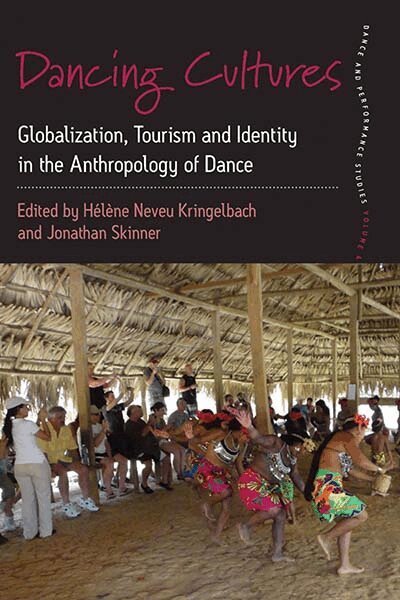
Dancing Cultures
Globalization, Tourism and Identity in the Anthropology of Dance
Inbunden, Engelska, 2012
2 014 kr
Skickas inom 3-6 vardagar
Dance is more than an aesthetic of life - dance embodies life. This is evident from the social history of jive, the marketing of trans-national ballet, ritual healing dances in Italy or folk dances performed for tourists in Mexico, Panama and Canada. Dance often captures those essential dimensions of social life that cannot be easily put into words. What are the flows and movements of dance carried by migrants and tourists? How is dance used to shape nationalist ideology? What are the connections between dance and ethnicity, gender, health, globalization and nationalism, capitalism and post-colonialism? Through innovative and wide-ranging case studies, the contributors explore the central role dance plays in culture as leisure commodity, cultural heritage, cultural aesthetic or cathartic social movement. Helene Neveu Kringelbach is an Oxford Diaspora Programme Researcher at the University of Oxford. Her current research interests include dance and musical theatre in West Africa and beyond, contemporary choreography in Africa and transnational families across Senegal and Europe.Jonathan Skinner is Senior Lecturer in Social Anthropology in the School of History and Anthropology, Queen's University Belfast. He is the author of Before the Volcano: Reverberations of Identity on Montserrat (Arawak Publications 2004) and co-editor of Great Expectations: Imagination and Anticipation in Tourism (Berghahn Books 2011).
Del 5 - Dance & Performance Studies
Dance Circles
Movement, Morality and Self-fashioning in Urban Senegal
Inbunden, Engelska, 2013
2 014 kr
Skickas inom 3-6 vardagar
Senegal has played a central role in contemporary dance due to its rich performing traditions, as well as strong state patronage of the arts, first under French colonialism and later in the postcolonial era. In the 1980s, when the Senegalese economy was in decline and state funding withdrawn, European agencies used the performing arts as a tool in cultural diplomacy. This had a profound impact on choreographic production and arts markets throughout Africa. In Senegal, choreographic performers have taken to contemporary dance, while continuing to engage with neo-traditional performance, regional genres like the sabar, and the popular dances they grew up with. A historically informed ethnography of creativity, agency, and the fashioning of selves through the different life stages in urban Senegal, this book explores the significance of this multiple engagement with dance in a context of economic uncertainty and rising concerns over morality in the public space.
Dancing Cultures
Globalization, Tourism and Identity in the Anthropology of Dance
Häftad, Engelska, 2014
583 kr
Skickas inom 3-6 vardagar
Dance is more than an aesthetic of life – dance embodies life. This is evident from the social history of jive, the marketing of trans-national ballet, ritual healing dances in Italy or folk dances performed for tourists in Mexico, Panama and Canada. Dance often captures those essential dimensions of social life that cannot be easily put into words. What are the flows and movements of dance carried by migrants and tourists? How is dance used to shape nationalist ideology? What are the connections between dance and ethnicity, gender, health, globalization and nationalism, capitalism and post-colonialism? Through innovative and wide-ranging case studies, the contributors explore the central role dance plays in culture as leisure commodity, cultural heritage, cultural aesthetic or cathartic social movement.
583 kr
Skickas inom 3-6 vardagar
Senegal has played a central role in contemporary dance due to its rich performing traditions, as well as strong state patronage of the arts, first under French colonialism and later in the postcolonial era. In the 1980s, when the Senegalese economy was in decline and state fundingwithdrawn, European agencies used the performing arts as a tool in diplomacy. This had a profound impact on choreographic production and arts markets throughout Africa. In Senegal, choreographic performers have taken to contemporary dance, while continuing to engage with neo-traditional performance, regional genres like the sabar, and the popular dances they grew up with. A historically informed ethnography of creativity, agency, and the fashioning of selves through the different life stages in urban Senegal, this book explores the significance of this multiple engagement with dance in a context of economic uncertainty and rising concerns over morality in the public space.