Helmut Kury - Böcker
Visar alla böcker från författaren Helmut Kury. Handla med fri frakt och snabb leverans.
8 produkter
8 produkter
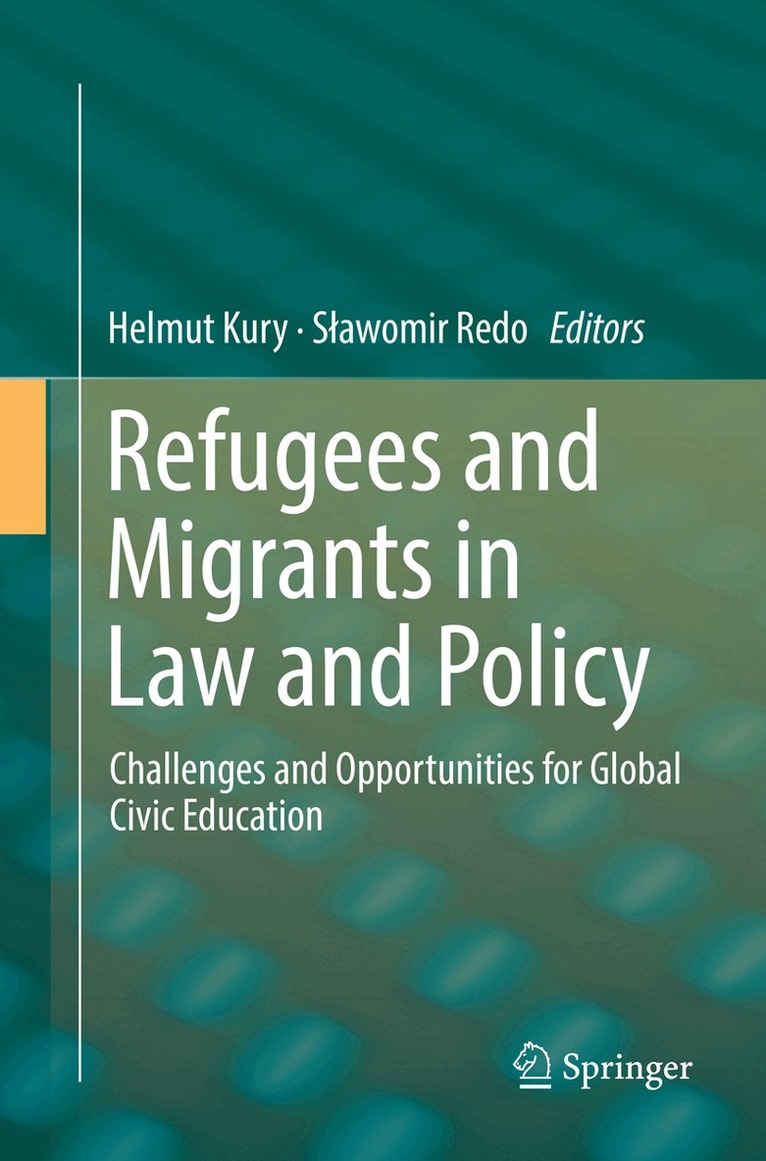
Refugees and Migrants in Law and Policy
Challenges and Opportunities for Global Civic Education
Häftad, Engelska, 2019
3 632 kr
Skickas inom 10-15 vardagar
Rather than a timeline for migration policies based on “now”, with states focusing on “stopping migration now”, “sending back migrants now” or “bringing in technicians or low-skilled migrant workers now”, there should be a long-term strategy for multicultural integration and economic assimilation.
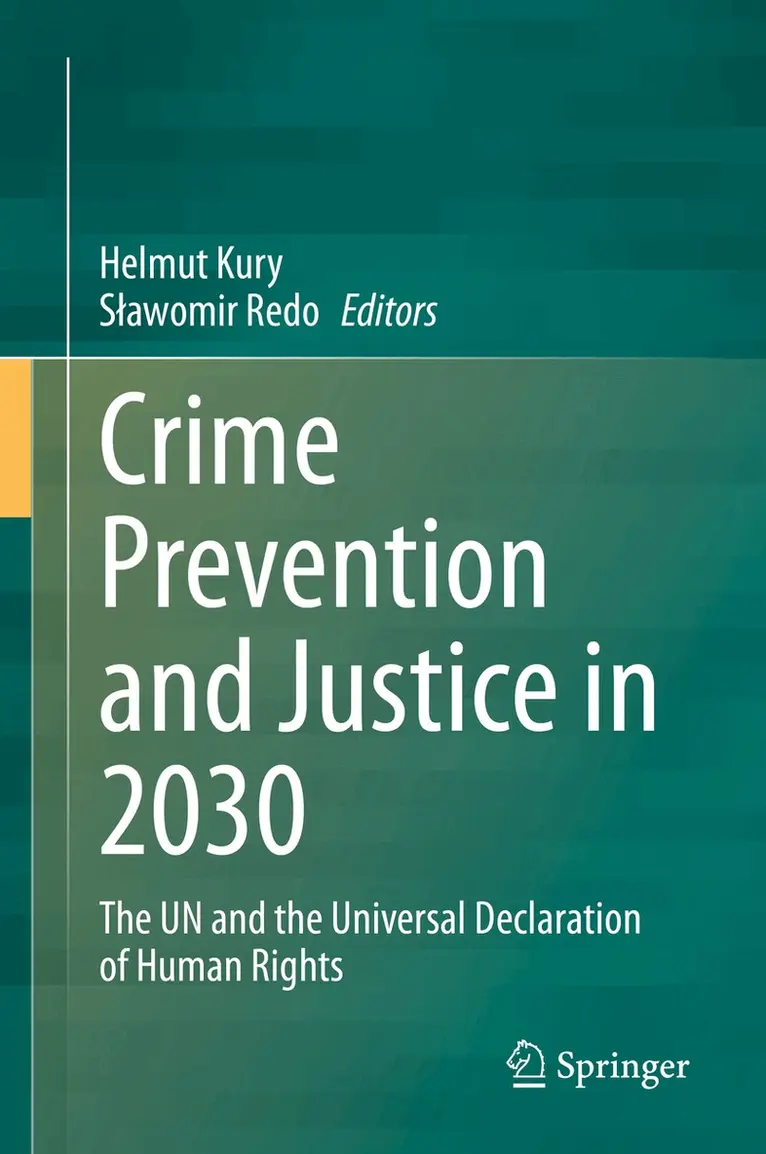
Crime Prevention and Justice in 2030
The UN and the Universal Declaration of Human Rights
Inbunden, Engelska, 2021
1 933 kr
Skickas inom 10-15 vardagar
This book analyzes human rights and crime prevention challenges from the perspective of the 1948 Universal Declaration of Human Rights and the 2030 United Nations Sustainable Development Agenda, in particular its goal 16 on promoting peaceful, inclusive and just societies, the creation and development of which depend on the interplay between various secular and non-secular (f)actors. The book reflects on the implementation of these two legal instruments from a “back to the future” standpoint, that is, drawing on the wisdom of contributors to the 2030 Agenda from the past and present in order to offer a constructive inter-disciplinary and intergenerational approach. The book’s intended readership includes academics and educationists, criminal justice practitioners and experts, diplomats, spiritual leaders and non-governmental actors; its goal is to encourage them to pursue a socially and human rights oriented drive for “larger freedom,” which is currently jeopardized by adverse political currents.
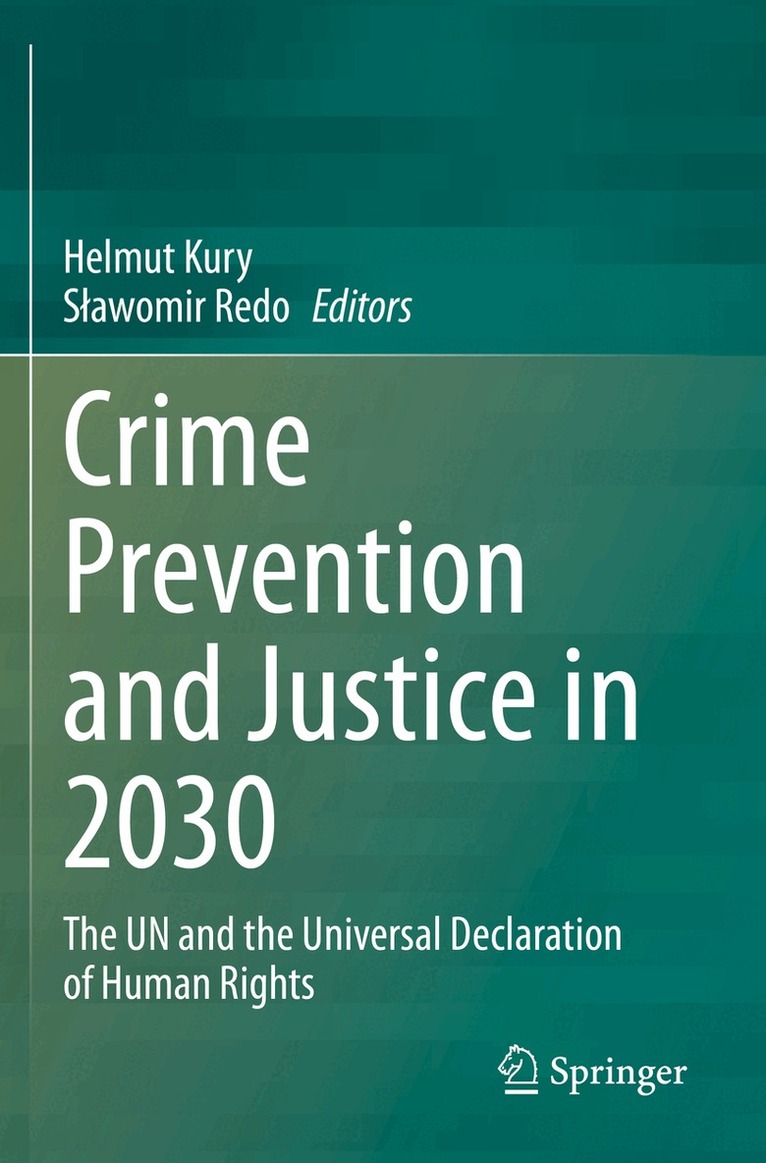
Crime Prevention and Justice in 2030
The UN and the Universal Declaration of Human Rights
Häftad, Engelska, 2022
1 644 kr
Skickas inom 10-15 vardagar
This book analyzes human rights and crime prevention challenges from the perspective of the 1948 Universal Declaration of Human Rights and the 2030 United Nations Sustainable Development Agenda, in particular its goal 16 on promoting peaceful, inclusive and just societies, the creation and development of which depend on the interplay between various secular and non-secular (f)actors. The book reflects on the implementation of these two legal instruments from a “back to the future” standpoint, that is, drawing on the wisdom of contributors to the 2030 Agenda from the past and present in order to offer a constructive inter-disciplinary and intergenerational approach. The book’s intended readership includes academics and educationists, criminal justice practitioners and experts, diplomats, spiritual leaders and non-governmental actors; its goal is to encourage them to pursue a socially and human rights oriented drive for “larger freedom,” which is currently jeopardized by adverse political currents.
Del 475 - Urban-Taschenbücher
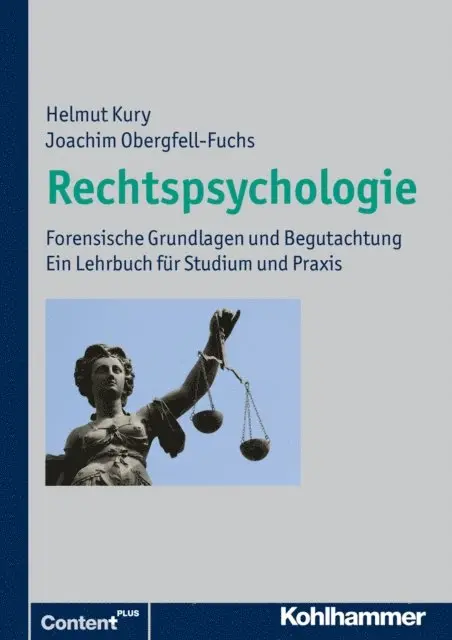
Rechtspsychologie: Forensische Grundlagen Und Begutachtung. Ein Lehrbuch Fur Studium Und PRAXIS
Inbunden, Tyska, 2012
490 kr
Skickas inom 3-6 vardagar
Women and Children as Victims and Offenders: Background, Prevention, Reintegration
Suggestions for Succeeding Generations (Volume 1)
Inbunden, Engelska, 2016
791 kr
Skickas
This work compiles experiences and lessons learned in meeting the unique needs of women and children regarding crime prevention and criminal justice, in particular the treatment and social reintegration of offenders, and serves a as a cross-disciplinary work for academic and policy-making analyses and follow-up in developing and developed countries.Furthermore, it argues for a more humane and effective approach to countering delinquency and crime among future generations. In a world where development positively depends on the rule of law and the related investment security, two global trends may chart the course of development: urbanization and education. Urbanization will globalize the concepts of “justice” and “fairness”; education will be dominated by the urban mindset and digital service economy, just as a culture of lawfulness will. This work looks at crime prevention education as an investment in the sustainable quality of life of succeeding generations, and at those who pursue such crime prevention as the providers of much-needed skills in the educational portfolio. Adopting a reformist approach, this work collects articles with findings and recommendations that may be relevant to domestic and international policymaking, including the United Nations Studies and their educational value for the welfare of coming generations. The books address the relevant United Nations ideas by combining them with academic approaches. Guided by the Editors’ respective fields of expertise, and in full recognition of academic freedom and “organized scepticism”, it includes contributions by lawyers, criminologists, sociologists and other eminent experts seeking to bridge the gap between academic and policy perspectives, as appropriate, against the international background, including the United Nations developments. The first volume opens with a foreword by Marta Santos Pais, the United Nations Special Representative of the Secretary-General on Violence against Children, and a general introduction by the editors. Part I provides an overview of United Nations principles for crime prevention and the treatment of women and children. Part II concentrates on education and the social learning of children and adolescents. The importance of quality education is stressed as is its impact on the behaviour of children of all ages. It also includes a discussion of the factors that still hinder access to good schooling in many parts of the world. Part III presents international research findings on children, juveniles and women both as victims and offenders. Statistics show overwhelmingly that these groups are more often victims than offenders.
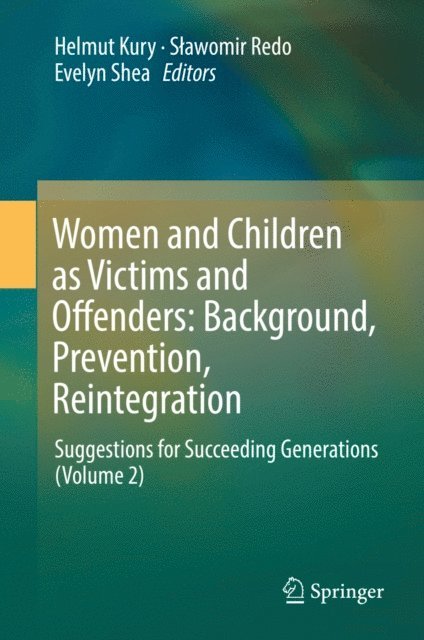
Women and Children as Victims and Offenders: Background, Prevention, Reintegration
Suggestions for Succeeding Generations (Volume 2)
Inbunden, Engelska, 2016
1 473 kr
Skickas inom 10-15 vardagar
This work compiles experiences and lessons learned in meeting the unique needs of women and children regarding crime prevention and criminal justice, in particular the treatment and social reintegration of offenders and serves as a cross-disciplinary work for academic and policy-making analyses and follow-up in developing and developed countries.Furthermore, it argues for a more humane and effective approach to countering delinquency and crime among future generations. In a world where development positively depends on the rule of law and the related investment security, two global trends may chart the course of development: urbanization and education. Urbanization will globalize the concepts of “justice” and “fairness”; education will be dominated by the urban mindset and digital service economy, just as a culture of lawfulness will. This work looks at crime prevention education as an investment in the sustainable quality of life of succeeding generations, and at those who pursue such crime prevention as the providers of much-needed skills in the educational portfolio. Adopting a reformist approach, this work collects articles with findings and recommendations that may be relevant to domestic and international policymaking, including the United Nations Studies and their educational value for the welfare of coming generations. The books address the relevant United Nations ideas by combining them with academic approaches. Guided by the Editors’ respective fields of expertise, and in full recognition of academic freedom and “organized scepticism”, it includes contributions by lawyers, criminologists, sociologists and other eminent experts seeking to bridge the gap between academic and policy perspectives, as appropriate, against the international background, including the United Nations developments.The second volume opens with Part IV, which presents articles on different kinds of crime prevention. The effectiveness of punishment and, in particular, imprisonment is examined by contrasting it with alternative sanctions and the following questions are raised: Does harsh punishment have a crime preventive effect? What are the side effects of imprisonment on the offenders and their families? Are alternatives, such as restorative justice or mediation, more effective and cheaper? Part V outlines proactive strategies of crime prevention, e.g. for potential sex offenders or in the domain of internet crime. Part VI envisions a more peaceful and inclusive society, which would be realized by improving the protection of women and children in their everyday life, and easing the reintegration of those who have become offenders. The importance of the role played by the UN in formulating these goals is underlined. The volume concludes with an epilogue of the 70th President of the United Nations Economic and Social Council, Martin Sajdik, and a post scriptum of the editors. p>
Refugees and Migrants in Law and Policy
Challenges and Opportunities for Global Civic Education
Inbunden, Engelska, 2018
3 632 kr
Skickas inom 10-15 vardagar
Rather than a timeline for migration policies based on “now”, with states focusing on “stopping migration now”, “sending back migrants now” or “bringing in technicians or low-skilled migrant workers now”, there should be a long-term strategy for multicultural integration and economic assimilation.
Women and Children as Victims and Offenders: Background, Prevention, Reintegration
Suggestions for Succeeding Generations (Volume 1)
Häftad, Engelska, 2018
1 452 kr
Skickas inom 10-15 vardagar
This work compiles experiences and lessons learned in meeting the unique needs of women and children regarding crime prevention and criminal justice, in particular the treatment and social reintegration of offenders, and serves a as a cross-disciplinary work for academic and policy-making analyses and follow-up in developing and developed countries.Furthermore, it argues for a more humane and effective approach to countering delinquency and crime among future generations. In a world where development positively depends on the rule of law and the related investment security, two global trends may chart the course of development: urbanization and education. Urbanization will globalize the concepts of “justice” and “fairness”; education will be dominated by the urban mindset and digital service economy, just as a culture of lawfulness will. This work looks at crime prevention education as an investment in the sustainable quality of life of succeeding generations, and at those who pursue such crime prevention as the providers of much-needed skills in the educational portfolio. Adopting a reformist approach, this work collects articles with findings and recommendations that may be relevant to domestic and international policymaking, including the United Nations Studies and their educational value for the welfare of coming generations. The books address the relevant United Nations ideas by combining them with academic approaches. Guided by the Editors’ respective fields of expertise, and in full recognition of academic freedom and “organized scepticism”, it includes contributions by lawyers, criminologists, sociologists and other eminent experts seeking to bridge the gap between academic and policy perspectives, as appropriate, against the international background, including the United Nations developments. The first volume opens with a foreword by Marta Santos Pais, the United Nations Special Representative of the Secretary-General on Violence against Children, and a general introduction by the editors. Part I provides an overview of United Nations principles for crime prevention and the treatment of women and children. Part II concentrates on education and the social learning of children and adolescents. The importance of quality education is stressed as is its impact on the behaviour of children of all ages. It also includes a discussion of the factors that still hinder access to good schooling in many parts of the world. Part III presents international research findings on children, juveniles and women both as victims and offenders. Statistics show overwhelmingly that these groups are more often victims than offenders.