Helmut Seidl – författare
Visar alla böcker från författaren Helmut Seidl. Handla med fri frakt och snabb leverans.
23 produkter
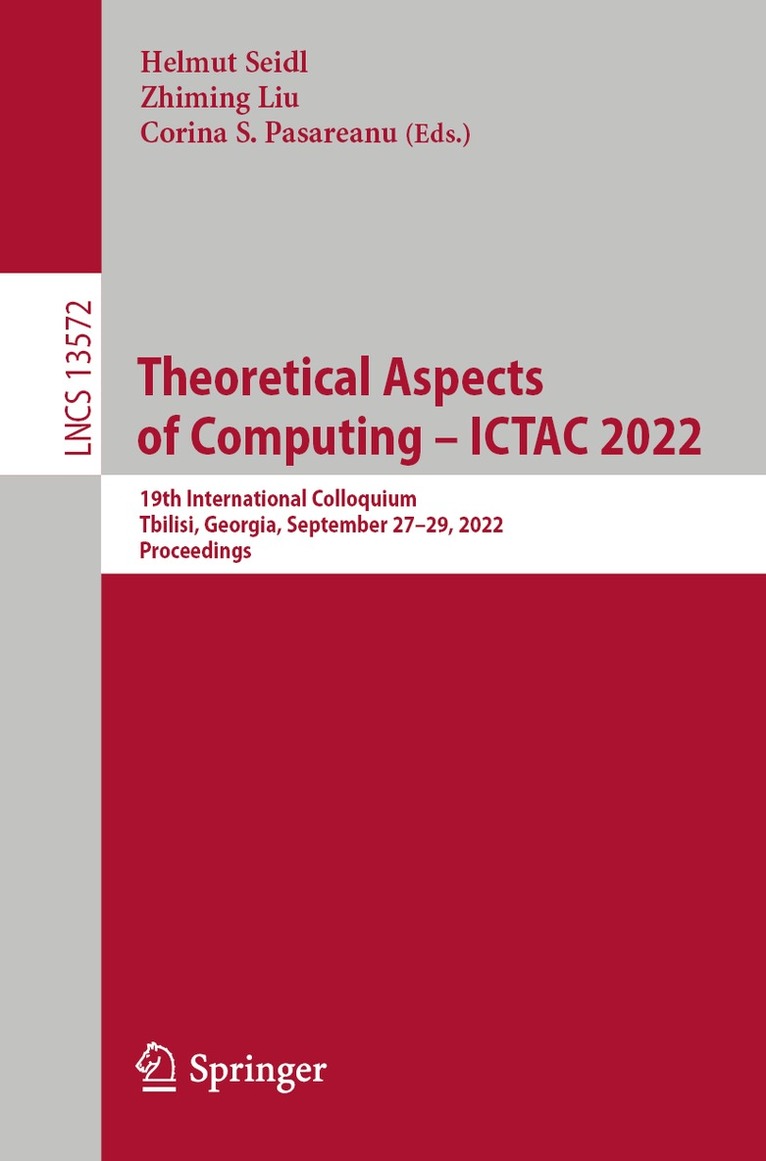
Theoretical Aspects of Computing – ICTAC 2022
19th International Colloquium, Tbilisi, Georgia, September 27–29, 2022, Proceedings
Av Helmut Seidl, Zhiming Liu m. fl.
Häftad, 2022
568 kr
Lägg i varukorg
This book constitutes the proceedings of the 19th International Colloquium on Theoretical Aspects of Computing, ICTAC 2022, which took place in Tbilisi, Georgia, in September 2022.The 23 papers presented in this volume together with 2 short papers were carefully reviewed and selected from 52 …
Theoretical Aspects of Computing - ICTAC 2022
19th International Colloquium, Tbilisi, Georgia, September 27–29, 2022, Proceedings
Av Corina S. Pasareanu, Zhiming Liu m. fl.
E-bok, 2022
739 kr
Lägg i varukorg
This book constitutes the proceedings of the 19th International Colloquium on Theoretical Aspects of Computing, ICTAC 2022, which took place in Tbilisi, Georgia, in September 2022. The 23 papers presented in this volume together with 2 short papers were carefully reviewed and selected from 52 …
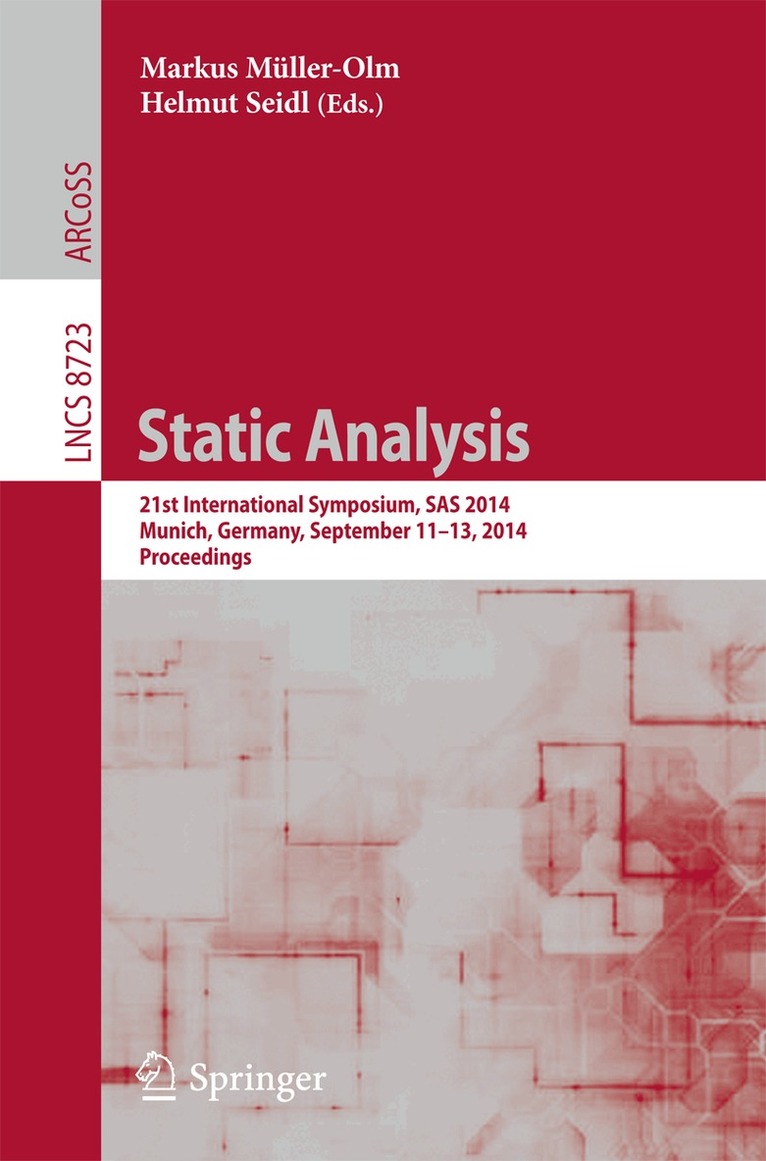
Static Analysis
21st International Symposium, SAS 2014, Munich, Germany, September 11-13, 2014. Proceedings
Av Markus Müller-Olm, Helmut Seidl
Häftad, 2014
568 kr
Lägg i varukorg
This book constitutes the thoroughly refereed proceedings of the 21st International Symposium on Static Analysis, SAS 2014, held in Munich, Germany, in September 2014. The 20 revised full papers were selected from 53 submissions and are presented together with 3 invited talks. The papers address …
Static Analysis
21st International Symposium, SAS 2014, Munich, Germany, September 11-13, 2014. Proceedings
Av Helmut Seidl, Markus Muller-Olm
E-bok, 2014
739 kr
Lägg i varukorg
This book constitutes the thoroughly refereed proceedings of the 21st International Symposium on Static Analysis, SAS 2014, held in Munich, Germany, in September 2014. The 20 revised full papers were selected from 53 submissions and are presented together with 3 invited talks. The papers address …
Übersetzerbau
Virtuelle Maschinen
Av Reinhard Wilhelm, Helmut Seidl
Häftad, 2007
353 kr
Lägg i varukorg
Virtuelle Maschinen sind Abstraktionen von realen Rechnern. Meist sind sie in Software realisiert und häufig für eine spezielle Programmiersprache entworfen. Dieses Buch beschreibt die Übersetzung von imperativen, funktionalen, logischen und objektorientierten Programmiersprachen. Für jedes dieser …
Foundations of Software Science and Computational Structures
10th International Conference, FOSSACS 2007, Held as Part of the Joint European Conferences on Theory and Practice of Software, ETAPS 2007, Braga, Portugal, March 24-April 1, 2007, Proceedings
Av Helmut Seidl
Häftad, 2007
568 kr
Lägg i varukorg
This book constitutes the refereed proceedings of the 10th International Conference on Foundations of Software Science and Computation Structures, FOSSACS 2007, held in Braga, Portugal in March/April 2007. The 25 revised full papers presented together with the abstract of one invited talk cover a …
Foundations of Software Science and Computational Structures
10th International Conference, FOSSACS 2007, Held as Part of the Joint European Conferences on Theory and Practice of Software, ETAPS 2007, Braga, Portugal, March 24-April 1, 2007, Proceedings
Av Helmut Seidl
E-bok, 2007
755 kr
Lägg i varukorg
Übersetzerbau
Band 2: Syntaktische und semantische Analyse
Av Reinhard Wilhelm, Helmut Seidl m. fl.
Häftad, 2012
312 kr
Lägg i varukorg
Das Buch behandelt die Analysephase von Übersetzern für Programmiersprachen. Es beschreibt die lexikalische, die syntaktische und die semantische Analyse, Spezifikationsmechanismen für diese Aufgaben aus der Theorie der formalen Sprachen und automatische Erzeugungsverfahren aus der Theorie der …
Übersetzerbau
Band 2: Syntaktische und semantische Analyse
Av Sebastian Hack, Helmut Seidl m. fl.
E-bok, 2012
182 kr
Lägg i varukorg
Das Buch behandelt die Analysephase von Übersetzern für Programmiersprachen. Es beschreibt die lexikalische, die syntaktische und die semantische Analyse, Spezifikationsmechanismen für diese Aufgaben aus der Theorie der formalen Sprachen und automatische Erzeugungsverfahren aus der Theorie der …
Übersetzerbau
Band 3: Analyse und Transformation
Av Helmut Seidl, Reinhard Wilhelm m. fl.
Häftad, 2010
261 kr
Lägg i varukorg
Dieses Buch behandelt die Optimierungsphase von Übersetzern. In dieser Phase werden Programme zur Effizienzsteigerung transformiert. Damit die Semantik der Programme bei diesen Transformationen erhalten bleibt, müssen jeweils zugehörige Anwendbarkeitsbedingungen erfüllt sein. Diese werden mittels …
Übersetzerbau
Band 3: Analyse und Transformation
Av Sebastian Hack, Reinhard Wilhelm m. fl.
E-bok, 2009
213 kr
Lägg i varukorg
Dieses Buch behandelt die Optimierungsphase von Übersetzern. In dieser Phase werden Programme zur Effizienzsteigerung transformiert. Damit die Semantik der Programme bei diesen Transformationen erhalten bleibt, müssen jeweils zugehörige Anwendbarkeitsbedingungen erfüllt sein. Diese werden mittels …
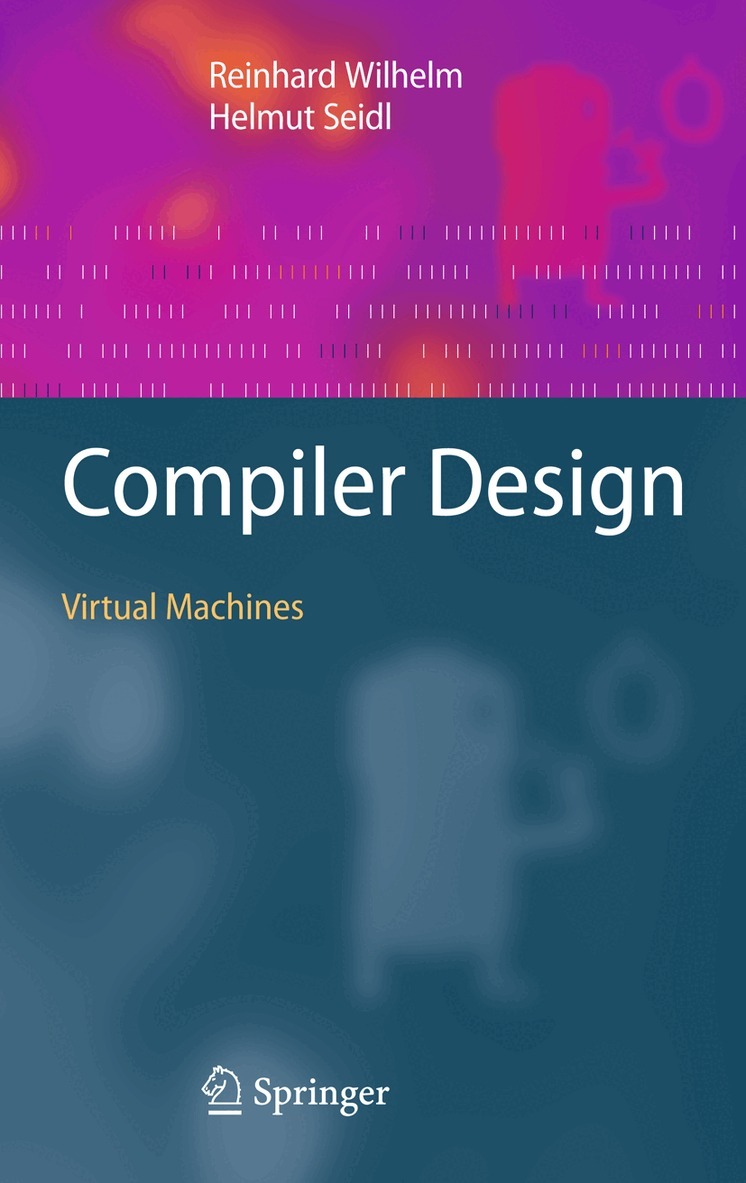
Compiler Design
Virtual Machines
Av Reinhard Wilhelm, Helmut Seidl
Inbunden, 2010
792 kr
Lägg i varukorg
While compilers for high-level programming languages are large complex software systems, they have particular characteristics that differentiate them from other software systems. Their functionality is almost completely well-defined – ideally there exist complete precise descriptions of the source …
Compiler Design
Virtual Machines
Av Helmut Seidl, Reinhard Wilhelm
E-bok, 2010
739 kr
Lägg i varukorg
While compilers for high-level programming languages are large complex software systems, they have particular characteristics that differentiate them from other software systems. Their functionality is almost completely well-defined – ideally there exist complete precise descriptions of the source …
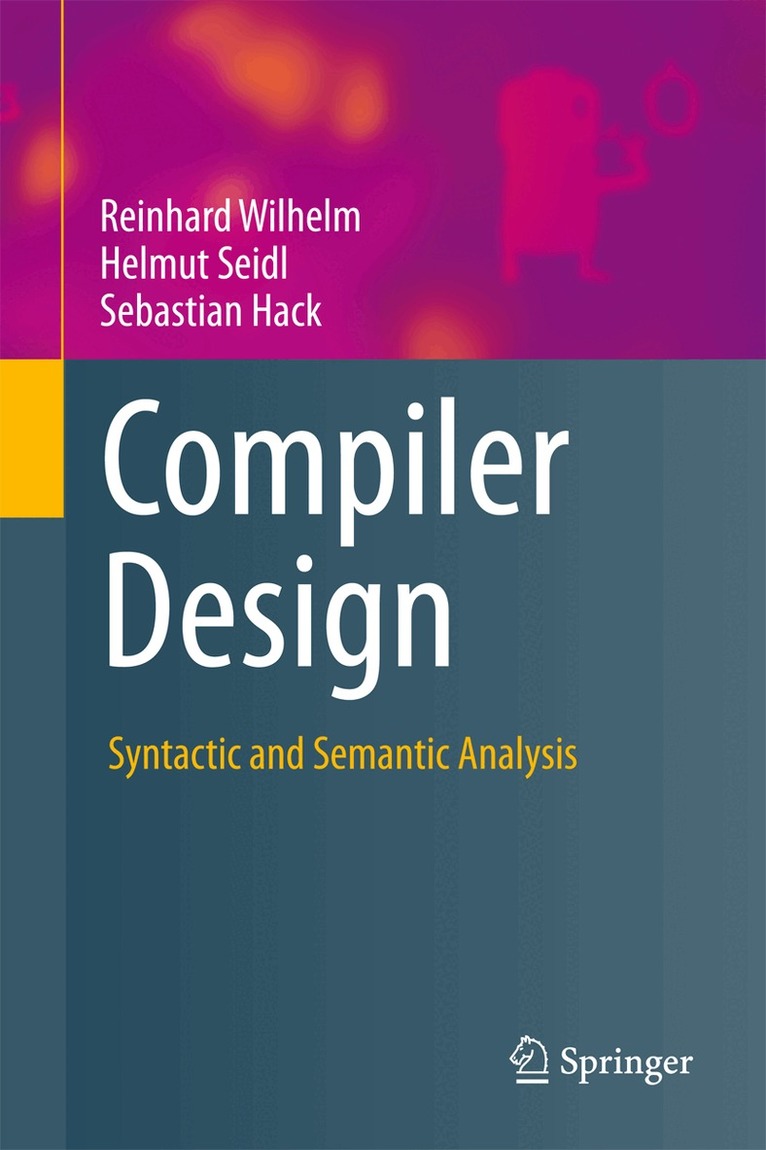
Compiler Design
Syntactic and Semantic Analysis
Av Reinhard Wilhelm, Helmut Seidl m. fl.
Inbunden, 2013
904 kr
Lägg i varukorg
While compilers for high-level programming languages are large complex software systems, they have particular characteristics that differentiate them from other software systems. Their functionality is almost completely well-defined – ideally there exist complete precise descriptions of the source …
Compiler Design
Syntactic and Semantic Analysis
Av Sebastian Hack, Helmut Seidl m. fl.
E-bok, 2013
839 kr
Lägg i varukorg
While compilers for high-level programming languages are large complex software systems, they have particular characteristics that differentiate them from other software systems. Their functionality is almost completely well-defined – ideally there exist complete precise descriptions of the source …
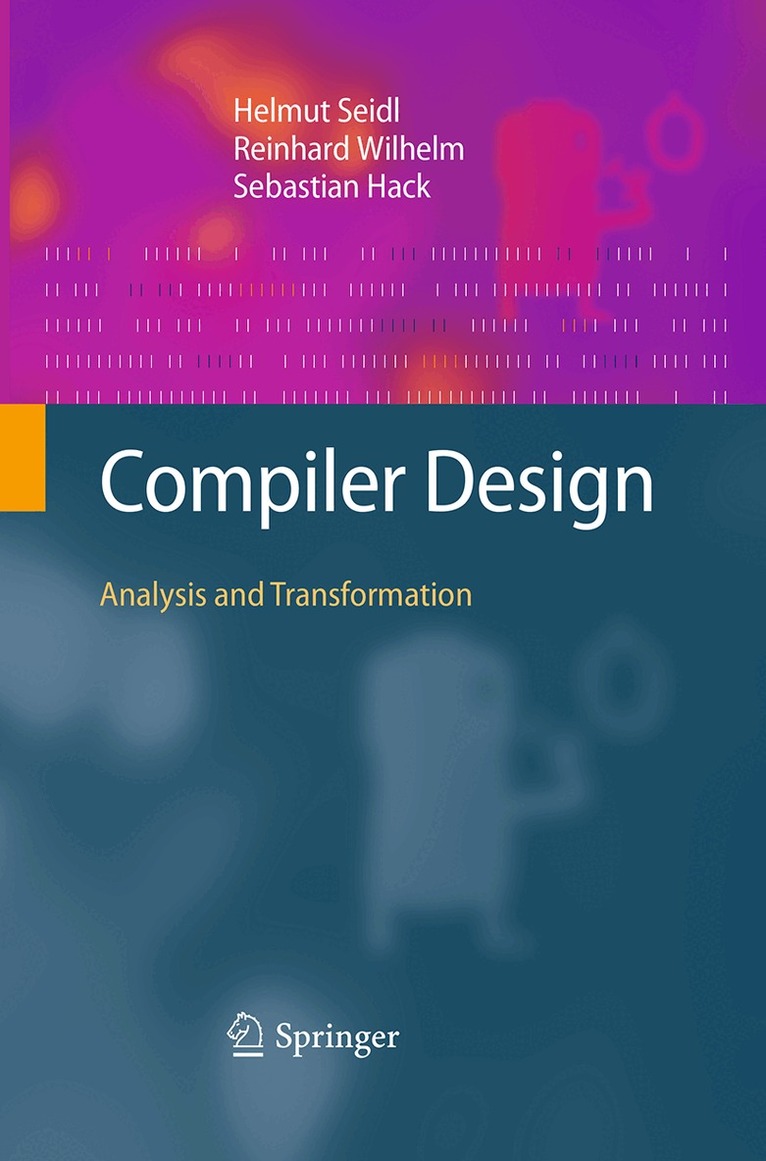
Compiler Design
Analysis and Transformation
Av Helmut Seidl, Reinhard Wilhelm m. fl.
Inbunden, 2012
792 kr
Lägg i varukorg
While compilers for high-level programming languages are large complex software systems, they have particular characteristics that differentiate them from other software systems. Their functionality is almost completely well-defined - ideally there exist complete precise descriptions of the source …
Compiler Design
Analysis and Transformation
Av Sebastian Hack, Reinhard Wilhelm m. fl.
E-bok, 2012
1007 kr
Lägg i varukorg
While compilers for high-level programming languages are large complex software systems, they have particular characteristics that differentiate them from other software systems. Their functionality is almost completely well-defined - ideally there exist complete precise descriptions of the source …
Programming Languages and Systems
21st European Symposium on Programming, ESOP 2012, Held as Part of the European Joint Conferences on Theory and Practice of Software, ETAPS 2012, Tallinn, Estonia, March 24 - April 1, 2012, Proceedings
Av Helmut Seidl
Häftad, 2012
568 kr
Lägg i varukorg
This book constitutes the refereed proceedings of the 21st European Symposium on Programming, ESOP 2012, held in Tallinn, Estonia, as part of ETAPS 2012, in March/April 2012.The 28 full papers, presented together with one full length invited talk, were carefully reviewed and selected from 92 …
Programming Languages and Systems
21st European Symposium on Programming, ESOP 2012, Held as Part of the European Joint Conferences on Theory and Practice of Software, ETAPS 2012, Tallinn, Estonia, March 24 - April 1, 2012, Proceedings
Av Helmut Seidl
E-bok, 2012
739 kr
Lägg i varukorg
This book constitutes the refereed proceedings of the 21st European Symposium on Programming, ESOP 2012, held in Tallinn, Estonia, as part of ETAPS 2012, in March/April 2012.The 28 full papers, presented together with one full length invited talk, were carefully reviewed and selected from 92 …
Compiler Design
Syntactic and Semantic Analysis
Av Reinhard Wilhelm, Helmut Seidl m. fl.
Häftad, 2015
646 kr
Lägg i varukorg
While compilers for high-level programming languages are large complex software systems, they have particular characteristics that differentiate them from other software systems. Their functionality is almost completely well-defined – ideally there exist complete precise descriptions of the source …
Compiler Design
Virtual Machines
Av Reinhard Wilhelm, Helmut Seidl
Häftad, 2016
568 kr
Lägg i varukorg
While compilers for high-level programming languages are large complex software systems, they have particular characteristics that differentiate them from other software systems. Their functionality is almost completely well-defined – ideally there exist complete precise descriptions of the source …
Compiler Design
Analysis and Transformation
Av Helmut Seidl, Reinhard Wilhelm m. fl.
Häftad, 2016
792 kr
Lägg i varukorg
While compilers for high-level programming languages are large complex software systems, they have particular characteristics that differentiate them from other software systems. Their functionality is almost completely well-defined - ideally there exist complete precise descriptions of the source …