Henric Krawczynski – författare
Visar alla böcker från författaren Henric Krawczynski. Handla med fri frakt och snabb leverans.
3 produkter
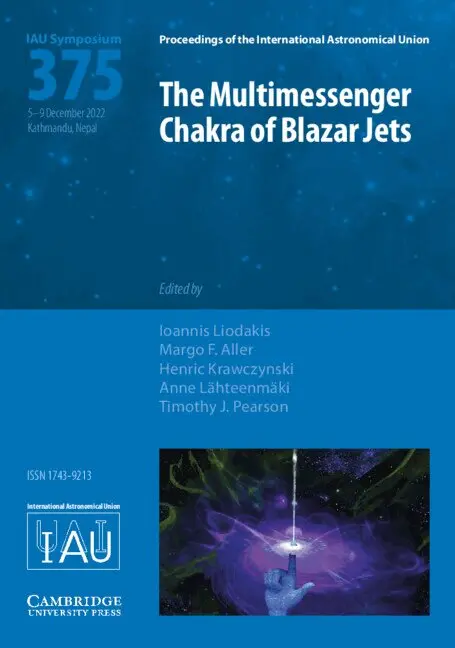
The Multimessenger Chakra of Blazar Jets (IAU S375)
Av Yannis Liodakis, Timothy J. Pearson m. fl.
Inbunden, 2023
1752 kr
Lägg i varukorg
Blazars, the most extreme active galactic nuclei with powerful relativistic jets extending out to kiloparsecs from their central engine, are among the most intriguing and consistently bright objects in the observable Universe. Understanding how they form and shine has been a cumbersome endeavor …
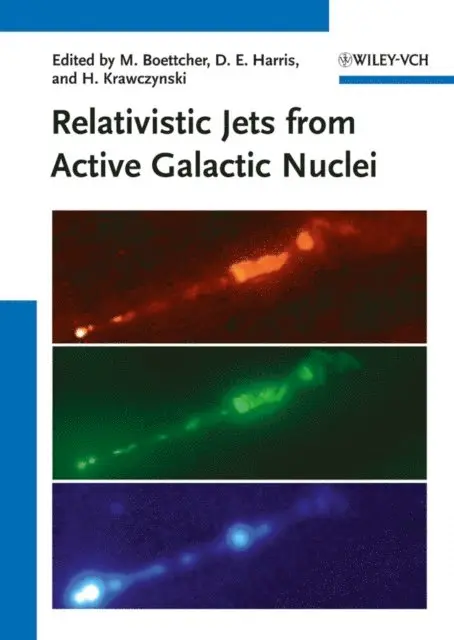
Relativistic Jets from Active Galactic Nuclei
Av Henric Krawczynski, Daniel E. Harris m. fl.
E-bok, 2012
1894 kr
Lägg i varukorg
Written by a carefully selected consortium of researchers working in the field, this book fills the gap for an up-to-date summary of the observational and theoretical status. As such, this monograph includes all used wavelengths, from radio to gamma, the FERMI telescope, a history and theory …
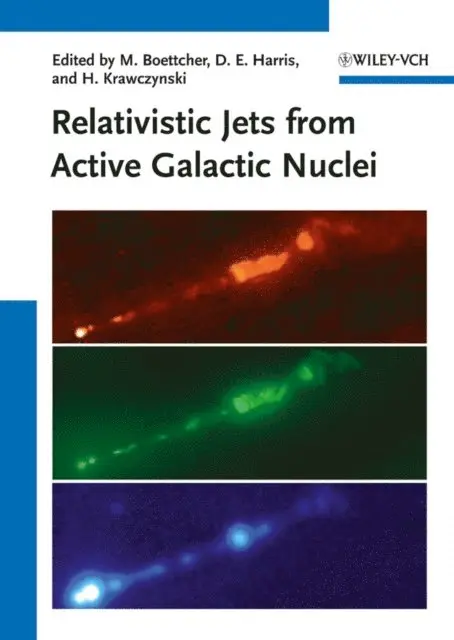
Relativistic Jets from Active Galactic Nuclei
Av Henric Krawczynski, Daniel E. Harris m. fl.
E-bok, 2011
1956 kr
Lägg i varukorg
Written by a carefully selected consortium of researchers working in the field, this book fills the gap for an up-to-date summary of the observational and theoretical status. As such, this monograph includes all used wavelengths, from radio to gamma, the FERMI telescope, a history and theory …