Henrik Skaug Sætra - Böcker
Visar alla böcker från författaren Henrik Skaug Sætra. Handla med fri frakt och snabb leverans.
5 produkter
5 produkter
359 kr
Skickas inom 10-15 vardagar
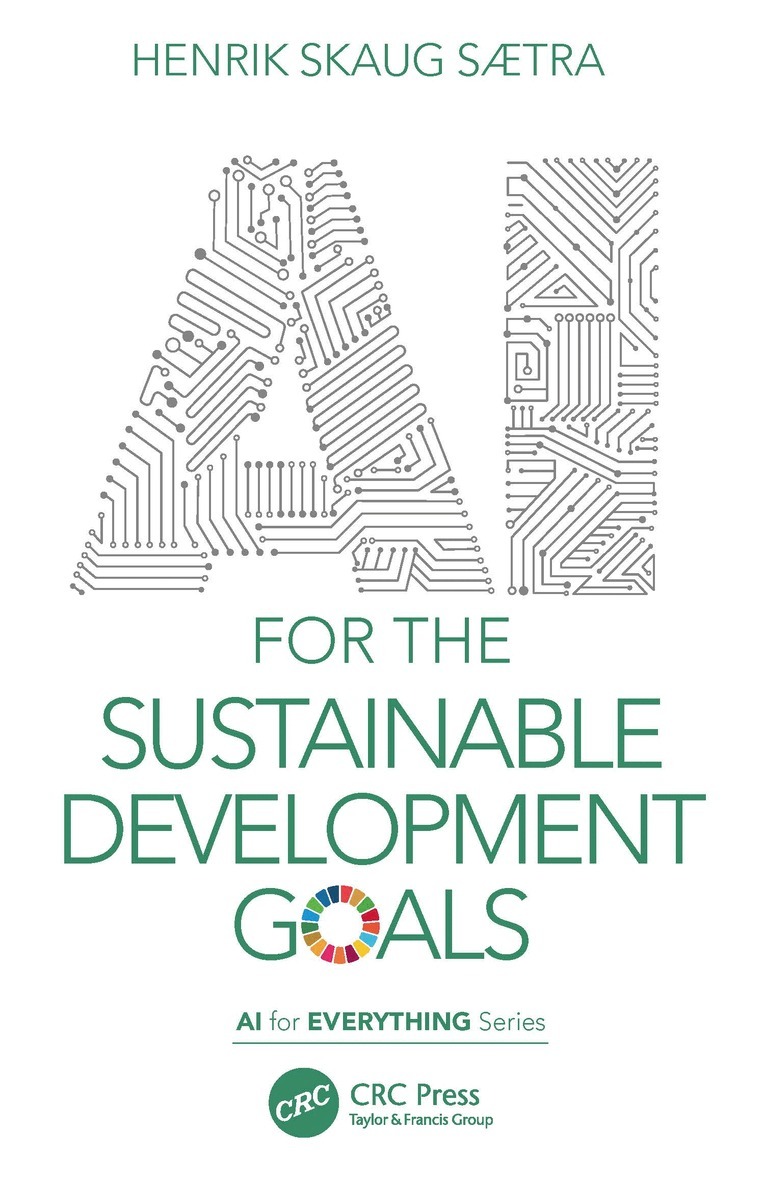
What is artificial intelligence? What are the Sustainable Development Goals (SDGs)? How does AI affect the SDGs?Artificial Intelligence has a real impact on our lives and on our environment, and the Sustainable Development Goals enable us to evaluate these impacts in a systematic manner. This book shows that doing so requires us to understand the context of AI – the infrastructure it is built on, who develops it, who owns it, who has access to it, who uses it, and what it is used for – rather than relying on an isolationist theory of technology. By doing so, we can analyze not only the direct effects of AI on sustainability, but also the indirect – or second-order – effects. AI for the Sustainable Development Goals shows how AI potentially affects all SDGs – both positively and negatively.
Big Data's Threat to Liberty
Surveillance, Nudging, and the Curation of Information
Häftad, Engelska, 2021
1 653 kr
Skickas inom 7-10 vardagar
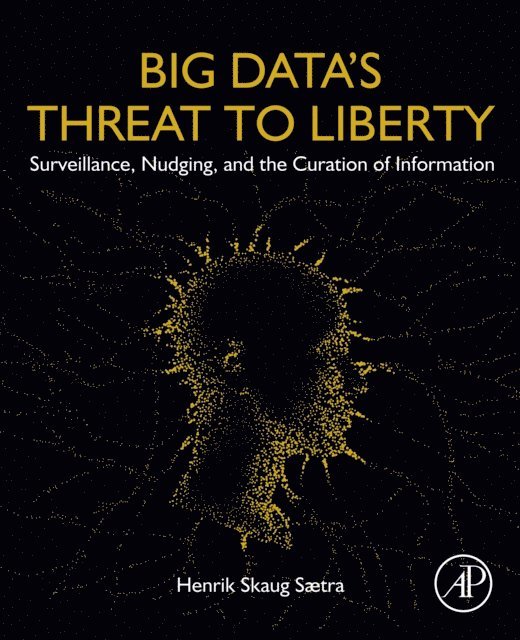
Big Data permeates all aspects of modern life, and while there is no shortage of potential benefits resulting from this, author Henrik Skaug S�tra argues that we must also understand the threats Big Data poses to liberty. The issues discussed in Big Data's Threat to Liberty: Surveillance, Nudging, and the Curation of Information are related to how we are constantly under surveillance. Data is gathered from our homes, our cars, our smartphones, various devices around the house, and public sources such as facial recognition enabled camera surveillance and various websites and social networks. Furthermore, the information gathered is used to influence our actions. Detailed personality profiles are utilized in order to make us purchase products and services, or pay our taxes, through tailor-made nudges aimed at irrational and subconscious mechanisms, and delivered with a level of precision only possible with Big Data-driven algorithmic curation of data. Finally, the information we receive through various media is curated by algorithms, and even people are curated in order to satisfy our desires. By providing us with what the algorithm believes we want, we are spared from the exposure of unpleasant information, and even unpleasant people. The ideological landscapes we traverse are thus characterized by conformity, and a concomitant tyranny of popular opinion becomes ever more coercive as this occurs.The question is: How does being constantly watched, manipulated, and having our world-views shaped as just described affect our freedom? In this book it is argued that Big Data's threat to individual liberty is routinely misunderstood and underappreciated due to (a) vagueness resulting from the concept of liberty being used without it being defined, or (b) the use of definitions based on flawed understandings of what liberty is. In this new and unique contribution to the ethics of Big Data and artificial intelligence, both these challenges are thoroughly addressed. Explanation of key Big Data-related technologies and how they affect modern society, including explanation of surveillance technologies and nudging algorithms, and how Big Data, Machine Learning, and Artificial Intelligence algorithms are used to tailor and mold opinion Conceptualization of the term liberty, making the concept tangible, as a clear understanding of various forms of liberty enables a proper debate about the effects of technology on liberty, and a debate about what sort of liberty we value A�thorough technical explanation of how Big Data influences individuals by way of surveillance that allows for detailed personality profiles, nudging, and the algorithmic curation of information
1 900 kr
Skickas inom 10-15 vardagar
What is artificial intelligence? What are the Sustainable Development Goals (SDGs)? How does AI affect the SDGs?Artificial Intelligence has a real impact on our lives and on our environment, and the Sustainable Development Goals enable us to evaluate these impacts in a systematic manner. This book shows that doing so requires us to understand the context of AI – the infrastructure it is built on, who develops it, who owns it, who has access to it, who uses it, and what it is used for – rather than relying on an isolationist theory of technology. By doing so, we can analyze not only the direct effects of AI on sustainability, but also the indirect – or second-order – effects. AI for the Sustainable Development Goals shows how AI potentially affects all SDGs – both positively and negatively.
Technology and Sustainable Development
The Promise and Pitfalls of Techno-Solutionism
Häftad, Engelska, 2023
690 kr
Skickas inom 10-15 vardagar
Technological change is at the core of all major disruptions in human history, andrevolutions, wars, and general development are regularly connected to some sort oftechnological change. However, not all development is beneficial. While technology hasfueled great innovations and rapid development, the notion of sustainable developmenthas gained prominence as we now experience serious social, economic, and environmentalchallenges.This book examines whether technology can be used to fix the very problems caused bytechnology, as the various chapters examine different aspects related to how technologyhas brought us where we are today (which some will say is the best place humanity’s been ataccording to a range of metrics), and whether technology helps or hinders us in our effortsto solve the challenges we currently face. The issues discussed cover the three sustainabilitydimensions and include topics such as the materiality of AI, technology in education, AIfor gender equality, innovation and the digital divide, and how technology relates to power,the political system, and capitalism. The chapters all build on the theoretical backdrop oftechnological change, sustainable development, and the UN’s Sustainable DevelopmentGoals are actively used throughout this book, both to examine how these goals capture oroverlook central elements of sustainable development, and also to facilitate and create acommon framework of engagement between the chapters.This book provides a novel combination of traditional theories that are exploredthrough different case studies, providing the ground for a better understanding of howand when technology can – and cannot – be the enabler of sustainable development.It is thus an important resource for students of all disciplines, technologists, and thosedeveloping and applying new technologies. It is also a valuable resource for politiciansand regulators attempting to harness the power of technology for good, while limiting itsnegative potential.The Open Access version of this book, available at www.taylorfrancis.com, has beenmade available under a Creative Commons [Attribution-Non Commercial-No Derivatives(CC-BY-NC-ND)] 4.0 license. Funded by Østfold University College.
Technology and Sustainable Development
The Promise and Pitfalls of Techno-Solutionism
Inbunden, Engelska, 2023
1 818 kr
Skickas inom 10-15 vardagar
Technological change is at the core of all major disruptions in human history, andrevolutions, wars, and general development are regularly connected to some sort oftechnological change. However, not all development is beneficial. While technology hasfueled great innovations and rapid development, the notion of sustainable developmenthas gained prominence as we now experience serious social, economic, and environmentalchallenges.This book examines whether technology can be used to fix the very problems caused bytechnology, as the various chapters examine different aspects related to how technologyhas brought us where we are today (which some will say is the best place humanity’s been ataccording to a range of metrics), and whether technology helps or hinders us in our effortsto solve the challenges we currently face. The issues discussed cover the three sustainabilitydimensions and include topics such as the materiality of AI, technology in education, AIfor gender equality, innovation and the digital divide, and how technology relates to power,the political system, and capitalism. The chapters all build on the theoretical backdrop oftechnological change, sustainable development, and the UN’s Sustainable DevelopmentGoals are actively used throughout this book, both to examine how these goals capture oroverlook central elements of sustainable development, and also to facilitate and create acommon framework of engagement between the chapters.This book provides a novel combination of traditional theories that are exploredthrough different case studies, providing the ground for a better understanding of howand when technology can – and cannot – be the enabler of sustainable development.It is thus an important resource for students of all disciplines, technologists, and thosedeveloping and applying new technologies. It is also a valuable resource for politiciansand regulators attempting to harness the power of technology for good, while limiting itsnegative potential.The Open Access version of this book, available at www.taylorfrancis.com, has beenmade available under a Creative Commons [Attribution-Non Commercial-No Derivatives(CC-BY-NC-ND)] 4.0 license. Funded by Østfold University College.