Henry E. Brady - Böcker
Visar alla böcker från författaren Henry E. Brady. Handla med fri frakt och snabb leverans.
11 produkter
11 produkter
247 kr
Skickas inom 5-8 vardagar
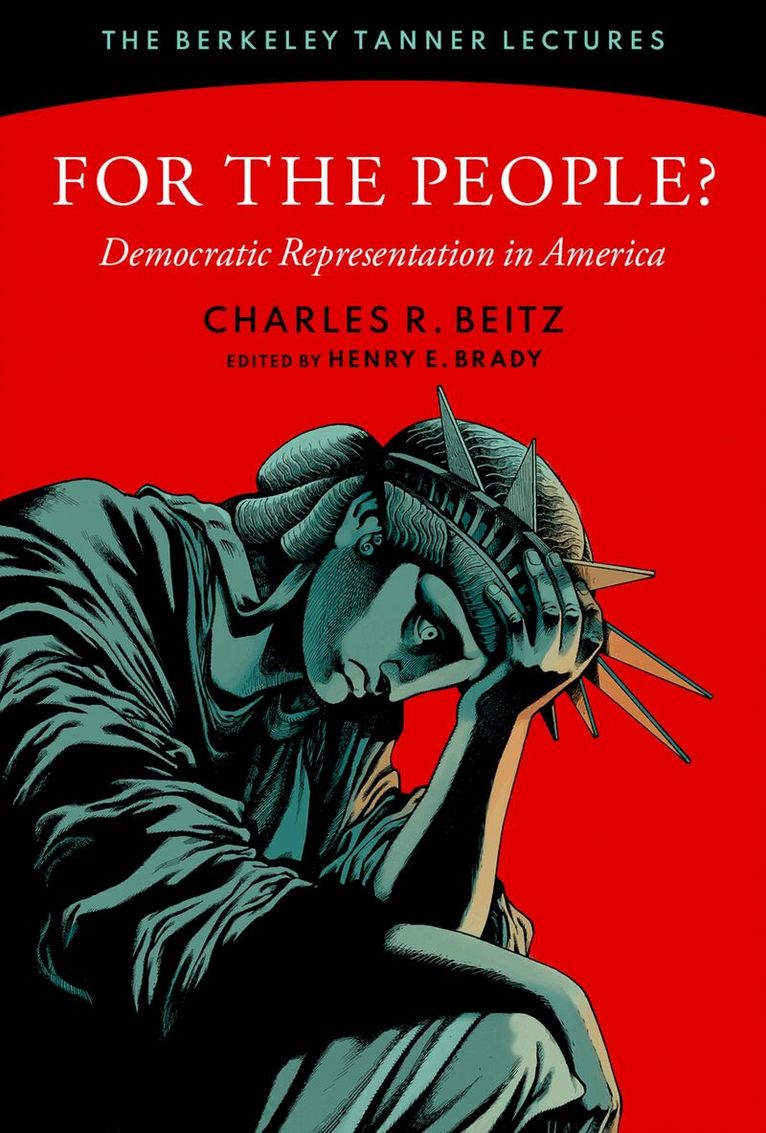
Many scholars of American government believe representative democracy is failing more systematically than even the recent spectacle of political extremism suggests. Unprecedented levels of elite polarization, severe partisan gerrymandering, weakened party institutions, easing of restrictions on campaign finance, and other forces-all in the context of rising levels of economic inequality-produce dysfunction that subverts healthy political competition. A gridlocked U.S. Congress offers few solutions to broadly recognized public problems. Legislation favors the interests of elites when they conflict with those of the majority.In his 2022 Berkeley Tanner Lectures, Charles Beitz examines the narrative of dysfunction by reading the literature of political science as democratic theory. The narrative raises two questions. First, are symptoms documented by political scientists really failures? What norms of democratic representation do they infringe? This is a problem of diagnosis. Second, what would successful democratic representation look like? This is a problem of prescription. Beitz's book explores both.The literatures of political scientists, constitutional lawyers, and democratic theorists on norms of democratic representation tend to cross too seldom. They do not agree about the meaning of fair and effective representation. One might look to democratic theory for insight, but for the most part it has been too remote from political practice to illuminate the problems of America's recent institutional history. Beitz's lectures bring the theory of democratic representation into closer contact with its troubled American practice. Emphasizing the constructive role that competition can play in democratic politics, they aim to articulate systemic norms for fair and effective democratic representation through critical engagement with the findings of scholars who have studied it in the wild.The volume includes commentaries by a political scientist, Martin Gilens; a constitutional lawyer, Pamela S. Karlan; and a political theorist, Jane Mansbridge. Their commentaries elaborate themes in the lectures and pose critical questions. Charles Beitz responds in a concluding comment.
2 803 kr
Skickas inom 5-8 vardagar
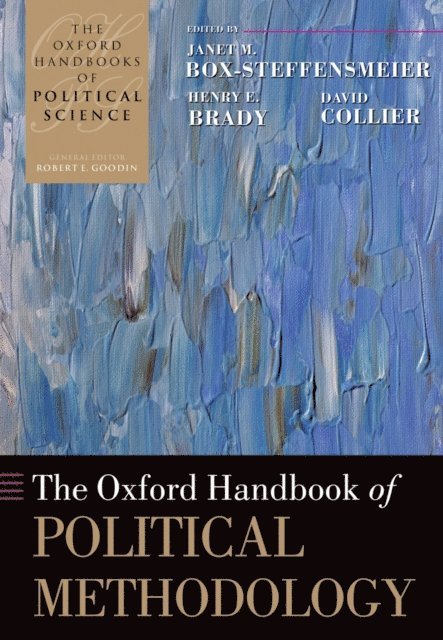
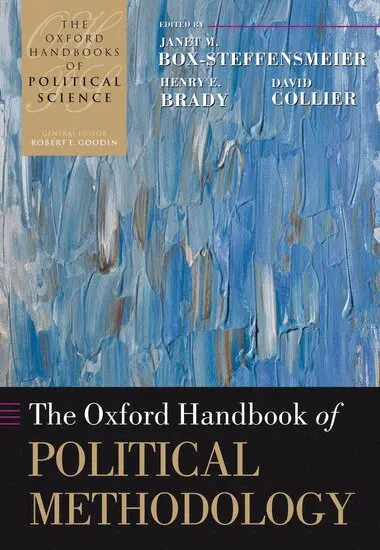
Political methodology has changed dramatically in the past thirty years. Not only have new methods and techniques been developed, but the Political Methodology Society and the Qualitative Methods Section of the American Political Science Association have engaged in ongoing research and training programs that have advanced both quantitative and qualitative methodology. The Oxford Handbook of Political Methodology is designed to reflect these developments.It provides comprehensive overviews and critiques of all the key specific methodologies. The volume emphasises three things. Firstly, techniques should be the servants of improved data collection, measurement, conceptualization, and the understanding of meanings and the identification of causal relationship in social science research. Techniques will be described with the aim of showing how they contribute to these tasks, and the emphasis will be upon developing good research designs-not upon simply using sophisticated techniques. Second, there are many different ways that these tasks can be undertaken in the social sciences through description and modeling, case-study and large-n designs, and quantitative and qualitative research.Third, techniques can cut across boundaries and be useful for many different kinds of researchers. The chapter authors ask how their methods can be used by, or at least inform, the work of those outside those areas where they are usually employed. For example, those describing large-n statistical techniques should ask how their methods might at least inform, if not sometimes be adopted by, those doing case studies or interpretive work, and we want those explaining how to do comparative historical work or process tracing to explain how it could inform those doing time-series studies.
538 kr
Skickas inom 5-8 vardagar
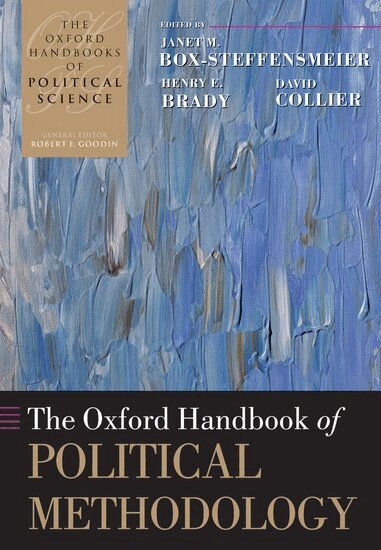
Political methodology has changed dramatically over the past thirty years, and many new methods and techniques have been developed. Both the Political Methodology Society and the Qualitative/Multi-Methods Section of the American Political Science Association have engaged in ongoing research and training programs that have advanced quantitative and qualitative methodology. The Oxford Handbook of Political Methodology presents and synthesizes these developments.The Handbook provides comprehensive overviews of diverse methodological approaches, with an emphasis on three major themes. First, specific methodological tools should be at the service of improved conceptualization, comprehension of meaning, measurement, and data collection. They should increase analysts' leverage in reasoning about causal relationships and evaluating them empirically by contributing to powerful research designs. Second, the authors explore the many different ways of addressing these tasks: through case-studies and large-n designs, with both quantitative and qualitative data, and via techniques ranging from statistical modelling to process tracing. Finally, techniques can cut across traditional methodological boundaries and can be useful for many different kinds of researchers. Many of the authors thus explore how their methods can inform, and be used by, scholars engaged in diverse branches of methodology.
463 kr
Skickas inom 7-10 vardagar
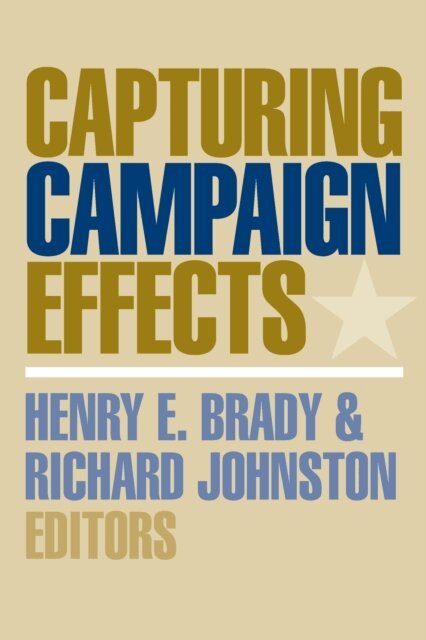
Capturing Campaign Effects is the definitive study to date of the influence of campaigns on political culture. Comprising a broad exploration of campaign factors (debates, news coverage, advertising, and polls) and their effects (priming, learning, and persuasion), as well as an impressive survey of techniques for the collection and analysis of campaign data, Capturing Campaign Effects examines different kinds of campaigns in the U.S. and abroad and presents strong evidence for significant campaign effects. "Capturing Campaign Effects is an accessible and penetrating account of modern scholarship on electoral politics. It draws critical insights from a range of innovative analyses."--Arthur Lupia, University of Michigan"What a wonderful way to usher in the new era of election studies! This book spotlights fascinating paradoxes in the literature of voting behavior, highlights many promising approaches to resolving those paradoxes, and shows how these strategies can yield important findings with terrific payoffs for our understanding of contemporary democracy. Fasten your seatbelts, folks: scholarship on elections is about to speed up thanks to this collection of great essays."--Jon Krosnick, Stanford University"The past decade has seen a renewed interest in understanding campaign effects. How and when do voters learn? Does the election campaign even matter at all? Capturing Campaign Effects draws on leading political scientists to address these matters. The result is a collection that will become the major reference for the study of campaigns. The lesson that emerges is that campaigns do affect voter decision making, usually for the better."--Robert S. Erikson, Columbia UniversityHenry E. Brady is Class of 1941 Monroe Deutsch Professor of Political Science and Public Policy, and Director of the Survey Research Center at the University of California, Berkeley. Richard Johnston is Professor and Head of Political Science and Distinguished University Scholar at the University of British Columbia.
484 kr
Skickas inom 10-15 vardagar
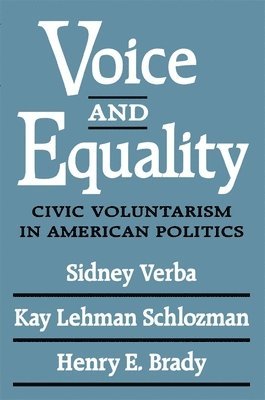
This book confirms Alexis de Tocqueville’s idea, dating back a century and a half, that American democracy is rooted in civil society. Citizens’ involvement in family, school, work, voluntary associations, and religion has a significant impact on their participation as voters, campaigners, donors, community activists, and protesters.The authors focus on the central issues of involvement: how people come to be active and the issues they raise when they do. They find fascinating differences along cultural lines, among African-Americans, Latinos, and Anglo-Whites, as well as between the religiously observant and the secular. They observe family activism moving from generation to generation, and they look into the special role of issues that elicit involvement, including abortion rights and social welfare.This far-reaching analysis, based on an original survey of 15,000 individuals, including 2,500 long personal interviews, shows that some individuals have a greater voice in politics than others, and that this inequality results not just from varying inclinations toward activity, but also from unequal access to vital resources such as education. Citizens’ voices are especially unequal when participation depends on contributions of money rather than contributions of time. This deeply researched study brilliantly illuminates the many facets of civic consciousness and action and confirms their quintessential role in American democracy.
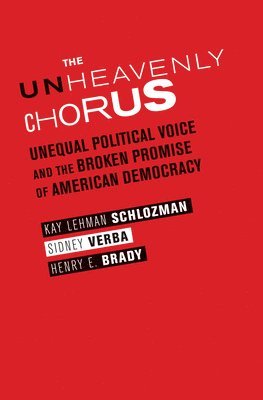
Unheavenly Chorus
Unequal Political Voice and the Broken Promise of American Democracy
Inbunden, Engelska, 2012
543 kr
Skickas inom 7-10 vardagar
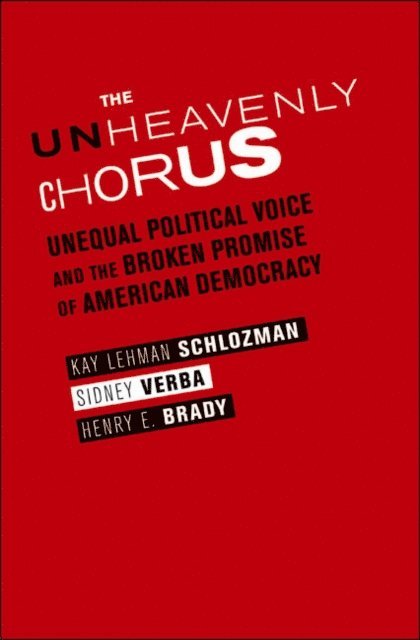
Politically active individuals and organizations make huge investments of time, energy, and money to influence everything from election outcomes to congressional subcommittee hearings to local school politics, while other groups and individual citizens seem woefully underrepresented in our political system. The Unheavenly Chorus is the most comprehensive and systematic examination of political voice in America ever undertaken--and its findings are sobering. The Unheavenly Chorus is the first book to look at the political participation of individual citizens alongside the political advocacy of thousands of organized interests--membership associations such as unions, professional associations, trade associations, and citizens groups, as well as organizations like corporations, hospitals, and universities. Drawing on numerous in-depth surveys of members of the public as well as the largest database of interest organizations ever created--representing more than thirty-five thousand organizations over a twenty-five-year period--this book conclusively demonstrates that American democracy is marred by deeply ingrained and persistent class-based political inequality.The well educated and affluent are active in many ways to make their voices heard, while the less advantaged are not. This book reveals how the political voices of organized interests are even less representative than those of individuals, how political advantage is handed down across generations, how recruitment to political activity perpetuates and exaggerates existing biases, how political voice on the Internet replicates these inequalities--and more. In a true democracy, the preferences and needs of all citizens deserve equal consideration. Yet equal consideration is only possible with equal citizen voice. The Unheavenly Chorus reveals how far we really are from the democratic ideal and how hard it would be to attain it.
Unheavenly Chorus
Unequal Political Voice and the Broken Promise of American Democracy
Häftad, Engelska, 2013
287 kr
Skickas inom 7-10 vardagar
Politically active individuals and organizations make huge investments of time, energy, and money to influence everything from election outcomes to congressional subcommittee hearings to local school politics, while other groups and individual citizens seem woefully underrepresented in our political system. The Unheavenly Chorus is the most comprehensive and systematic examination of political voice in America ever undertaken--and its findings are sobering. The Unheavenly Chorus is the first book to look at the political participation of individual citizens alongside the political advocacy of thousands of organized interests--membership associations such as unions, professional associations, trade associations, and citizens groups, as well as organizations like corporations, hospitals, and universities. Drawing on numerous in-depth surveys of members of the public as well as the largest database of interest organizations ever created--representing more than thirty-five thousand organizations over a twenty-five-year period--this book conclusively demonstrates that American democracy is marred by deeply ingrained and persistent class-based political inequality.The well educated and affluent are active in many ways to make their voices heard, while the less advantaged are not. This book reveals how the political voices of organized interests are even less representative than those of individuals, how political advantage is handed down across generations, how recruitment to political activity perpetuates and exaggerates existing biases, how political voice on the Internet replicates these inequalities--and more. In a true democracy, the preferences and needs of all citizens deserve equal consideration. Yet equal consideration is only possible with equal citizen voice. The Unheavenly Chorus reveals how far we really are from the democratic ideal and how hard it would be to attain it.
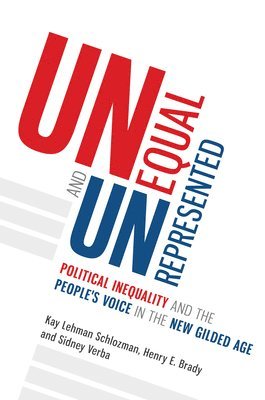
Unequal and Unrepresented
Political Inequality and the People's Voice in the New Gilded Age
Inbunden, Engelska, 2018
343 kr
Skickas inom 7-10 vardagar
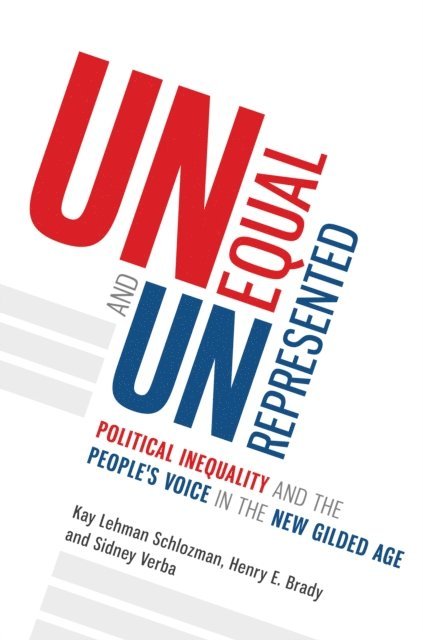
How American political participation is increasingly being shaped by citizens who wield more resourcesThe Declaration of Independence proclaims equality as a foundational American value. However, Unequal and Unrepresented finds that political voice in America is not only unequal but also unrepresentative. Those who are well educated and affluent carry megaphones. The less privileged speak in a whisper. Relying on three decades of research and an enormous wealth of information about politically active individuals and organizations, Kay Schlozman, Henry Brady, and Sidney Verba offer a concise synthesis and update of their groundbreaking work on political participation. The authors consider the many ways that citizens in American democracy can influence public outcomes through political voice: by voting, getting involved in campaigns, communicating directly with public officials, participating online or offline, acting alone and in organizations, and investing their time and money. Socioeconomic imbalances characterize every form of political voice, but the advantage to the advantaged is especially pronounced when it comes to any form of political expression--for example, lobbying legislators or making campaign donations—that relies on money as an input. With those at the top of the ladder increasingly able to spend lavishly in politics, political action anchored in financial investment weighs ever more heavily in what public officials hear. Citing real-life examples and examining inequalities from multiple perspectives, Unequal and Unrepresented shows how disparities in political voice endanger American democracy today.
Unequal and Unrepresented
Political Inequality and the People's Voice in the New Gilded Age
Häftad, Engelska, 2020
247 kr
Skickas inom 7-10 vardagar
How American political participation is increasingly being shaped by citizens who wield more resourcesThe Declaration of Independence proclaims equality as a foundational American value. However, Unequal and Unrepresented finds that political voice in America is not only unequal but also unrepresentative. Those who are well educated and affluent carry megaphones. The less privileged speak in a whisper. Relying on three decades of research and an enormous wealth of information about politically active individuals and organizations, Kay Schlozman, Henry Brady, and Sidney Verba offer a concise synthesis and update of their groundbreaking work on political participation. The authors consider the many ways that citizens in American democracy can influence public outcomes through political voice: by voting, getting involved in campaigns, communicating directly with public officials, participating online or offline, acting alone and in organizations, and investing their time and money. Socioeconomic imbalances characterize every form of political voice, but the advantage to the advantaged is especially pronounced when it comes to any form of political expression--for example, lobbying legislators or making campaign donations—that relies on money as an input. With those at the top of the ladder increasingly able to spend lavishly in politics, political action anchored in financial investment weighs ever more heavily in what public officials hear. Citing real-life examples and examining inequalities from multiple perspectives, Unequal and Unrepresented shows how disparities in political voice endanger American democracy today.
1 572 kr
Skickas inom 10-15 vardagar
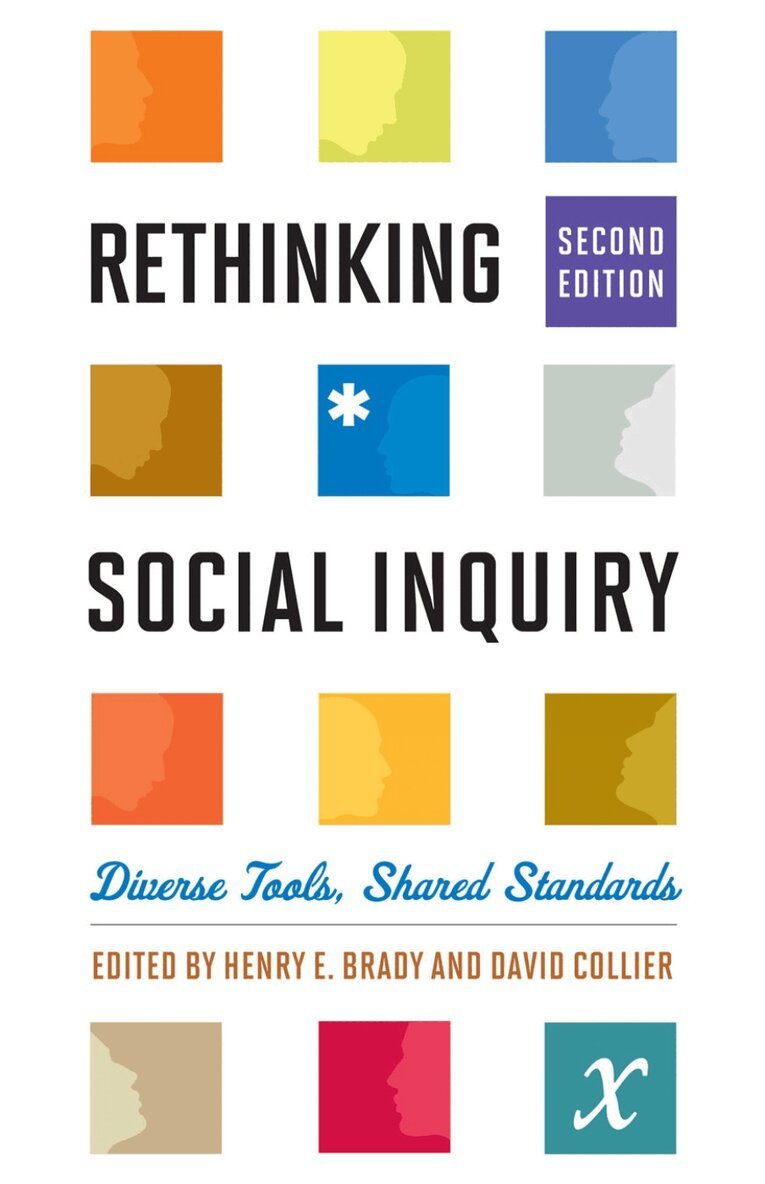
With innovative new chapters on process tracing, regression analysis, and natural experiments, the second edition of Rethinking Social Inquiry further extends the reach of this path-breaking book. The original debate with King, Keohane, and Verba_now updated_remains central to the volume, and the new material illuminates evolving discussions of essential methodological tools. Thus, process tracing is often invoked as fundamental to qualitative analysis, but is rarely applied with precision. Pitfalls of regression analysis are sometimes noted, but often are inadequately examined. And the complex assumptions and trade-offs of natural experiments are poorly understood. The second edition extends the methodological horizon through exploring these critical tools. A distinctive feature of this edition is the online placement of four chapters from the prior edition, all focused on the dialogue with King, Keohane, and Verba.
742 kr
Skickas inom 10-15 vardagar
With innovative new chapters on process tracing, regression analysis, and natural experiments, the second edition of Rethinking Social Inquiry further extends the reach of this path-breaking book. The original debate with King, Keohane, and Verba_now updated_remains central to the volume, and the new material illuminates evolving discussions of essential methodological tools. Thus, process tracing is often invoked as fundamental to qualitative analysis, but is rarely applied with precision. Pitfalls of regression analysis are sometimes noted, but often are inadequately examined. And the complex assumptions and trade-offs of natural experiments are poorly understood. The second edition extends the methodological horizon through exploring these critical tools. A distinctive feature of this edition is the online placement of four chapters from the prior edition, all focused on the dialogue with King, Keohane, and Verba.