Henry Gao – författare
Visar alla böcker från författaren Henry Gao. Handla med fri frakt och snabb leverans.
8 produkter
8 produkter
Inbunden, Engelska, 2023
1 702 kr
Skickas inom 7-10 vardagar
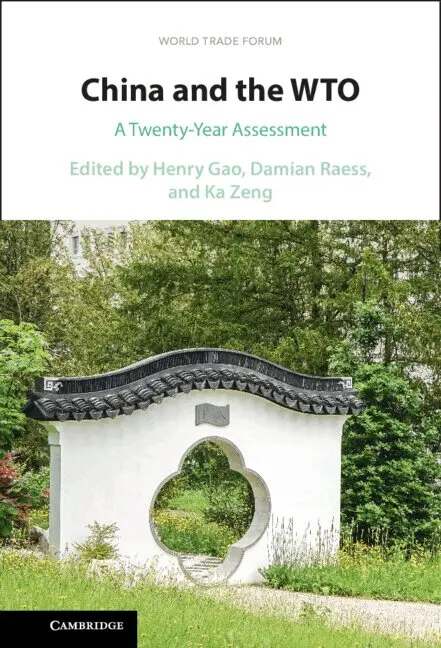
Examining the twenty years since China acceded to the World Trade Organization, this collection provides an original, systematic assessment of the opportunities and challenges that China has presented to the WTO. Offering in-depth analyses of the 'two-way' relationship between China and the WTO, the contributions explore a range of key issues from the varied effects of WTO membership for China and the global economy to the responses of the WTO members to China's rapid economic growth. It presents diverse perspectives of leading scholars from multiple disciplines, including law, economics, political science, and international relations, as well as practical insights from senior policymakers from both China and the United States. This is an invaluable contribution to ongoing debates about the implications of the rise of China for global economic governance and enriches discussions of the wide-ranging implications of China's growing integration into the multilateral trading system, both now and in the future. This title is also available as Open Access on Cambridge Core.
E-bok
PDF, Engelska, 20231 995 kr
Läs direkt efter köp
E-bok
Engelska, 20231 925 kr
Läs direkt efter köp
Häftad, Engelska, 2024
291 kr
Skickas inom 7-10 vardagar
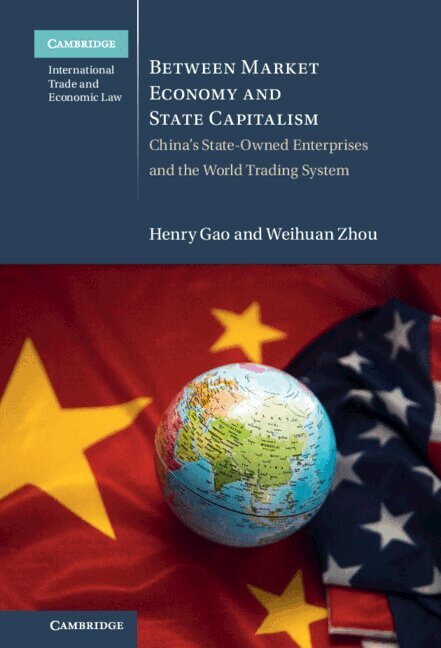
One major issue facing the world trading system today is how to deal with the challenge of China's state capitalism. Many commentators believe that the existing WTO rules are insufficient and, thus new rules are needed. This book challenges this conventional wisdom. Through meticulous studies and fresh analysis of the commitments in China's WTO accession package, existing rules on state capitalism in WTO agreements and recent attempts to make new rules on these issues at the bilateral, regional and multilateral levels, this book argues that existing WTO rules, especially those on subsidies, coupled with China-specific rules in its accession protocol, do provide feasible tools to counter China's state capitalism. This book also discusses the reasons for the lack of usage of these rules and provides concrete policy suggestions on how the rules may be better utilized, as well as how to conduct constructive negotiations on new rules in the WTO and beyond.
Inbunden, Engelska, 2022
1 145 kr
Skickas inom 7-10 vardagar
One major issue facing the world trading system today is how to deal with the challenge of China's state capitalism. Many commentators believe that the existing WTO rules are insufficient and, thus new rules are needed. This book challenges this conventional wisdom. Through meticulous studies and fresh analysis of the commitments in China's WTO accession package, existing rules on state capitalism in WTO agreements and recent attempts to make new rules on these issues at the bilateral, regional and multilateral levels, this book argues that existing WTO rules, especially those on subsidies, coupled with China-specific rules in its accession protocol, do provide feasible tools to counter China's state capitalism. This book also discusses the reasons for the lack of usage of these rules and provides concrete policy suggestions on how the rules may be better utilized, as well as how to conduct constructive negotiations on new rules in the WTO and beyond.
Inbunden, Engelska, 2017
2 183 kr
Skickas inom 10-15 vardagar
The TPP was negotiated among 12 economically diverse countries, including some most highly developed and rich countries (i.e., the United States, Japan, Australia, Canada, New Zealand, and Singapore), some newly industrialized countries (i.e., Mexico and Malaysia), and some less-developed countries (i.e., Peru, Chile, and Vietnam). A new paradigm created in this context is that countries with vastly different economic developments can actually agree on a set of very high standards to regulate their economic activities, to liberalize their trade, and to protect intellectual property and foreign investment. The contents of the TPP also reflect its status of being a “new paradigm” as the “21st-Century Trade Agreement” and being a pioneer in rule making in many key regulatory areas. These include not only the improved and enhanced rules on traditional issues already covered by the WTO , such as goods, services, and IP rights, but also the carefully designed rules in areas that have never been addressed in the WTO or comprehensively covered in other FTAs , such as state-owned enterprises, electronic commerce, and labor and environmental issues. Although the United States has withdrawn from the TPP, the remaining countries are still putting efforts into establishing a TPP without the United States or a TPP with China. Economically speaking, the current 11 parties account for about 20 % of the global economy. If such agreement is put into force, there will be significant implications for the region, for the multilateral system, and even for other FTAs. The book addresses the potential of the TPP to change the ways trade and investments are conducted and argues for its potential to be the start of an international trade/economic law revolution. The book elaborates the relationship between the TPP and other existing trade agreements such as the WTO and other FTAs and explains how the TPP is to deal with traditional and new issues. Taken together, the authors argue that the implications of the TPP go beyond its current membership. It is hoped that the book will make an important contribution to the field of international economic law.
E-bok
Engelska, 20172 031 kr
Läs direkt efter köp
The TPP was negotiated among 12 economically diverse countries, including some most highly developed and rich countries (i.e., the United States, Japan, Australia, Canada, New Zealand, and Singapore), some newly industrialized countries (i.e., Mexico and Malaysia), and some less-developed countries (i.e., Peru, Chile, and Vietnam). A new paradigm created in this context is that countries with vastly different economic developments can actually agree on a set of very high standards to regulate their economic activities, to liberalize their trade, and to protect intellectual property and foreign investment. The contents of the TPP also reflect its status of being a “new paradigm” as the “21st-Century Trade Agreement” and being a pioneer in rule making in many key regulatory areas. These include not only the improved and enhanced rules on traditional issues already covered by the WTO , such as goods, services, and IP rights, but also the carefully designed rules in areas that have never been addressed in the WTO or comprehensively covered in other FTAs , such as state-owned enterprises, electronic commerce, and labor and environmental issues. Although the United States has withdrawn from the TPP, the remaining countries are still putting efforts into establishing a TPP without the United States or a TPP with China. Economically speaking, the current 11 parties account for about 20 % of the global economy. If such agreement is put into force, there will be significant implications for the region, for the multilateral system, and even for other FTAs. The book addresses the potential of the TPP to change the ways trade and investments are conducted and argues for its potential to be the start of an international trade/economic law revolution. The book elaborates the relationship between the TPP and other existing trade agreements such as the WTO and other FTAs and explains how the TPP is to deal with traditional and new issues. Taken together, the authors argue that the implications of the TPP go beyond its current membership. It is hoped that the book will make an important contribution to the field of international economic law.
Häftad, Engelska, 2018
1 540 kr
Skickas inom 10-15 vardagar
The TPP was negotiated among 12 economically diverse countries, including some most highly developed and rich countries (i.e., the United States, Japan, Australia, Canada, New Zealand, and Singapore), some newly industrialized countries (i.e., Mexico and Malaysia), and some less-developed countries (i.e., Peru, Chile, and Vietnam). A new paradigm created in this context is that countries with vastly different economic developments can actually agree on a set of very high standards to regulate their economic activities, to liberalize their trade, and to protect intellectual property and foreign investment. The contents of the TPP also reflect its status of being a “new paradigm” as the “21st-Century Trade Agreement” and being a pioneer in rule making in many key regulatory areas. These include not only the improved and enhanced rules on traditional issues already covered by the WTO , such as goods, services, and IP rights, but also the carefully designed rules in areas that have never been addressed in the WTO or comprehensively covered in other FTAs , such as state-owned enterprises, electronic commerce, and labor and environmental issues. Although the United States has withdrawn from the TPP, the remaining countries are still putting efforts into establishing a TPP without the United States or a TPP with China. Economically speaking, the current 11 parties account for about 20 % of the global economy. If such agreement is put into force, there will be significant implications for the region, for the multilateral system, and even for other FTAs. The book addresses the potential of the TPP to change the ways trade and investments are conducted and argues for its potential to be the start of an international trade/economic law revolution. The book elaborates the relationship between the TPP and other existing trade agreements such as the WTO and other FTAs and explains how the TPP is to deal with traditional and new issues. Taken together, the authors argue that the implications of the TPP go beyond its current membership. It is hoped that the book will make an important contribution to the field of international economic law.