Henry Gee – författare
Visar alla böcker från författaren Henry Gee. Handla med fri frakt och snabb leverans.
47 produkter
En kort historik över livet på jorden
Av Henry Gee
Inbunden, 2024
273 kr
Lägg i varukorg
En gång för länge sedan kollapsade en jättestjärna. Så börjar Henry Gee sin berättelse om livet på jorden. Sedan tar han med läsaren på en halsbrytande, underhållande och upplysande odyssé genom 4,6 miljarder år av geologisk och evolutionär historia.I skuggan av kontinentaldrift, jordbävningar, …
(Very) Short History of Life On Earth
4.6 Billion Years in 12 Chapters
Av Henry Gee
Häftad, 2022
4,0 utav 5 stjärnor. Totalt antal röster: (1)
120 kr
Lägg i varukorg
Winner of the Royal Society Science Book.'Exhilaratingly whizzes through billions of years . . . Gee is a marvellously engaging writer' - The Times4.6 billion years of the story of life on Earth, in twelve concise chapters. Brief, brilliant and entirely gripping.For billions of years, Earth was an …
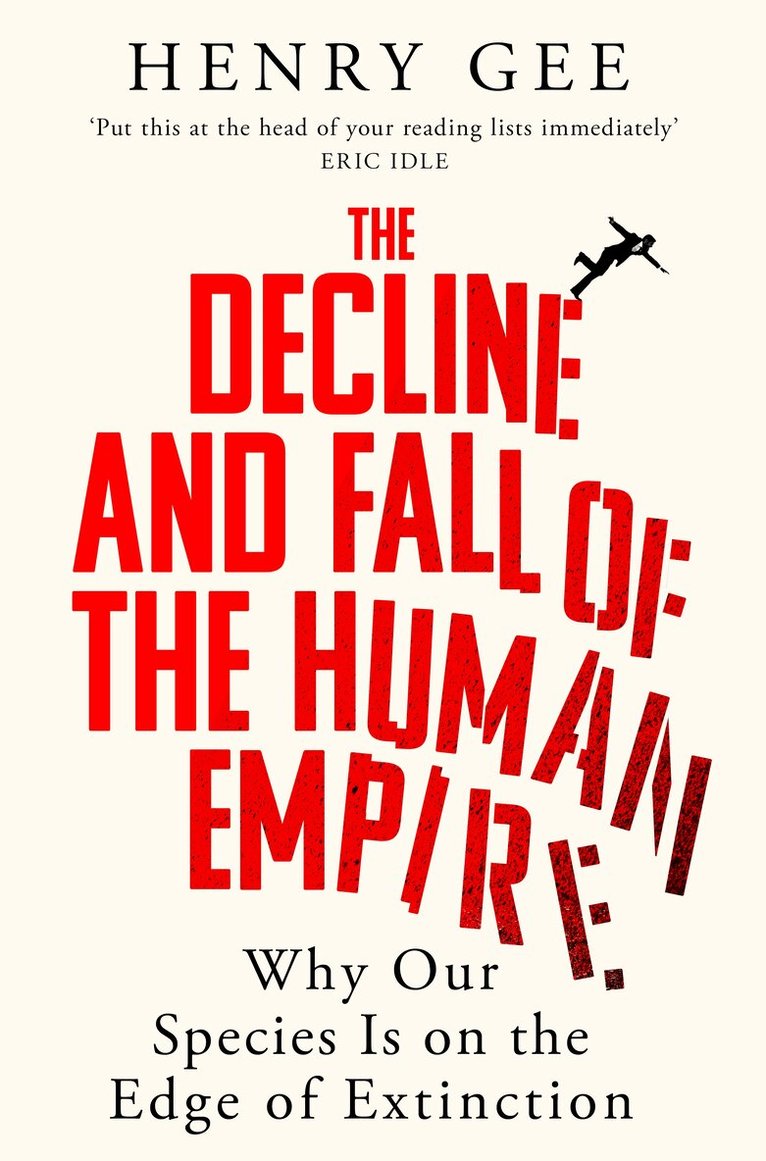
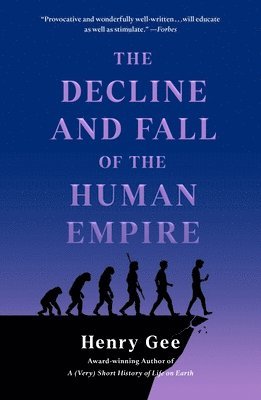
Decline and Fall of the Human Empire
Why Our Species Is on the Edge of Extinction
Av Henry Gee
Häftad, 2026
123 kr
Lägg i varukorg
‘Brilliant’ – The Times‘Hugely informative and entertaining’ – New Scientist‘Put this at the head of your reading lists immediately’ – Eric IdleFrom Royal Society Science Book Prize winner Henry Gee, a thrilling and thought-provoking account of the rise and fall of humankind.For the first time in …
A (Very) Short History of Life on Earth
4.6 Billion Years in 12 Pithy Chapters
Av Henry Gee
Häftad, 2023
249 kr
Lägg i varukorg
Accidental Species
Misunderstandings of Human Evolution
Av Henry Gee
Häftad, 2015
178 kr
Lägg i varukorg
The idea of a missing link between humanity and our animal ancestors predates evolution and popular science and actually has religious roots in the deist concept of the Great Chain of Being. Yet the metaphor has lodged itself in the contemporary imagination, and new fossil discoveries are often …
Deep Time
Cladistics, the Revolution in Evolution
Av Henry Gee
Häftad, 2008
142 kr
Lägg i varukorg
In Deep Time, Henry Gee, assistant editor of Nature, shows us that everything we think we know about evolution is wrong.For a long time, popular scientists have told us that by looking at a fossilised bone we could tell whether it belonged to our ancestors or not. This is not true.In Deep Time, …
Rise of the Dragon
Readings from Nature on the Chinese Fossil Record
Av Henry Gee
Inbunden, 2001
1090 kr
Lägg i varukorg
Over the past decade, fossil finds from China have stunned the world, grabbing headlines and changing perceptions with a wealth of new discoveries. Many of these finds were first announced to English speakers in the journal "Nature". "Rise of the Dragon" gathers together 16 of these original …
Shaking the Tree
Readings from Nature in the History of Life
Av Henry Gee
Inbunden, 2000
1178 kr
Lägg i varukorg
"Nature" has published news about the history of life ever since its first issue in 1869, in which T.H. Huxley ("Darwin's bulldog") wrote about Triassic dinosaurs. In recent years, the field has enjoyed a tremendous flowering due to new investigative techniques drawn from cladistics (a …
Shaking the Tree
Readings from Nature in the History of Life
Av Henry Gee
Häftad, 2000
349 kr
Lägg i varukorg
"Nature" has published news about the history of life ever since its first issue in 1869, in which T.H. Huxley ("Darwin's bulldog") wrote about Triassic dinosaurs. In recent years, the field has enjoyed a tremendous flowering due to new investigative techniques drawn from cladistics (a …
Across the Bridge
Understanding the Origin of the Vertebrates
Av Henry Gee
Häftad, 2018
289 kr
Lägg i varukorg
Our understanding of vertebrate origins and the backbone of human history evolves with each new fossil find and DNA map. Many species have now had their genomes sequenced, and molecular techniques allow genetic inspection of even nonmodel organisms. But as longtime Nature editor Henry Gee argues in …
Documents Illustrative of English Church History
Av William John Hardy, Henry Gee
Inbunden, 2022
513 kr
Lägg i varukorg
Documents Illustrative of English Church History
Av William John Hardy, Henry Gee
Häftad, 2022
391 kr
Lägg i varukorg
Elizabethan Clergy and the Settlement of Religion, 1558-1564
Av Henry Gee
Inbunden, 2022
399 kr
Lägg i varukorg
Elizabethan Clergy and the Settlement of Religion, 1558-1564
Av Henry Gee
Häftad, 2022
285 kr
Lägg i varukorg
Wonder of Life on Earth
A beautifully illustrated story of our planet, evolution and you, by the winner of the Royal Society Science Book Prize
Av Henry Gee
Inbunden, 2026, 9-12 år
227 kr
Lägg i varukorg
Discover the story of life on our planet as you have never seen it before! The perfect gift for the curious of any age.From the first tiny bubbles of life in the ocean to the arrival of endlessly adaptable apes, this is the ultimate survival story.In 30 bite-size chapters, Nature editor and author …
Wonder of Life on Earth
A beautifully illustrated story of our planet, evolution and you, by the winner of the Royal Society Science Book Prize
Av Henry Gee
E-bok, 2026
238 kr
Lägg i varukorg
Discover the story of life on our planet as you have never seen it before! The perfect gift for the curious of any age.From the first tiny bubbles of life in the ocean to the arrival of endlessly adaptable apes, this is the ultimate survival story.In 30 bite-size chapters, Nature editor and author …
Decline and Fall of the Human Empire
Why Our Species Is on the Edge of Extinction
Av Henry Gee
Häftad, 2025
186 kr
Lägg i varukorg
'Brilliant' – The Times'Hugely informative and entertaining' – New Scientist'Put this at the head of your reading lists immediately' – Eric IdleFrom the winner of the 2022 Royal Society Science Book Prize, a thrilling and thought-provoking account of the rise and fall of humankind.For the first …
Decline and Fall of the Human Empire
Why Our Species Is on the Edge of Extinction
Av Henry Gee
E-bok, 2025
173 kr
Lägg i varukorg
‘Brilliant’ – The Times‘Hugely informative and entertaining’ – New Scientist‘Put this at the head of your reading lists immediately’ – Eric IdleFrom Royal Society Science Book Prize winner Henry Gee, a thrilling and thought-provoking account of the rise and fall of humankind.For the first time in …
(Very) Short History of Life on Earth
4.6 Billion Years in 12 Pithy Chapters
Av Henry Gee
E-bok, 2021
173 kr
Lägg i varukorg
The Royal Society''s Science Book of the Year "[A]n exuberant romp through evolution, like a modern-day Willy Wonka of genetic space. Gee’s grand tour enthusiastically details the narrative underlying life’s erratic and often whimsical exploration of biological form and function.” —Adrian Woolfson, …
The Decline and Fall of the Human Empire
Why Our Species Is on the Edge of Extinction
Av Henry Gee
Inbunden, 2025
337 kr
Lägg i varukorg
By the award-winning author of A (Very) Short History of Life on Earth: a history of humanity on the brink of decline. A Next Big Idea Club Must-Read Selection We are living through a period that is unique in human history. For the first time in more than ten thousand years, the rate of human …
Decline and Fall of the Human Empire
Why Our Species Is on the Edge of Extinction
Av Henry Gee
E-bok, 2025
185 kr
Lägg i varukorg
By the award-winning author of A (Very) Short History of Life on Earth: a history of humanity on the brink of decline. A Next Big Idea Club Must-Read Selection We are living through a period that is unique in human history. For the first time in more than ten thousand years, the rate of human …
Decline and Fall of the Human Empire
Why Our Species Is on the Edge of Extinction
Av Henry Gee
Häftad, 2026
257 kr
Lägg i varukorg
By the award-winning author of A (Very) Short History of Life on Earth : a history of humanity on the brink of decline. We are living through a period that is unique in human history. For the first time in more than ten thousand years, the rate of human population growth is slowing down. In the …
(Very) Short History of Life on Earth
4.6 Billion Years in 12 Pithy Chapters
Av Henry Gee
Ljudbok, 2021
286 kr
Lägg i varukorg
The Royal Society''s Science Book of the Year "...Henry Gee presents a pithy, fascinating account of the stages of biological evolution. He''s a deliberate, engaged narrator whose slow pacing will require adaptation. This and creative background music and sound effects (dinosaur sounds?) create a …