This revised edition of Adam Wall's 1798 guide to the formal ceremonies of the University of Cambridge - written by Henry Gunning (1764-1854), at the time Senior Esquire Bedell, and published in 1828 - was intended to help 'that very numerous Class, who are desirous of proceeding to their degrees, but are utterly at a loss what steps to take for that purpose'. It goes through the academic year, from Michaelmas Day to the 'Public Commencement' in July, explains the procedure for electing or appointing the university officers, from the Member of Parliament to the 'School-keeper and Bell-ringer', and lists the various fees (including Stamp Duty) payable by the students before proceeding to their degrees. Gunning expressed 'sincere acknowledgements to the Syndics of the Press for their liberality in defraying the expenses of this publication', testifying to close co-operation between the Press and the University on this fascinating project.
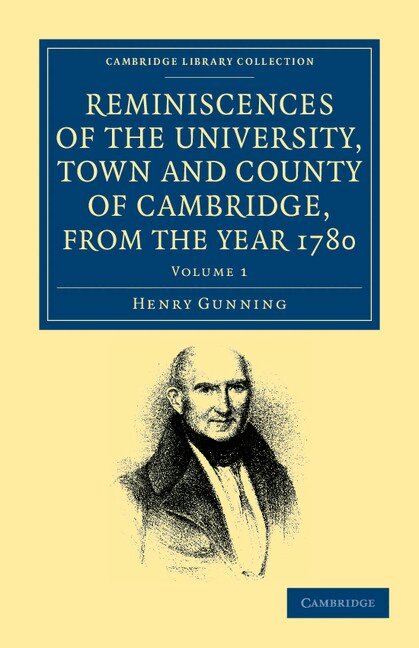
Henry Gunning (1768-1854) was a Bedell at the University of Cambridge for over sixty years, and in this capacity attended on the Vice-Chancellor at official ceremonies and published the results of votes held in the Senate House. This two-volume work, written shortly before his death, and published posthumously in 1854, was controversial. News of its publication caused consternation about what he might say, and senior members of the University are noticeably absent from the subscription list. Gunning had been active in town politics as well as university affairs, and, though he includes amusing and perhaps embarrassing anecdotes about Cambridge figures, he is not malicious. He makes it clear that Cambridge was at a low point academically when he arrived as a student, but he lived to see the beginnings of reform in the Victorian period. Volume 1 deals with his life from 1784 to 1794, when he became a Bedell.
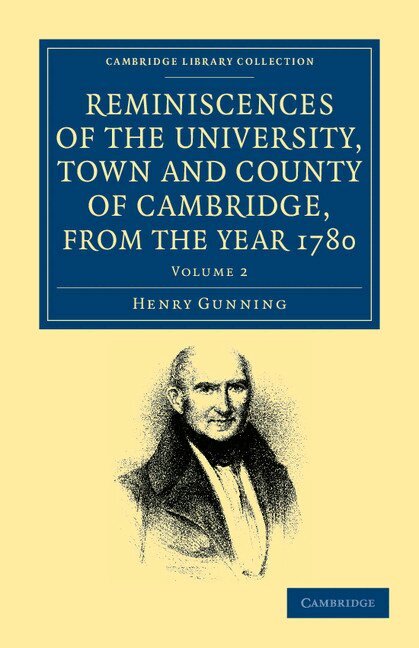
Henry Gunning (1768-1854) was a Bedell at the University of Cambridge for over sixty years, and in this capacity attended on the Vice-Chancellor at official ceremonies and published the results of votes held in the Senate House. This two-volume work, written shortly before his death, and published posthumously in 1854, was controversial. News of its publication caused consternation about what he might say, and senior members of the University are noticeably absent from the subscription list. Gunning had been active in town as well as university affairs, and, though he includes amusing and perhaps embarrassing anecdotes about Cambridge figures, he is not malicious. He makes it clear that Cambridge was at a low point academically when he arrived as a student, but he lived to see the beginnings of reform in the Victorian period. Volume 2, covering the period from 1795 to 1830, includes the events and friendships of his later life.