Henry J. Vogel – författare
Visar alla böcker från författaren Henry J. Vogel. Handla med fri frakt och snabb leverans.
5 produkter
5 produkter
E-bok
Engelska, 2014807 kr
Läs direkt efter köp
Molecular Mechanisms of Immunological Self-Recognition covers the understanding of immunological self-recognition. The introductory chapter of the book summarizes the dawn of the insight into immunological tolerance, and provides an overview of research on the underlying mechanisms. The book addresses the developments in the molecular mechanisms of B and T cell tolerance and describes the failure of tolerance in autoimmunity. The text concludes by furnishing orienting perspectives and highlighting new information presented. The novel findings characterized as impressive advances pertain to the areas of B cell development and the generation of molecular diversity; V gene usage, especially from transgenes, in positive and negative thymic selection; the handling of positive and negative signals by T and B cells; anergy in postthymic T cells; the design of peptide-based therapy for autoimmune diseases; and the design of therapy with the aid of monoclonal antibodies. Immunologists will find the text useful.
E-bok
PDF, Engelska, 20131 017 kr
Läs direkt efter köp
Pathobiology of the Endothelial Cell presents the proceedings of the symposium on the "Pathobiology of the Endothelial Cell" held at Arden House, on the Harriman Campus of Columbia University on June 5-7, 1981. The book discusses the endothelial growth regulation; the stimulation of vascular cell growth by macrophage products; and the control of proliferation and differentiation of endothelial cells. The text also describes vessel wall growth control; the implications of angiogenesis in vitro for tumor biology; and the interactions and activation of coagulation proteases. Platelet adhesion and fibrinogen proteolysis; endothelial protein synthesis; prostaglandins, and endothelial cell-cell interactions are also considered. The book further tackles topics on vascular pathobiology. Biologists, pathologists, biochemists, hematologists, oncologists, immunologists, and microbiologists will find the text invaluable.
E-bok
PDF, Engelska, 2014979 kr
Läs direkt efter köp
Metabolic Pathways, Third Edition, Volume V: Metabolic Regulation presents the regulation of metabolism in terms of the control of protein synthesis. This book discusses the significance of the control of metabolism in regard to the remarkable mechanisms involved and to the provision of an effective conceptual framework for appreciating the workings of the cell. Organized into 15 chapters, this edition begins with an overview of the numerous and diversified activities of a living cell. This text then examines the ability of living organisms to regulate the storage and mobilization of metabolizable energy. Other chapters consider the cytochrome system that represents the final common path of oxidation and coupled phosphorylation in the eukaryotic cell. This book discusses as well the profound changes that cell metabolism undergoes during differentiation. The final chapter deals with the chemical and genetic bases of the induction response in Gram-positive bacteria. This book is a valuable resource for biologists and physicians.
E-bok
PDF, Engelska, 20141 015 kr
Läs direkt efter köp
Evolving Genes and Proteins covers the proceedings of the "Evolving Genes and Proteins" symposium, held at the Institute of Microbiology of Rutgers, The State University on September 17 and 18, 1964, with support from the National Science Foundation. The book focuses on the structural and functional features of proteins and nucleic acids. The selection first offers information on lysine biosynthesis and evolution, lipid patterns in the evolution of organisms, and evolution of heme and chlorophyll. Discussions focus on the evolution of the genes of the porphyrin biosynthetic chain, polyunsaturated fatty acids in plants and animals, and diagnostic radiocarbon tracers. The text then examines evolutionary divergence and convergence in proteins; evolution of hemoglobin in primates; and constancy and variability of protein structure in respiratory and viral proteins. The publication takes a look at the comparative aspects of the structure and function of phosphoglucomutase, evolution of dehydrogenases, and enzymatic homology and analogy in phylogeny. The text also ponders on the evolution of an enzyme, role of mutations in evolution, enzyme catalysis and color of light in bioluminescent reactions, and evolution of the lactose utilization gene system in enteric bacteria. The selection is a valuable reference for microbiologists and readers interested in the study of genes and proteins.
E-bok
Engelska, 2014756 kr
Läs direkt efter köp
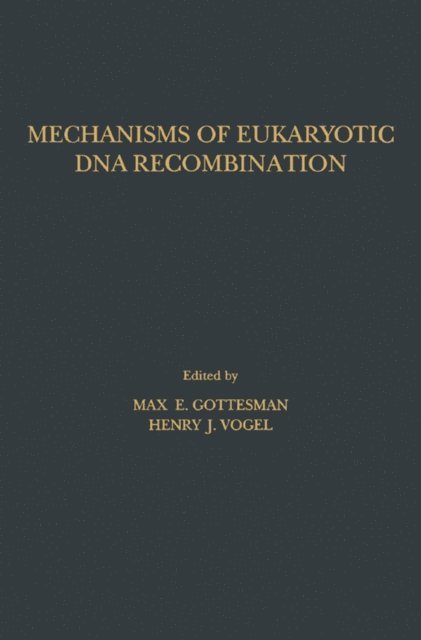
Mechanisms of Eukaryotic DNA Recombination is a collection of papers that discusses advances in eukaryotic genetic recombination. Papers address issues in eukaryotic genetic recombination, particularly DNA integration in mammalian genomes, genetic recombination in Drosophila or Caenorhabditis; the manipulation of the mouse genome; genome organization; and genetic recombination in protozoa. One paper discusses chromatid interactions during intrachromosomal recombination in mammalian cells, namely, intrachromatid and sister chromatid. Another paper analyzes the implication for chromosomal recombination and gene targeting; results on extrachromosomal recombination show that circles are inefficient substrates for recombination even if only one of two substrates in an intermolecular reaction is circular. One author discusses the genetics and molecular biology of recombination, citing the work of Watson and Crick, stating that crossing-over occurs between genes (not within them). He also explains that the formation and resolution of recombination intermediaries depend on enzyme or other proteins. This book will prove invaluable to cellular biologists, microbiologists, and researchers engaged in genetics and general biology.