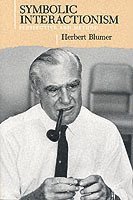
Herbert Blumer – författare
1 343 kr
Skickas inom 10-15 vardagar
485 kr
Skickas inom 10-15 vardagar
231 kr
Skickas inom 5-8 vardagar
1 493 kr
Skickas inom 10-15 vardagar
588 kr
Skickas inom 10-15 vardagar
651 kr
Läs direkt efter köp
400 kr
Skickas inom 5-8 vardagar
271 kr
Skickas inom 5-8 vardagar
343 kr
Skickas inom 5-8 vardagar
171 kr
Skickas inom 5-8 vardagar
388 kr
Skickas inom 5-8 vardagar
263 kr
Skickas inom 5-8 vardagar
661 kr
Skickas inom 3-6 vardagar
552 kr
Läs direkt efter köp
Herbert Blumer wrote continuously and voluminously, and consequently left a vast array of unpublished work at the time of his death in 1987. This posthumously published volume testifies further to his perceptive analysis of large-scale social organizations and elegant application of symbolic interactionist principles.
Blumer''s focus on the processual nature of social life and on the significance of the communicative interpretation of social contexts is manifest in his theory of industrialization and social change. His theory entails three major points: industrialization must be seen in processual terms, and the industrialization process is different for different historical periods; the consequences of industrialization are a function of the interpretive nature of human action and resembles a neutral framework within which groups interpret the meaning of industrial relations, and the industrial sector must be viewed in terms of power relations; industrial societies contain inherently conflicting interests.
The editors'' introductory essay outlines Blumer''s metatheoretical stance (symbolic interactionism) and its emphasis on the adjustive character of social life. It places Blumer''s theory in the context of contemporary macro theory, including world systems theory, resource dependence theory, and modernization theory.
572 kr
Läs direkt efter köp
Herbert Blumer wrote continuously and voluminously, and consequently left a vast array of unpublished work at the time of his death in 1987. This posthumously published volume testifies further to his perceptive analysis of large-scale social organizations and elegant application of symbolic interactionist principles.
Blumer''s focus on the processual nature of social life and on the significance of the communicative interpretation of social contexts is manifest in his theory of industrialization and social change. His theory entails three major points: industrialization must be seen in processual terms, and the industrialization process is different for different historical periods; the consequences of industrialization are a function of the interpretive nature of human action and resembles a neutral framework within which groups interpret the meaning of industrial relations, and the industrial sector must be viewed in terms of power relations; industrial societies contain inherently conflicting interests.
The editors'' introductory essay outlines Blumer''s metatheoretical stance (symbolic interactionism) and its emphasis on the adjustive character of social life. It places Blumer''s theory in the context of contemporary macro theory, including world systems theory, resource dependence theory, and modernization theory.