Herman Hattaway - Böcker
Visar alla böcker från författaren Herman Hattaway. Handla med fri frakt och snabb leverans.
8 produkter
8 produkter
343 kr
Skickas inom 3-6 vardagar
474 kr
Skickas inom 11-20 vardagar
From the introduction: “To those unacquainted with military history, [this book] provides an elementary, instructive, and readable military account of the American Civil War. The basic concepts of war, its conduct, management, and support, are thoroughly explained and explicitly applied throughout in order to make clear what many authors often incorrectly take for granted that readers already know. . . . We have tried to tell the military history of the war from the viewpoint of the higher commanders on both sides. We therefore emphasize strategy and logistics rather than tactics. . . .Strategy, management, and execution weigh more than superior numbers and resources in dictating the outcomes of wars, and the Civil War is no exception. The weaker side can win; the South almost did.”
461 kr
Skickas inom 10-15 vardagar
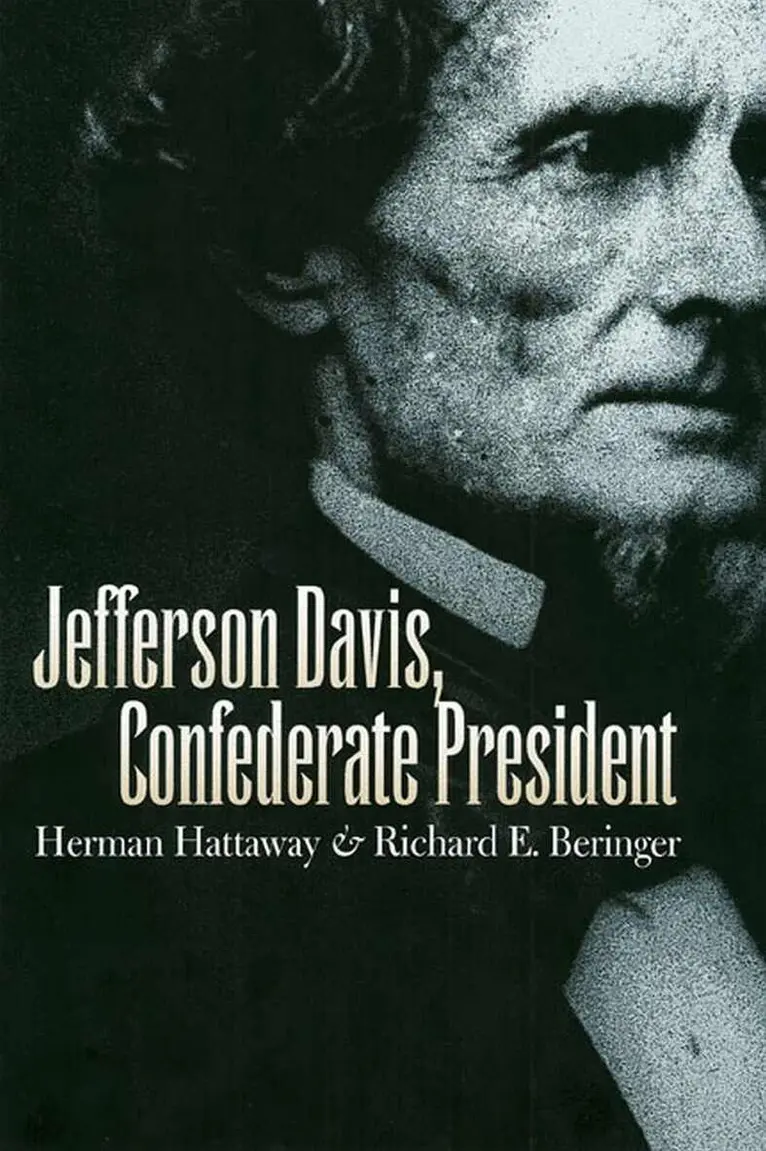
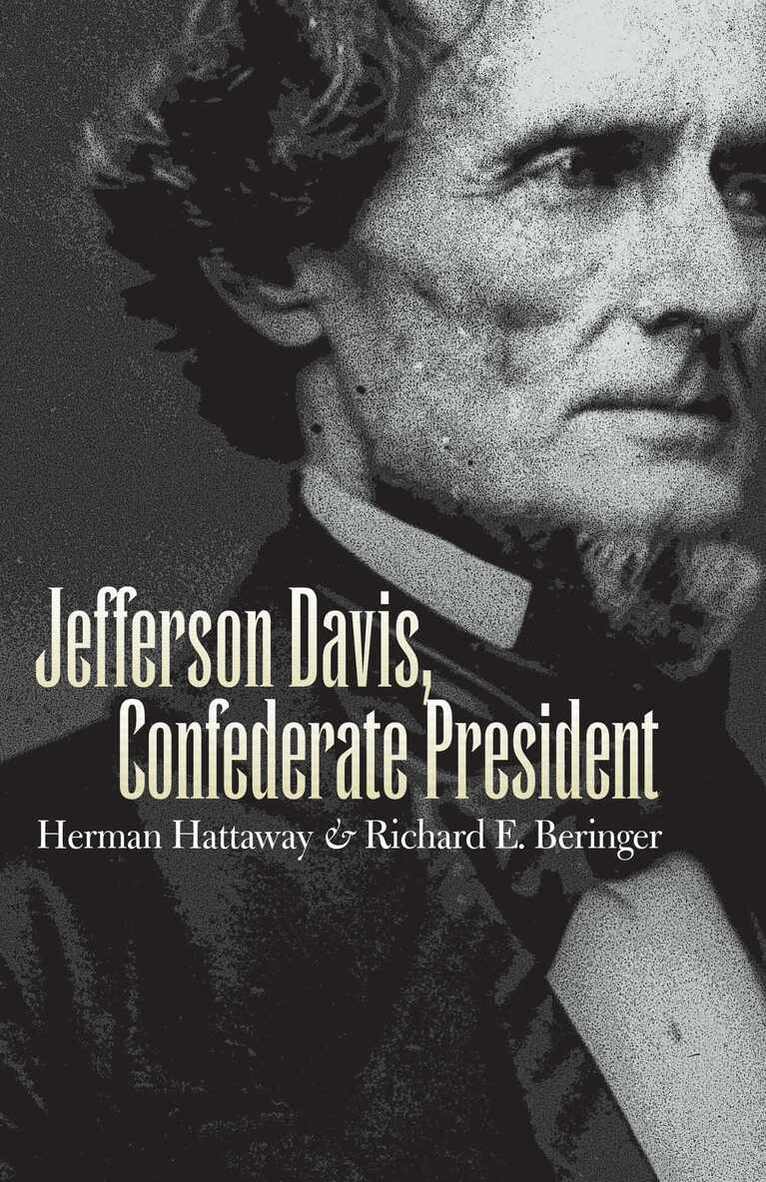
He was one of the most embattled heads of state in American history. Charged with building a new nation while waging a war for its very independence, he accepted his responsibilities reluctantly but carried them out with a fierce dedication to his ideals. Those efforts ultimately foundered on the shoals of Confederate defeat, leaving Davis stranded in public memory as both valiant leader and desolate loser.Now two renowned Civil War historians, Herman Hattaway and Richard Beringer, take a new and closer look at Davis's presidency. In the process, they provide a clearer image of his leadership and ability to handle domestic, diplomatic, and military matters under the most trying circumstances-without the considerable industrial and population resources of the North and without the formal recognition of other nations.Hattaway and Beringer examine Davis's strengths and weaknesses as president in light of both traditional evidence and current theories of presidential leadership. They show us a man so respected that northern colleagues regretted his departure from the U.S. Senate, but so bent on Southern independence he was willing to impose unthinkable burdens on his citizens-an apologist for slavery who was committed to state rights, even while growing nationalism in his new country called for a stronger central government.In assessing Davis's actual administration of the Confederate state, the authors analyze the Confederate government's constitution, institutions, infrastructure, and cabinet-level administrators. They also integrate events of Davis's presidency with the ongoing war as it encroached upon the South, offering a panoramic view of military strategy as seen from the president's office. They tell how Davis reacted to the outcomes of key battles and campaigns in order to assess his leadership abilities, his relations with civilian and military authorities, and—his own personal competency notwithstanding—his poor judgment in selecting generals.Rich in detail and exhilaratingly told with generous selections from Davis's own letters and speeches, Hattaway and Beringer provide the most insightful account available of the first and only Confederate presidency-suggesting that perhaps it was the Confederate government, rather than Davis himself, that failed. More than that, it shows us Jefferson Davis as an American leader and offers a new appreciation of his place in our country's history.
454 kr
Skickas inom 5-8 vardagar
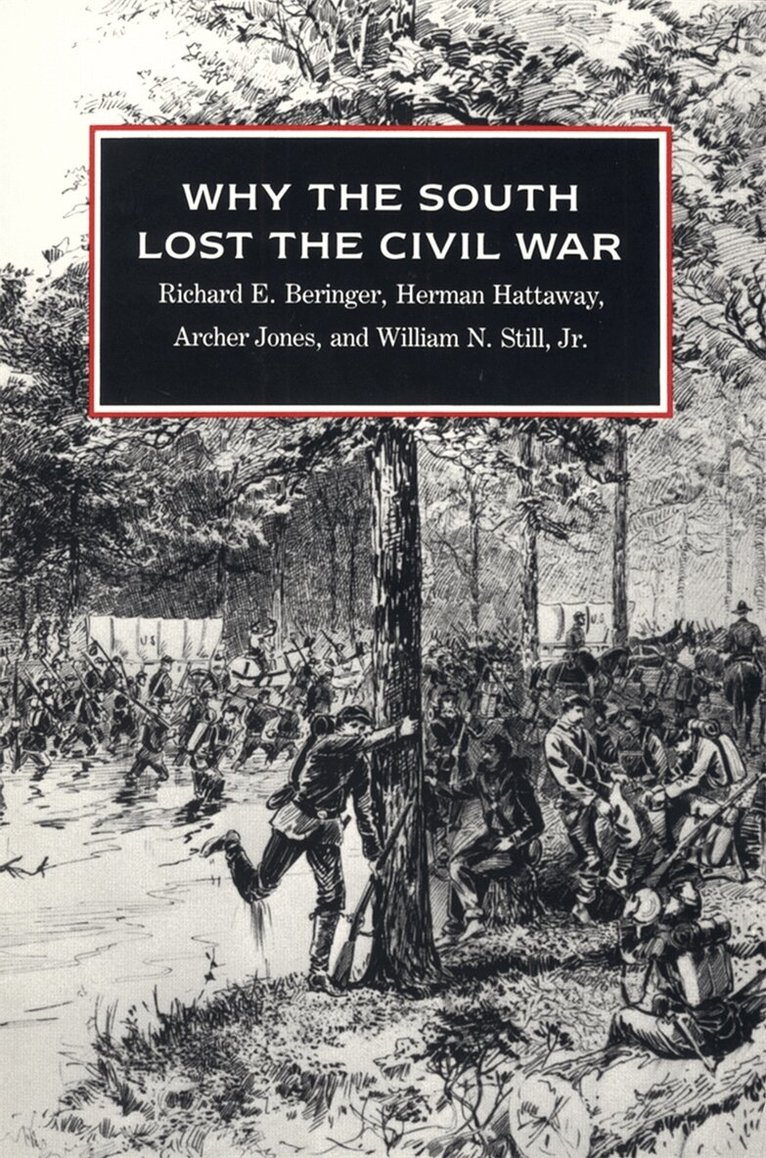
In Why the South Lost the Civil War, four historians considered the dominant explanations of southern defeat. At end, the authors found that states' rights disputes, the Union blockade, and inadequate southern forces did not fully account for the surrender. Rather, they concluded, the South lacked the will to win. Its strength sapped by a faltering Confederate nationalism and weakened by a peculiar brand of evangelical Protestantism, the South withdrew from a war not yet lost on the field of battle.Roughly one-half the size of its parent study, The Elements of Confederate Defeat retains all the essential arguments of the earlier edition, forming for the student a book that at once follows the events of the war and presents the major interpretations of its outcome in the South.
669 kr
Skickas inom 3-6 vardagar
In this widely heralded book first published in 1986, four historians consider the popularly held explanations for southern defeat—state-rights disputes, inadequate military supply and strategy, and the Union blockade—undergirding their discussion with a chronological account of the war's progress. In the end, the authors find that the South lacked the will to win, that weak Confederate nationalism and the strength of a peculiar brand of evangelical Protestantism sapped the South's ability to continue a war that was not yet lost on the field.
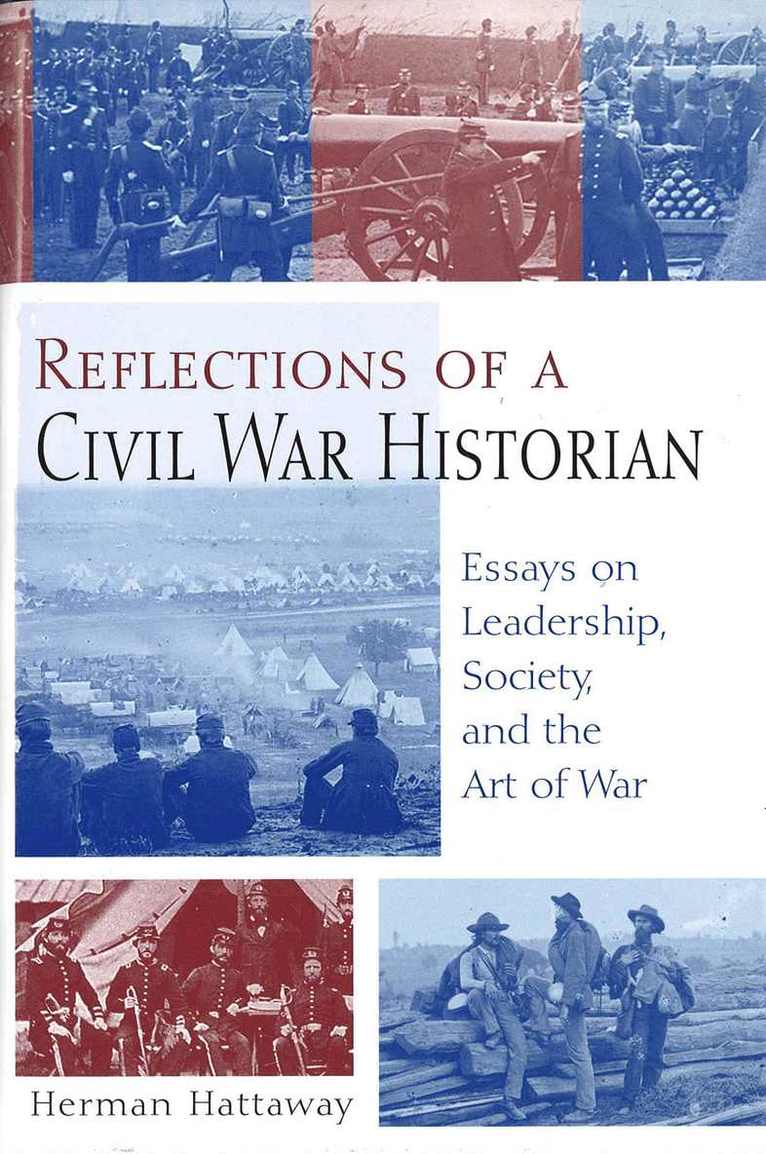
Reflections of a Civil War Historian
Essays on Leadership, Society, and the Art of War
Inbunden, Engelska, 2003
496 kr
Skickas inom 7-10 vardagar
Born in New Orleans, Herman Hattaway grew up in the Deep South. While it might not seem such a stretch for him to have become one of the foremost authorities on the Civil War and Southern history, Hattaway was actually at a loss for a career choice when he stumbled into the class of Professor T. Harry Williams at Louisiana State University. Williams's lectures and writings were so inspiring to Hattaway that he became a regular in his classes, receiving his B.A., M.A., and Ph.D. all under the professor's tutelage. This collection of essays is a compendium of Hattaway's writings from throughout his more-than-forty-year career. He is the author or coauthor of five books that were selections of the History Book Club - Jefferson Davis: Confederate President; Shades of Blue and Gray: An Introductory Military History of the Civil War; Why the South Lost the Civil War; How the North Won: A Military History of the Civil War; and General Stephen D. Lee. He is also the author of the text for Gettysburg to Vicksburg: The Five Original Civil War Battlefield Parks. Hattaway is a captivating historian who always seeks to engage others in the study of history. He has made many important scholarly contributions to our understanding of the Civil War, including new information on the military use of balloons, the relevance of religion in warfare, and the nature of good (and bad) military leadership. This book will appeal to the many historians and others who have been influenced by Hattaway over the years. It demonstrates how he has evolved as a historian and brings to light many essays that were never before published or published only in obscure journals.
378 kr
Skickas inom 10-15 vardagar
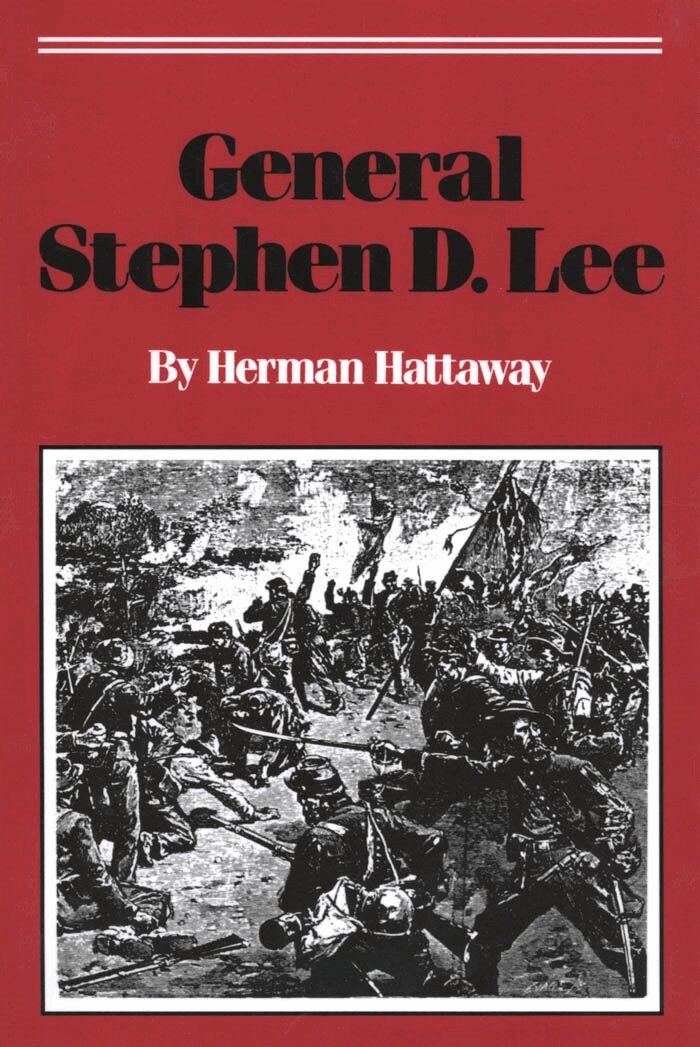
This biographical portrait by a well known Civil War historian brings much deserved attention to an exceptional Confederate military figure who became one of the New South's most progressive leaders.Herman Hattaway's clear, swift narrative depicts Lee in brilliant performance at Second Manassas, Chickasaw Bayou, Nashville, and after the war as a leader who used his military skills and discipline to work in bringing prosperity and education into the defeated South.After the war Lee established a home in Mississippi and found fulfillment in his calling to be the first president of Mississippi A & M College (today Mississippi State University), where he preached the message of applying brain power to farming. His admirers bestowed upon him the title ""Father of Industrial Education in the South.""Though the significance of Stephen D. Lee was long overlooked in historical perspectives of the Civil War and the development of the New South, Hattaway's appreciative study has remedied a case of unintended neglect by previous historians.
390 kr
Skickas inom 10-15 vardagar
This is a marvelously interesting collection of letters written over a period of thirty years by members of the Thomas A. Watkins family of Carroll County, Mississippi. The correspondence provides an intimate look into activities in the household of Forest Place during a period of great propserity and a period of decline. The letters reveal the poignant history of Dr. Watkins, a non practicing physician, his wife, and their two daughters. Some include passages written to various favored slaves, who in return dictated their responses. Besides offering a glimpse into the domestic life on a cotton plantation, these letters picture the years both of abundance and of twilight at Forest Place. The national sectional controversy attracts only scant attention. This antiabolitionist family watches, comments to one another, and witnesses the nation's drifting toward disunion and civil war. When it comes, the war for them remains an awful event happening at a distance, but more and more its effects become the focal subject of the correspondence. The Watkins women make uniforms and engage in raising money to benefit units at the front. As early as 1861 the plantation begins to feel the pinch of shortages and the economic discomfort of shockingly high prices. Dr. Watkins is alarmed over the growing illiquidity of Mississippi state bank notes. At war's end the family's economic stability has been eroded. Many friends and loved ones have been lost, but for Dr. Watkins the most bitter loss comes when his beloved wife falls ill in 1865 and dies. Through the Reconstruction the family has little relief from economic struggle. Poor growing seasons and uncertain prices eventually cause Dr. Watkins to sell Forest Place and move to Texas to live near his elder daughter. Eventually the remnant of the family left in Mississippi dies off or like the patriarch moves away. Now, only the letters remain.