Hermann Dugas – författare
Visar alla böcker från författaren Hermann Dugas. Handla med fri frakt och snabb leverans.
3 produkter
3 produkter
Häftad, Engelska, 1999
550 kr
Skickas inom 10-15 vardagar
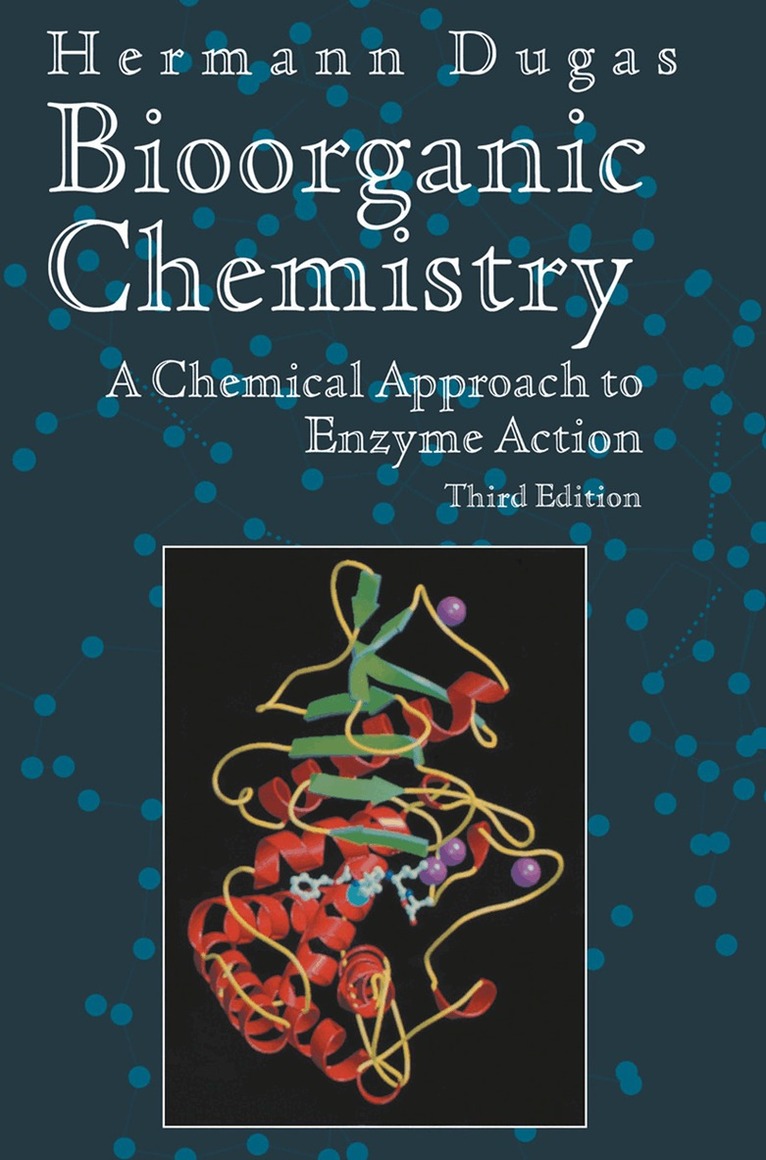
New textbooks at all levels of chemistry appear with great regularity. So me fields such as basic biochemistry, organic reaction mechanisms, weIl represented by many excellent and chemical thermodynamics are texts, and new or revised editions are published sufficiently often to keep up with progress in research. However, some areas of chemistry, especially many of those taught at the graduate level, suffer from areal lack of up-to-date textbooks. The most serious needs occur in fields that are rapidly changing. Textbooks in these subjects usually have to be written by scientists actually involved in the research that is advancing the field. It is not often easy to persuade such individuals to set time aside to help spread the knowledge they have accumulated. Our goal, in this series, is to pinpoint areas of chemistry where recent progress has outpaced what is covered in any available textbooks, and then seek out and per suade experts in these fields to produce relatively concise but instructive introductions to their fields. These should serve the needs of one semester or one quarter graduate courses in chemistry and biochem istry. In some cases the availability of texts in active research areas should help stimulate the creation of new courses. Charles R. Cantor vii Preface to the Third Edition It was over 100 years ago that Emil Fischer postulated his ingenious "lock-and-key" principle, whieh was subsequently applied to the devel opment of a modern theory of enzyme catalysis.
E-bok
PDF, Engelska, 2012687 kr
Läs direkt efter köp
New textbooks at all levels of chemistry appear with great regularity. So me fields such as basic biochemistry, organic reaction mechanisms, weIl represented by many excellent and chemical thermodynamics are texts, and new or revised editions are published sufficiently often to keep up with progress in research. However, some areas of chemistry, especially many of those taught at the graduate level, suffer from areal lack of up-to-date textbooks. The most serious needs occur in fields that are rapidly changing. Textbooks in these subjects usually have to be written by scientists actually involved in the research that is advancing the field. It is not often easy to persuade such individuals to set time aside to help spread the knowledge they have accumulated. Our goal, in this series, is to pinpoint areas of chemistry where recent progress has outpaced what is covered in any available textbooks, and then seek out and per suade experts in these fields to produce relatively concise but instructive introductions to their fields. These should serve the needs of one semester or one quarter graduate courses in chemistry and biochem istry. In some cases the availability of texts in active research areas should help stimulate the creation of new courses. Charles R. Cantor vii Preface to the Third Edition It was over 100 years ago that Emil Fischer postulated his ingenious "lock-and-key" principle, whieh was subsequently applied to the devel opment of a modern theory of enzyme catalysis.
E-bok
PDF, Engelska, 20121 132 kr
Läs direkt efter köp
Springer Advanced Texts In Chemistry New textbooks at all levels of chemistry appear with great regularity. Some fields like basic biochemistry, organic reaction mechanisms, and chemical thermody namics are well represented by many excellent texts, and new or revised editions are published sufficiently often to keep up with progress in research. However, some areas of chemistry, especially many of those taught at the graduate level, suffer from a real lack of up-to-date textbooks. The most serious needs occur in fields that are rapidly changing. Textbooks in these subjects usually have to be written by scientists actually involved in the research that is advancing the field. It is not often easy to persuade such individuals to set time aside to help spread the knowledge they have accumulated. Our goal, in this series, is to pinpoint areas of chemistry where recent progress has outpaced what is covered in any available textbooks, and then seek out and persuade experts in these fields to produce relatively concise but instructive introductions to their fields. These should serve the needs of one semester or one quarter graduate courses in chemistry and biochemistry. In some cases the availability of texts in active research areas should help stimulate the creation of new courses.