Hester Schadee – författare
Visar alla böcker från författaren Hester Schadee. Handla med fri frakt och snabb leverans.
4 produkter
On Leaders and Tyrants
Av Poggio Bracciolini, Guarino of Verona m. fl.
Inbunden, 2024
371 kr
Lägg i varukorg
The first complete English translation of a controversial Renaissance debate centering moral questions on power and leadership.Poggio Bracciolini was a prominent scholar-official of the early Renaissance and a leading representative of Florentine humanism. He was employed as a secretary to seven …
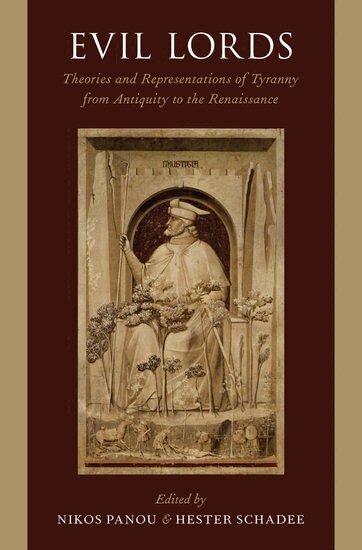
Evil Lords
Theories and Representations of Tyranny from Antiquity to the Renaissance
Av Hester Schadee, Nikos Panou
E-bok, 2018
1246 kr
Lägg i varukorg
Evil Lords uses the prism of bad rule or tyranny to enhance our understanding of political discourse from the ancient world to the Renaissance, elucidating premodern notions of sovereignty as well as the relation between ethics and politics, the individual and society, power, and propaganda. Eleven …
Evil Lords
Theories and Representations of Tyranny from Antiquity to the Renaissance
Av Nikos Panou, Hester Schadee
Inbunden, 2018
1752 kr
Lägg i varukorg
Evil Lords uses the prism of bad rule or tyranny to enhance our undestranding of political discourse from the ancient world to the renaissance, offering insights into pre-modern conceptions of sovereignty, as well as into the relation between ethics and politics, the individual and society, and …
Evil Lords
Theories and Representations of Tyranny from Antiquity to the Renaissance
Av Hester Schadee, Nikos Panou
E-bok, 2018
1246 kr
Lägg i varukorg
Evil Lords uses the prism of bad rule or tyranny to enhance our understanding of political discourse from the ancient world to the Renaissance, elucidating premodern notions of sovereignty as well as the relation between ethics and politics, the individual and society, power, and propaganda. Eleven …