Hilary Elfick – författare
Visar alla böcker från författaren Hilary Elfick. Handla med fri frakt och snabb leverans.
2 produkter
2 produkter
Häftad, Engelska, 2004
254 kr
Tillfälligt slut
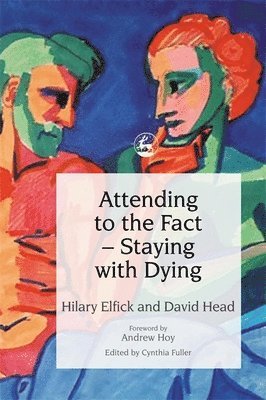
Macmillan Nurses and church bereavement visitors, some hospice trained, will use this book: so, too, will "dippers in" and purchasers of bedside books, both before and after bereavement.'-Plus - Christian Council on Ageing'I would recommend this book to professionals and non-professionals alike. It is thought provoking and insightful, yet because of the topics explored, tragic in places. It is a gentle reminder of the humanitarian aspects of caring for, and staying with, the dying in this increasingly medicalized world'.- Palliative Medicine'The poets, Hilary Elfick and David Head, both have connections with the hospice movement, and their poems tell us much about hospice philosophy and practice in care for the dying. I found the poems in which the dying speak for themselves the most moving: "I want a stay of execution The longer the better. I can wait. Let the guilty die. Not me. Not who I am." Poems about individual patients are interspersed with poems exploring connecting themes in the poets' lives. Patients, families and carers are all represented. This inclusiveness gives the book real power. Cythia Fuller's careful arrangement and selection of the poems moves the reader from the shock and denial of first diagnosis through acceptance (although not in all cases) of the inevitablilty of death. The experience of loss and painful sharpness of memory is captured in lines like: "What is grieving, but attending to the fact that you have gone?" Dr Andrew Hoy in his introduction suggests the book should be essential reading for professional carer, as well as for patients and families. After reading (and re-reading) Hilary Elfick's "Breaking the Thread" I can see why.' - Palliative Care Review'The Poetry in Attending to the Fact was written by a hospice chaplain and a hospice trustee. They range over the human events and activities around death and dying, including the intimate and the undignified. Horror and pain aren't shirked, but yet bring dignity and compassion.'- Progress in Palliative Care'It should be of interest to health and social care workers who operate in hospice or palliative care services, or indeed to any staff who want to gain some insight into the experience of supporting someone with a terminal condition... a useful reminder of the need for staff to recognize and reflect upon the deep emotions which can arise in this area of work.' - Care and Health Magazine'The poems show the human side of care and are essential reading for those who wish to be critically reflective about the nature of care and their own insight within the caring process.'- Contact'The poems range from sad to the inspirational, describing the humiliating indignities that accompany decline and death as well as the experience of caring for, parting from and staying with the dying. The poets have made an honest response to the people they have met and the experiences they have found themselves in. It will certainly add to limited resources available in this area.' - Methodist Recorder'Unflinchingly honest and intimate, Elfick and Head find the words to express the inexpressible: not only the humiliating indignities that accompany human decline and death and the ambivalent feelings evoked by intimacy, but the experience of caring for, parting from, and staying with the dying.' - Sandra Bertman, Research Professor of Palliative Care, Boston University'These poems show the reader the human side of care. They must be essential reading for professional carers as well as for patients and families.'- Andrew Hoy, Chairman of the Association for Palliative Medicine of Great Britain and IrelandThis inspirational collection of poetry explores one of the most difficult and painful subjects to make sense of in writing - what it is like to care for the dying and the dead. Drawing on the authors' own work in hospices, these poems take the reader on a journey that explores the experience of either supporting, or being, someone going through the physical changes and complex emotions that accompany ill-health and death. The poems themselves range from the savage to the sad to the sublime, encompassing a wide range of perspectives on illness, care, loss, grieving and comfort. They highlight the centrality of the human spirit. Attending to the Fact is an unusual source of experience, insight and self-recognition, both for professionals working with the seriously ill and dying, and also for patients and their families and all who have been touched by grief.
Häftad, Engelska, 2020
330 kr
Tillfälligt slut
Poet John Wakeman told The Irish Times that he thought "it would be exciting to start a poetry magazine out of the wilds of West Cork in Ireland." Within a few years THE SHOp became one of Ireland’s most highly-regarded poetry magazines, not only for its contents but for its looks. "Unquestionably the most beautiful poetry magazine now in existence," Bernard O’Donoghue said. Seamus Heaney described himself as a "confirmed SHOp-lifter." The title was inspired by W.B. Yeats' "foul rag and bone shop of the heart." The idiosyncratic lower-case 'p' was a whim of the early magazine designer, Joakim Säflund. Over the period between 1999 and 2014, THE SHOp published the work of internationally recognised poets such as Seamus Heaney, Paul Muldoon, Medbh McGuckian, Brendan Kennelly, Paula Meehan, Theo Dorgan, John F. Deane, Derek Mahon and John Montague. Significantly, it also provided a welcome and much needed space for emerging talents. Gradually, international poets began to contribute work. Each issue contained at least one poem in Irish, by poets such as Gabriel Rosenstock and Michael Davitt, with a translation. When John died in 2018 the poetry editor of The Irish Times, Gerard Smyth, wrote, "John Wakeman and his wife Hilary created a communal home for Irish poetry." The President of the Irish Republic, Michael D. Higgins, himself a poet, sent his condolences to Hilary and her family. One of the first women rectors of the Church of Ireland, Hilary had retired in 2001 and became co-editor and designer of THE SHOp. When Hilary Wakeman suggested producing an anthology to celebrate THE SHOp's legacy, it was met with such enthusiasm she knew she had to make it happen. So with the help of her co-editor, the poet Hilary Elfick, together they identified 285 poems from the 840 poets published in THE SHOp during those 15 years. The result is this collection of some of the finest Irish and international poetry ever assembled in one volume. The former Director of Poetry Ireland, Theo Dorgan, stated that "THE SHOp is a part of Irish literary history. That John and Hilary managed to produce such a rich and eclectic journal … from the side of a hill in West Cork was a source of wonder to us all."