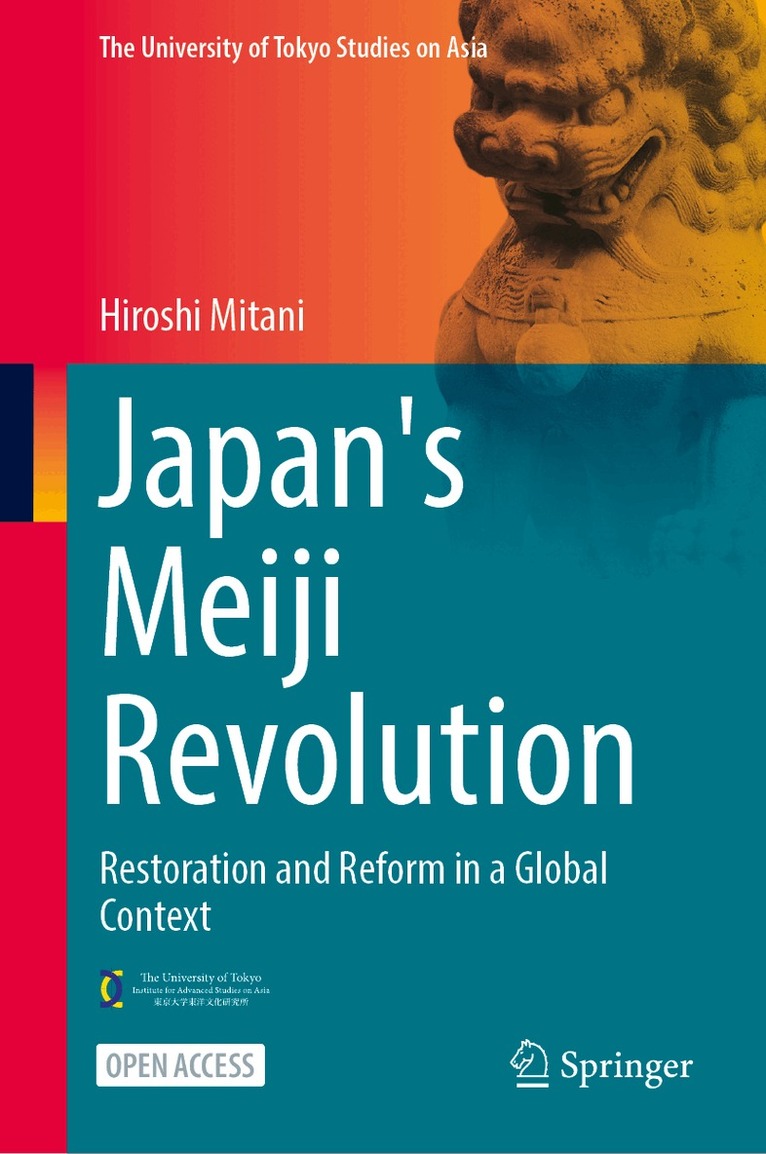
Hiroshi Mitani – författare
Visar alla böcker från författaren . Handla med fri frakt och snabb leverans.
1 produkt
1 produkt
Inbunden, Engelska, 2026
620 kr
Kommande
This open access book is a readable and thought-provoking exploration of the significance of Japan’s Meiji Revolution within a global context. It argues that the so-called “Meiji Restoration” of 1868 was only one, albeit significant, milestone in what it calls the “Meiji Revolution,” a complex series of political and social transformations over the course of several decades.The book begins by examining the double-headed federation state, consisting of the Tokugawa government and the imperial court, as well as the growing mismatch between status and ability in early modern Japan. Next, it emphasizes how the Tokugawa government shifted its attention to the West and carefully planned its foreign policy in the early nineteenth century, which meant that it was prepared for the arrival of the US envoy in 1853. As the issues of a US treaty and shogunal succession became entangled, the government’s suppression of opposition opened the way for the public sphere and violence. While the role of low-ranking samurai has traditionally been emphasized, this book highlights the significance of a movement by high-ranking daimyo to participate in national politics, which eventually led to the imperial restoration. The new Meiji government’s reforms included abolishing the domains and the status system in 1871, introducing Western-style institutions for nation-building, and establishing a constitutional monarchy in 1890. The book concludes with a comparative perspective on modern revolutions.Broadly relevant to historians, sociologists, and political scientists, this book is an important work in global studies, decentering the Western-centric narratives of history.