Holly Hillgardner – författare
Visar alla böcker från författaren Holly Hillgardner. Handla med fri frakt och snabb leverans.
3 produkter
3 produkter
Inbunden, Engelska, 2016
1 251 kr
Skickas inom 5-8 vardagar
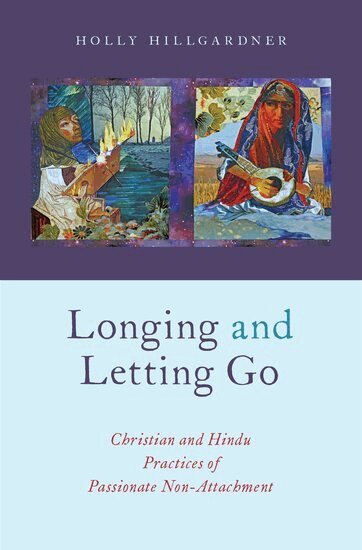
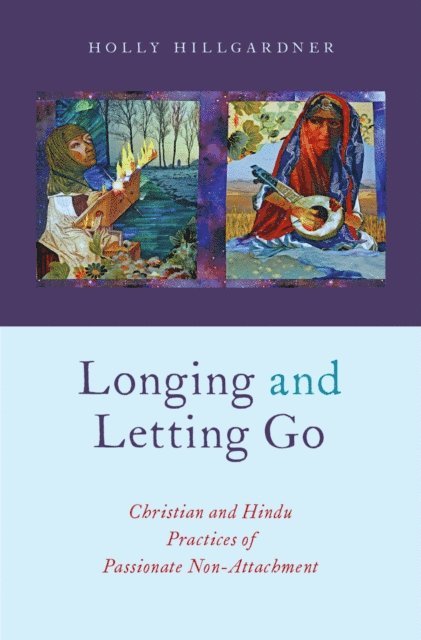
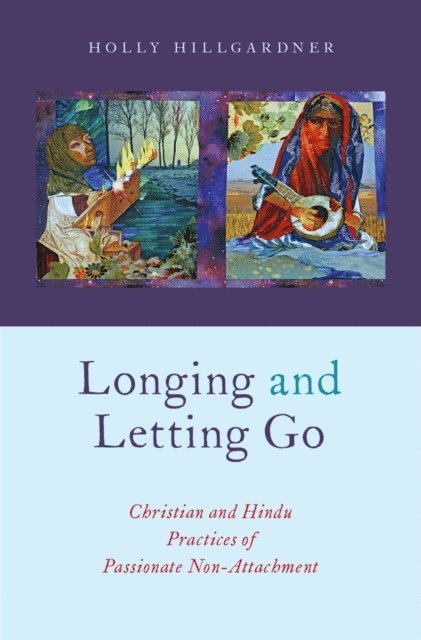
Longing and Letting Go explores and compares the energies of desire and non-attachment in the writings of Hadewijch, a thirteenth-century Christian Beguine, and Mirabai, a sixteenth-century Hindu bhakta. Through an examination of the relational power of their respective mystical poetics of longing, the book invites interreligious meditation in the middle spaces of longing as a resource for an ethic of social justice: passionate non-attachment thus surfaces as an interreligious value and practice in the service of a less oppressive world.Mirabai and Hadewijch are both read through the primary comparative framework of viraha-bhakti, a mystical eroticism from Mirabai's Vaisnava Hindu tradition that fosters communal experiences of longing. Mirabai's songs of viraha-bhakti are conversely read through the lens of Hadewijch's concept of "noble unfaith," which will be construed as a particular version of passionate non-attachment. Reading back and forth across the traditions, the comparative currents move into the thematics of apophatic theological anthropology, comparative feminist ethics, and religiously plural identities. Judith Butler provides a philosophically complementary schema through which to consider how the mystics' desire, manifest in the grief of separation and the erotic bliss of near union, operates as a force of "dispossession" that creates the very conditions for non-attachment. Hadewijch's and Mirabai's practices of longing, read in terms of Butler's concept of dispossession, offer clues for a lived ethic that encourages desire for the flourishing of the world, without that passion consuming the world, the other, or the self.Longing--in its vulnerable, relational, apophatic, dispossessive aspects--informs a lived ethic of passionate non-attachment, which holds space for the desires of others in an interrelated, fragile world. When configured as performative relationality and applied to the discipline of comparative theology, practices of longing decenter the self and allow for the emergence of dynamic, even plural, religious identities.
E-bok
PDF, Engelska, 20161 048 kr
Läs direkt efter köp
Mirabai, a sixteenth-century Indian princess, wrote passionate love songs to Lord Krishna. Hadewijch, a thirteenth-century European Beguine, wrote of her yearning to become Love itself, to be "God with God." Each woman practiced a full-bodied, sensuously-imaged longing for love; at the same time, each also practiced certain ascetic disciplines. Spanning centuries, continents, and religious traditions, this book juxtaposes Hadewijch''s and Mirabai''s inextricable energies of longing and letting go as resources for a comparative theology of passionate non-attachment. Within both Hinduism and Christianity, desire and renunciation are often presented as opposites; yet, both Mirabai and Hadewijch, in their own distinct ways, illuminate the integral, tensile relationship between these concepts. Rather than choosing one or the other, each woman''s dual practices of longing and letting go not only take her on an inward spiritual journey but also deeply involve her in the beauty and suffering of the wider world. Drawing out crucial differences and intriguing resonances between these two women of faith, Hillgardner develops a Hindu-Christian comparative theology that argues for an interreligious ethic of passionate non-attachment, one capacious and brave enough to hold together our own longings with the desires of others in an interconnected, fragile world.
1 048 kr
Läs direkt efter köp
Mirabai, a sixteenth-century Indian princess, wrote passionate love songs to Lord Krishna. Hadewijch, a thirteenth-century European Beguine, wrote of her yearning to become Love itself, to be "God with God." Each woman practiced a full-bodied, sensuously-imaged longing for love; at the same time, each also practiced certain ascetic disciplines. Spanning centuries, continents, and religious traditions, this book juxtaposes Hadewijch''s and Mirabai''s inextricable energies of longing and letting go as resources for a comparative theology of passionate non-attachment. Within both Hinduism and Christianity, desire and renunciation are often presented as opposites; yet, both Mirabai and Hadewijch, in their own distinct ways, illuminate the integral, tensile relationship between these concepts. Rather than choosing one or the other, each woman''s dual practices of longing and letting go not only take her on an inward spiritual journey but also deeply involve her in the beauty and suffering of the wider world. Drawing out crucial differences and intriguing resonances between these two women of faith, Hillgardner develops a Hindu-Christian comparative theology that argues for an interreligious ethic of passionate non-attachment, one capacious and brave enough to hold together our own longings with the desires of others in an interconnected, fragile world.