Hollylynne S. Lee - Böcker
Visar alla böcker från författaren Hollylynne S. Lee. Handla med fri frakt och snabb leverans.
2 produkter
2 produkter
531 kr
Skickas inom 7-10 vardagar
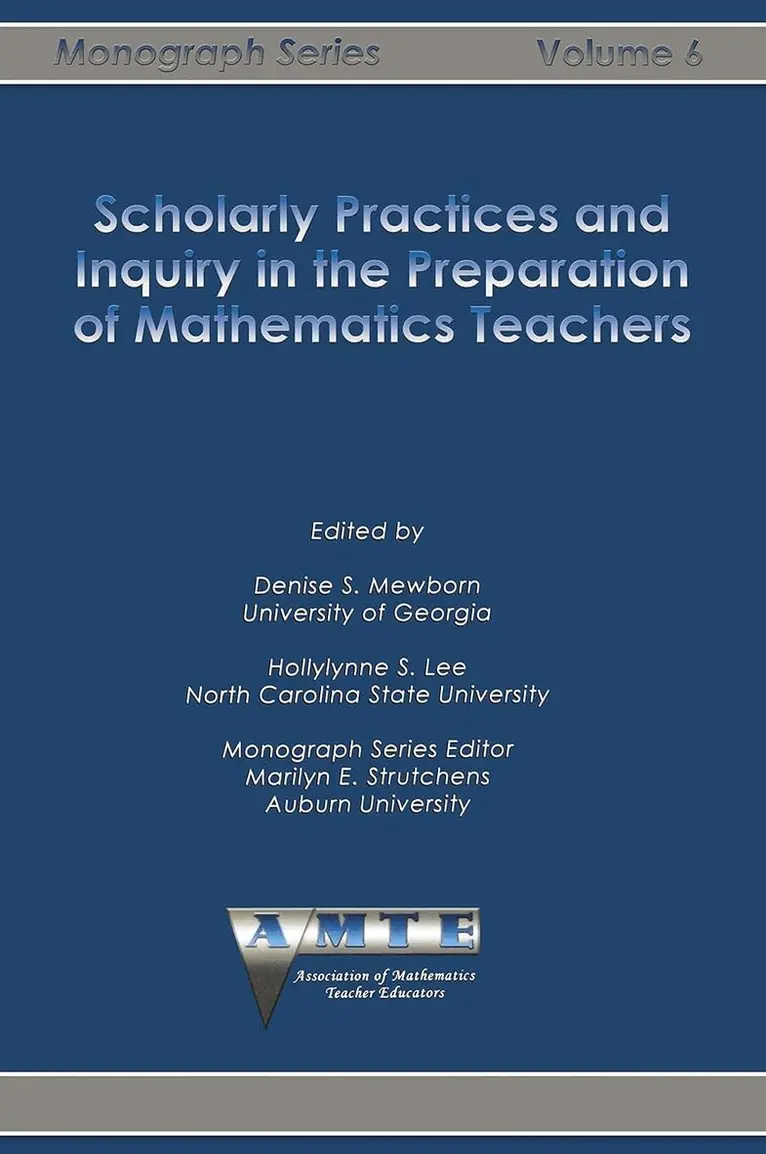
(Orginally published in 2009)The sixth monograph of AMTE highlights examples of the important scholarship of the mathematics teacher education community. This monograph, like others produced by AMTE, serves as a forum for mathematics teacher educators to exchange ideas, experiences, resources, and detailed acounts of work to improve preservice and inservice teacher preparation. Chapters address important issues such as: designing tasks to emphasize mathematics knowledge for teaching; capitalizing on opportunities for student teaching mentor learning; and learning to lead classroom mathematics discussions.
106 kr
Skickas inom 10-15 vardagar
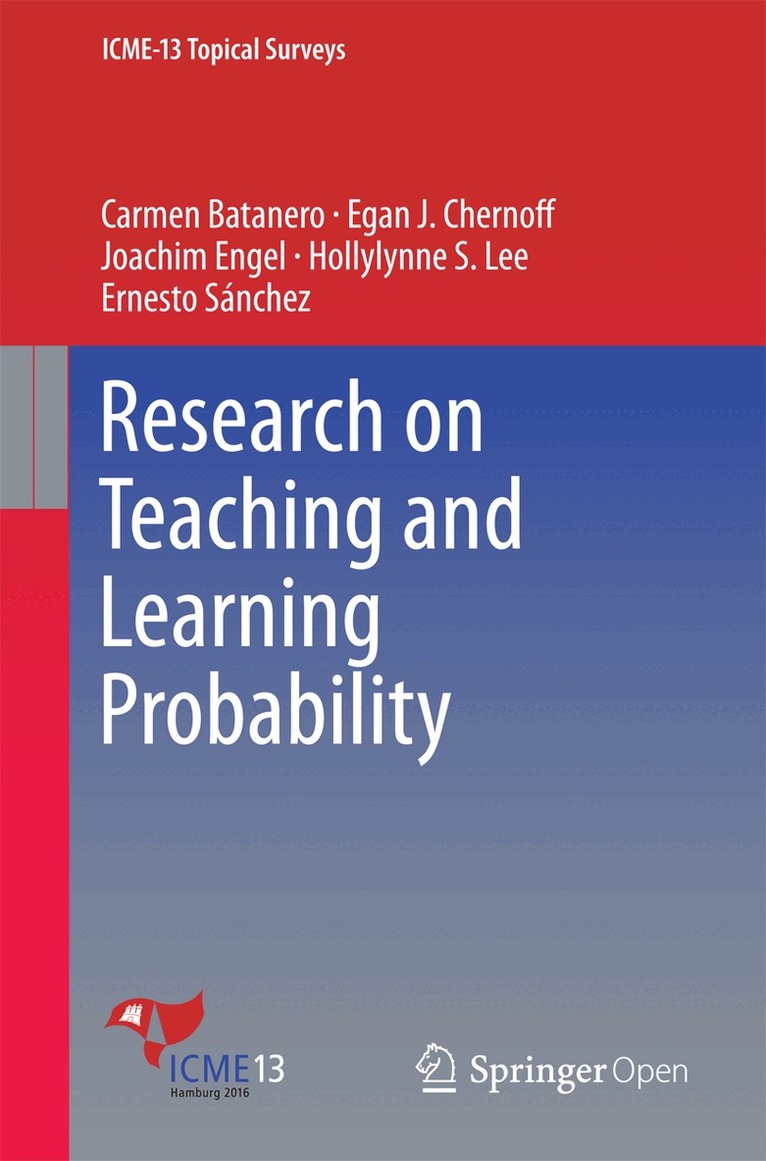
This book summarizes the vast amount of research related to teaching and learning probability that has been conducted for more than 50 years in a variety of disciplines. It begins with a synthesis of the most important probability interpretations throughout history: intuitive, classical, frequentist, subjective, logical propensity and axiomatic views. It discusses their possible applications, philosophical problems, as well as their potential and the level of interest they enjoy at different educational levels. Next, the book describes the main features of probabilistic thinking and reasoning, including the contrast to classical logic, probability language features, the role of intuitions, as well as paradoxes and the relevance of modeling. It presents an analysis of the differences between conditioning and causation, the variability expression in data as a sum of random and causal variations, as well as those of probabilistic versus statistical thinking. This is followed by an analysis of probability’s role and main presence in school curricula and an outline of the central expectations in recent curricular guidelines at the primary, secondary and high school level in several countries. This book classifies and discusses in detail the three different research periods on students’ and people’s intuitions and difficulties concerning probability: early research focused on cognitive development, a period of heuristics and biases programs, and the current period marked by a multitude of foci, approaches and theoretical frameworks.