Holmes Rolston III – författare
Visar alla böcker från författaren Holmes Rolston III. Handla med fri frakt och snabb leverans.
14 produkter
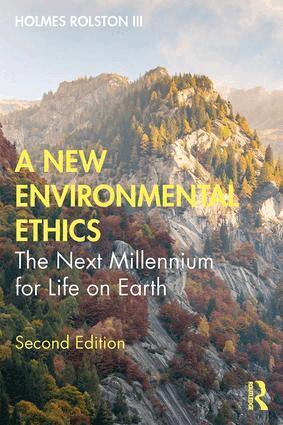
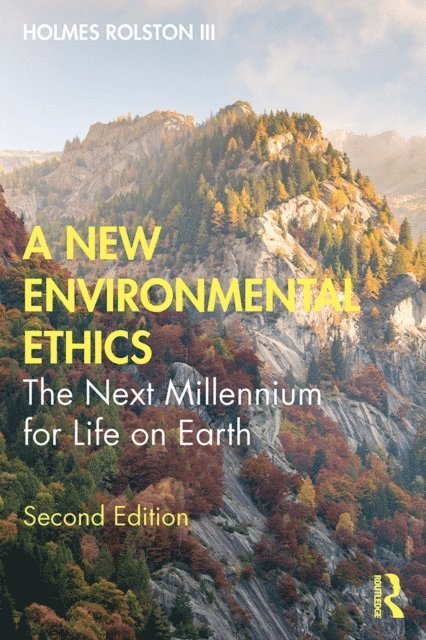
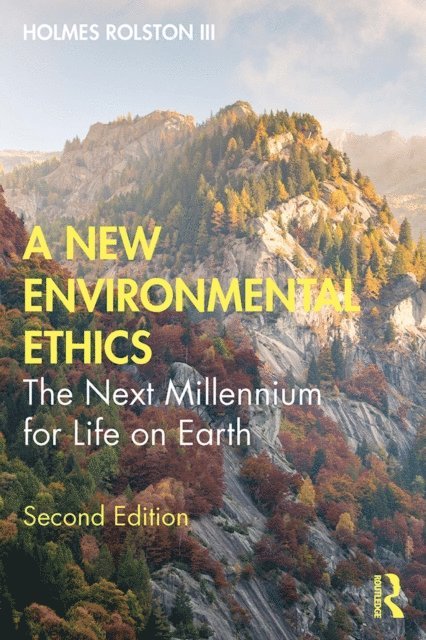
New Environmental Ethics
The Next Millennium for Life on Earth
Häftad, 2020
559 kr
Lägg i varukorg
This Second Edition of A New Environmental Ethics: The Next Millennium for Life on Earth offers clear, powerful, and often moving thoughts from Holmes Rolston III, one of the first and most respected philosophers to write on the environment and often called the "father of environmental ethics." …
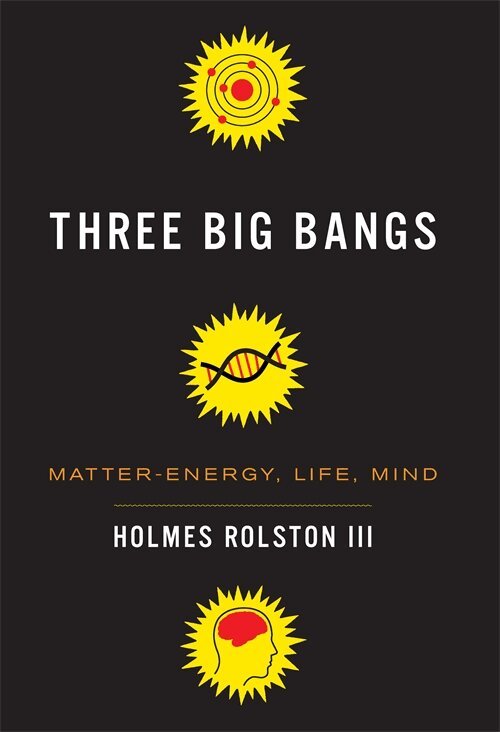
Three Big Bangs
Matter-Energy, Life, Mind
Inbunden, 2010
479 kr
Lägg i varukorg
By dividing the creation of matter, energy, life, and mind into three big bangs, Holmes Rolston III brings into focus a history of the universe that respects both scientific discovery and the potential presence of an underlying intelligence. Matter-energy appears, initially in simpler forms but …
Three Big Bangs
Matter-Energy, Life, Mind
E-bok, 2010
345 kr
Lägg i varukorg
By dividing the creation of matter, energy, life, and mind into three big bangs, Holmes Rolston III brings into focus a history of the universe that respects both scientific discovery and the potential presence of an underlying intelligence. Matter-energy appears, initially in simpler forms but …
New Environmental Ethics
The Next Millennium for Life on Earth
Inbunden, 2020
1894 kr
Lägg i varukorg
This Second Edition of A New Environmental Ethics: The Next Millennium for Life on Earth offers clear, powerful, and often moving thoughts from Holmes Rolston III, one of the first and most respected philosophers to write on the environment and often called the "father of environmental ethics." …
New Environmental Ethics
The Next Millennium for Life on Earth
Inbunden, 2011
2512 kr
Lägg i varukorg
No one looking ahead at the middle of the last century could have foreseen the extent and the importance of the ensuing environmental crises. Now, more than a decade into the next century, no one can ignore it. A New Environmental Ethics: the Next Millennium for Life on Earth offers clear, …
Genes, Genesis, and God
Values and their Origins in Natural and Human History
Inbunden, 1999
1465 kr
Lägg i varukorg
Holmes Rolston challenges the sociobiological orthodoxy that would naturalize science, ethics, and religion. The book argues that genetic processes are not blind, selfish, and contingent, and that nature is therefore not value-free. The author examines the emergence of complex biodiversity through …
Genes, Genesis, and God
Values and their Origins in Natural and Human History
Häftad, 1999
732 kr
Lägg i varukorg
Holmes Rolston challenges the sociobiological orthodoxy that would naturalize science, ethics, and religion. The book argues that genetic processes are not blind, selfish, and contingent, and that nature is therefore not value-free. The author examines the emergence of complex biodiversity through …
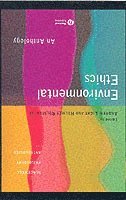
Environmental Ethics
An Anthology
Av Andrew Light, Holmes Rolston m. fl.
Häftad, 2002
510 kr
Lägg i varukorg
Environmental Ethics: An Anthology brings together both classic and cutting-edge essays which have formed contemporary environmental ethics, ranging from the welfare of animals versus ecosystems to theories of the intrinsic value of nature.
New Environmental Ethics
The Next Millennium for Life on Earth
E-bok, 2020
644 kr
Lägg i varukorg
This Second Edition of A New Environmental Ethics: The Next Millennium for Life on Earth offers clear, powerful, and often moving thoughts from Holmes Rolston III, one of the first and most respected philosophers to write on the environment and often called the "father of environmental ethics." …
New Environmental Ethics
The Next Millennium for Life on Earth
E-bok, 2020
644 kr
Lägg i varukorg
This Second Edition of A New Environmental Ethics: The Next Millennium for Life on Earth offers clear, powerful, and often moving thoughts from Holmes Rolston III, one of the first and most respected philosophers to write on the environment and often called the "father of environmental ethics." …
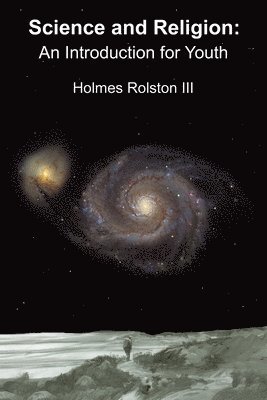
Science and Religion
An Introduction for Youth
E-bok, 2019
85 kr
Lägg i varukorg
This is written for young people, grades 9-12, to read on their own, with others their age, as well as with parents and teachers. How is the scientific method similar to and different from the way that Christians think? One tends to see what one is looking for. Those who think about religion also …