Hongxing Xu – författare
1 882 kr
Läs direkt efter köp
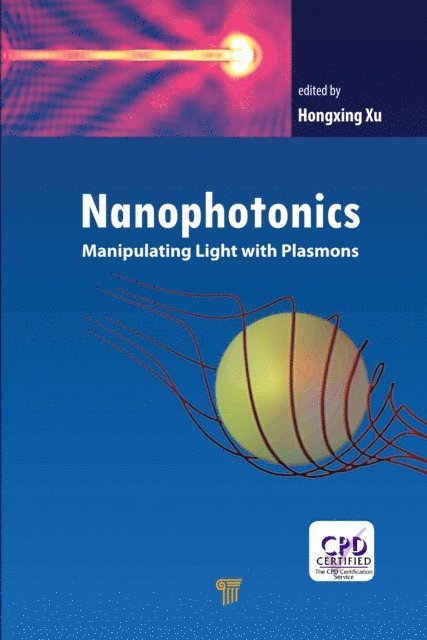
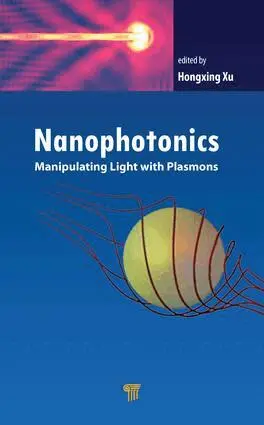
The manipulation of light at the nanometer scale is highly pursued for both fundamental sciences and wide applications. The diffraction limit of light sets the limit for the smallest size of photonic devices to the scale of light wavelength. Fortunately, the peculiar properties of surface plasmons in metal nanostructures make it possible to squeeze light into nanoscale volumes and enable the manipulation of light and light–matter interactions beyond the diffraction limit. Studies on surface plasmons have led to the creation of a booming research field called plasmonics. Because of its various scientific and practical applications, plasmonics attracts researchers from different fields, making it a truly interdisciplinary subject.
Nanophotonics: Manipulating Light with Plasmons starts with the general physics of surface plasmons and a brief introduction to the most prominent research topics, followed by a discussion of computational techniques for light scattering by small particles. Then, a few special topics are highlighted, including surfaceenhanced Raman scattering, optical nanoantennas, optical forces, plasmonic waveguides and circuits, and gain-assisted plasmon resonances and propagation.
The book discusses the fundamental and representative properties of both localized surface plasmons and propagating surface plasmons. It explains various phenomena and mechanisms using elegant model systems with well-defined structures, is illustrated throughout with excellent figures, and contains an extensive list of references at the end of each chapter. It will help graduate-level students and researchers in nanophotonics, physics, chemistry, materials science, nanoscience and nanotechnology, and electrical and electronic engineering get a quick introduction to this field.
1 950 kr
Läs direkt efter köp
The manipulation of light at the nanometer scale is highly pursued for both fundamental sciences and wide applications. The diffraction limit of light sets the limit for the smallest size of photonic devices to the scale of light wavelength. Fortunately, the peculiar properties of surface plasmons in metal nanostructures make it possible to squeeze light into nanoscale volumes and enable the manipulation of light and light–matter interactions beyond the diffraction limit. Studies on surface plasmons have led to the creation of a booming research field called plasmonics. Because of its various scientific and practical applications, plasmonics attracts researchers from different fields, making it a truly interdisciplinary subject.
Nanophotonics: Manipulating Light with Plasmons starts with the general physics of surface plasmons and a brief introduction to the most prominent research topics, followed by a discussion of computational techniques for light scattering by small particles. Then, a few special topics are highlighted, including surfaceenhanced Raman scattering, optical nanoantennas, optical forces, plasmonic waveguides and circuits, and gain-assisted plasmon resonances and propagation.
The book discusses the fundamental and representative properties of both localized surface plasmons and propagating surface plasmons. It explains various phenomena and mechanisms using elegant model systems with well-defined structures, is illustrated throughout with excellent figures, and contains an extensive list of references at the end of each chapter. It will help graduate-level students and researchers in nanophotonics, physics, chemistry, materials science, nanoscience and nanotechnology, and electrical and electronic engineering get a quick introduction to this field.
Plasmon-enhanced light-matter interactions
1 512 kr
Skickas inom 10-15 vardagar
1 891 kr
Läs direkt efter köp
This book highlights cutting-edge research in surface plasmons, discussing the different types and providing a comprehensive overview of their applications. Surface plasmons (SPs) receive special attention in nanoscience and nanotechnology due to their unique optical, electrical, magnetic, and catalytic properties when operating at the nanoscale. The excitation of SPs in metal nanostructures enables the manipulation of light beyond the diffraction limit, which can be utilized for enhancing and tailoring light-matter interactions and developing ultra-compact high-performance nanophotonic devices for various applications. With clear and understandable illustrations, tables, and descriptions, this book provides physicists, materials scientists, chemists, engineers, and their students with a fundamental understanding of surface plasmons and device applications as a basis for future developments.
Plasmon-enhanced light-matter interactions
1 512 kr
Skickas inom 10-15 vardagar
1 609 kr
Skickas
1 909 kr
Läs direkt efter köp
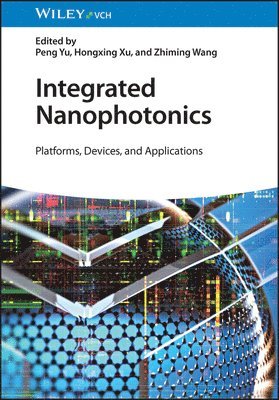
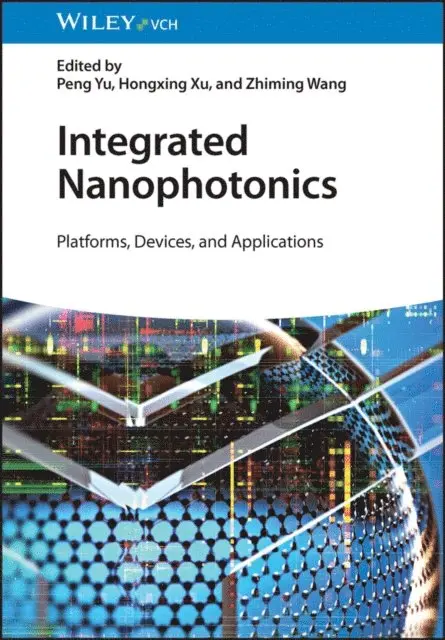
Helps readers understand the important advances in nanophotonics materials development and their latest applications
This book introduces the current state of and emerging trends in the development of integrated nanophotonics. Written by three well-qualified authors, it systematically reviews the knowledge of integrated nanophotonics from theory to the most recent technological developments. It also covers the applications of integrated nanophotonics in essential areas such as neuromorphic computing, biosensing, and optical communications. Lastly, it brings together the latest advancements in the key principles of photonic integrated circuits, plus the recent advances in tackling the barriers in photonic integrated circuits.
Sample topics included in this comprehensive resource include:
Platforms for integrated nanophotonics, including lithium niobate nanophotonics, indium phosphide nanophotonics, silicon nanophotonics, and nonlinear optics for integrated photonics The devices and technologies for integrated nanophotonics in on-chip light sources, optical packaging of photonic integrated circuits, optical interconnects, and light processing devices Applications on neuromorphic computing, biosensing, LIDAR, and computing for AI and artificial neural network and deep learningMaterials scientists, physicists, and physical chemists can use this book to understand the totality of cutting-edge theory, research, and applications in the field of integrated nanophotonics.
1 978 kr
Läs direkt efter köp
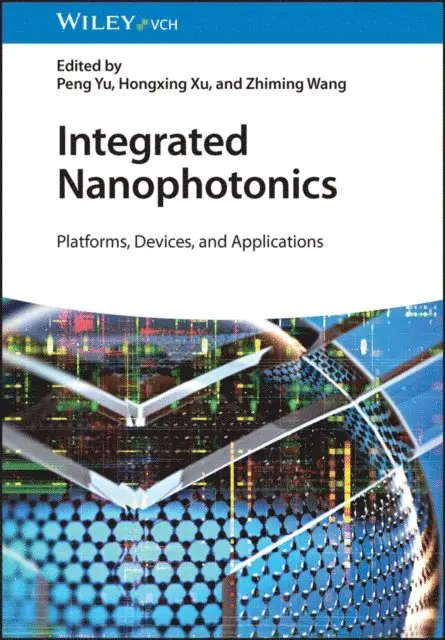
Helps readers understand the important advances in nanophotonics materials development and their latest applications
This book introduces the current state of and emerging trends in the development of integrated nanophotonics. Written by three well-qualified authors, it systematically reviews the knowledge of integrated nanophotonics from theory to the most recent technological developments. It also covers the applications of integrated nanophotonics in essential areas such as neuromorphic computing, biosensing, and optical communications. Lastly, it brings together the latest advancements in the key principles of photonic integrated circuits, plus the recent advances in tackling the barriers in photonic integrated circuits.
Sample topics included in this comprehensive resource include:
Platforms for integrated nanophotonics, including lithium niobate nanophotonics, indium phosphide nanophotonics, silicon nanophotonics, and nonlinear optics for integrated photonics The devices and technologies for integrated nanophotonics in on-chip light sources, optical packaging of photonic integrated circuits, optical interconnects, and light processing devices Applications on neuromorphic computing, biosensing, LIDAR, and computing for AI and artificial neural network and deep learningMaterials scientists, physicists, and physical chemists can use this book to understand the totality of cutting-edge theory, research, and applications in the field of integrated nanophotonics.
1 637 kr
Skickas inom 5-8 vardagar