Hope Wolf - Böcker
Visar alla böcker från författaren Hope Wolf. Handla med fri frakt och snabb leverans.
3 produkter
3 produkter
406 kr
Skickas inom 7-10 vardagar
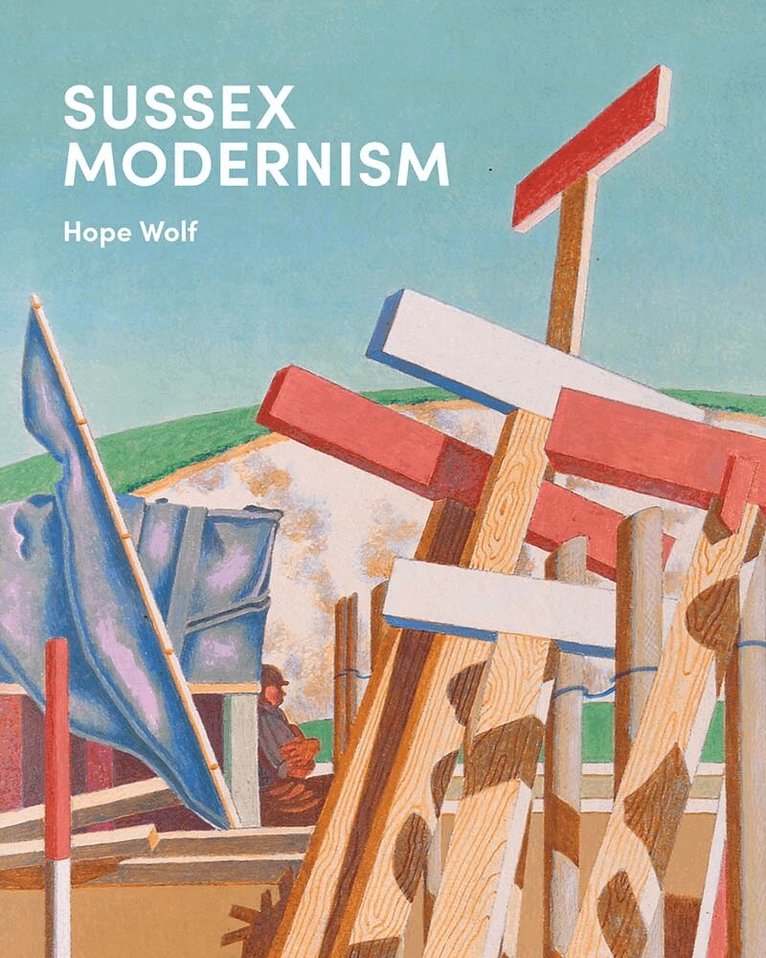
A look at how artists and writers harnessed the landscapes, cultures, and histories of their locations to reimagine how art should be made and life lived Hope Wolf explores a breadth of work by over 70 artists associated with different modernist movements who either visited or resided in Sussex. Well-known figures, including Virginia Woolf, Jacob Epstein, David Jones, Gluck, Edward Burra, and Lee Miller, are joined by countercultural artists of the 1960s–1980s, women artists whose power was regional rather than national, as well as the voices of modernism’s opponents. Offering a new history of modernism, this book intertwines literature, painting, sculpture, architecture, film, photography, textiles, music, and domestic decoration across a period of over 100 years. Revealing how artists drew on their environments to promote psychic and social change, Sussex Modernism is a book of jostling perspectives on art, place and politics.
770 kr
Skickas inom 10-15 vardagar
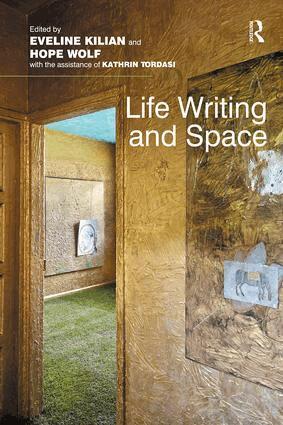
How does our ability, desire or failure to locate ourselves within space, and with respect to certain places, effect the construction and narration of our identities? Approaching recordings and interpretations of selves, memories and experiences through the lens of theories of space and place, this book brings the recent spatial turn in the Humanities to bear upon the work of life writing. It shows how concepts of subjectivity draw on spatial ideas and metaphors, and how the grounding and uprooting of the self is understood in terms of place. The different chapters investigate ways in which selves are reimagined through relocation and the traversing of spaces and texts. Many are concerned with the politics of space: how racial, social and sexual topographies are navigated in life writing. Some examine how focusing on space, rather than time, impacts upon auto/biographical form. The book blends sustained theoretical reflections with textual analyses and also includes experimental contributions that explore independencies between spaces and selves by combining criticism with autobiography. Together, they testify that life writing can hardly be thought of without its connection to space.
2 485 kr
Skickas inom 7-10 vardagar
How does our ability, desire or failure to locate ourselves within space, and with respect to certain places, effect the construction and narration of our identities? Approaching recordings and interpretations of selves, memories and experiences through the lens of theories of space and place, this book brings the recent spatial turn in the Humanities to bear upon the work of life writing. It shows how concepts of subjectivity draw on spatial ideas and metaphors, and how the grounding and uprooting of the self is understood in terms of place. The different chapters investigate ways in which selves are reimagined through relocation and the traversing of spaces and texts. Many are concerned with the politics of space: how racial, social and sexual topographies are navigated in life writing. Some examine how focusing on space, rather than time, impacts upon auto/biographical form. The book blends sustained theoretical reflections with textual analyses and also includes experimental contributions that explore independencies between spaces and selves by combining criticism with autobiography. Together, they testify that life writing can hardly be thought of without its connection to space.