Howard G. Brown – författare
Visar alla böcker från författaren . Handla med fri frakt och snabb leverans.
3 produkter
3 produkter
Inbunden, Engelska, 1995
3 580 kr
Skickas inom 5-8 vardagar
This book examines a period of particular importance in the formation of the modern French state. The revolutionary strife and international war of the 1790s had important and far-reaching consequences for the development of democracy and bureaucracy in France. Howard G. Brown's study of changes in army administration in this period sheds light on the dynamic relationship between the spread of political participation, the rationalization of public power, and the build-up of military might. Dr Brown shows how the exigencies of war and the vagaries of revolutionary politics wrought rapid and profound changes in the structures and personnel of army administration. Although loath to see a massive military bureaucracy take root, legislators found that their desire to combine civilian control with military effectiveness made a large central administration unavoidable.
Häftad, Engelska, 2007
324 kr
Skickas inom 11-20 vardagar
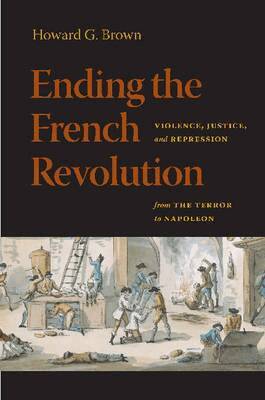
For two centuries, the early years of the French Revolution have inspired countless democratic movements around the world. Yet little attention has been paid to the problems of violence, justice, and repression between the Reign of Terror and the dictatorship of Napoleon Bonaparte. In ""Ending the French Revolution"", Howard Brown analyzes these years to reveal the true difficulty of founding a liberal democracy in the midst of continual warfare, repeated coups d'etat, and endemic civil strife. By highlighting the role played by violence and fear in generating illiberal politics, Brown speaks to the struggles facing democracy in our own age. The result is a fundamentally new understanding of the French Revolution's disappointing outcome.
Inbunden, Engelska, 2019
687 kr
Skickas inom 10-15 vardagar
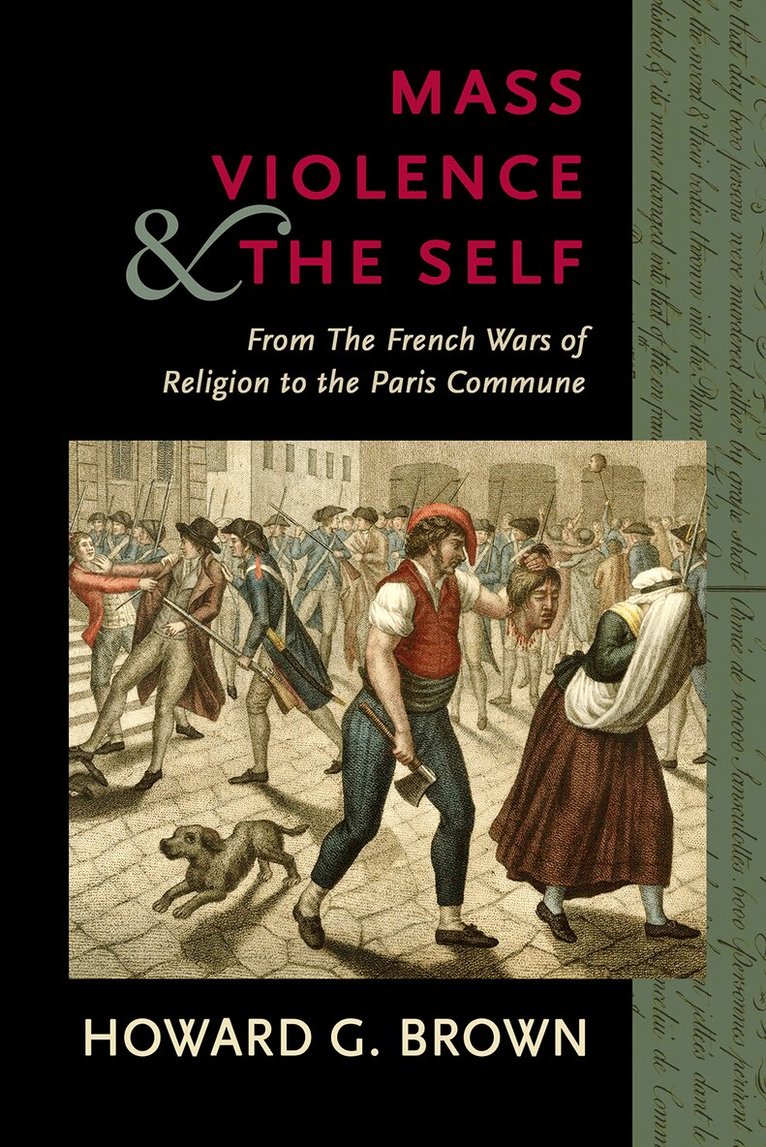
Mass Violence and the Self explores the earliest visual and textual depictions of personal suffering caused by the French Wars of Religion of 1562–98, the Fronde of 1648–52, the French Revolutionary Terror of 1793–94, and the Paris Commune of 1871. The development of novel media from pamphlets and woodblock printing to colored lithographs, illustrated newspapers, and collodion photography helped to determine cultural, emotional, and psychological responses to these four episodes of mass violence.Howard G. Brown's richly illustrated and conceptually innovative book shows how the increasingly effective communication of the suffering of others combined with interpretive bias to produce what may be understood as collective traumas. Seeing these responses as collective traumas reveals their significance in shaping new social identities that extended beyond the village or neighborhood. Moreover, acquiring a sense of shared identity, whether as Huguenots, Parisian bourgeois, French citizens, or urban proletarians, was less the cause of violent conflict than the consequence of it. Combining neuroscience, art history, and biography studies, Brown explores how collective trauma fostered a growing salience of the self as the key to personal identity. In particular, feeling empathy and compassion in response to depictions of others' emotional suffering intensified imaginative self-reflection. Protestant martyrologies, revolutionary "autodefenses," and personal diaries are examined in the light of cultural trends such as the interiorization of piety, the culture of sensibility, and the birth of urban modernism to reveal how representations of mass violence helped to shape the psychological processes of the self.