Howard Margolis - Böcker
Visar alla böcker från författaren Howard Margolis. Handla med fri frakt och snabb leverans.
7 produkter
7 produkter
1 169 kr
Skickas inom 11-20 vardagar
In Paradigms and Barriers Howard Margolis offers an innovative interpretation of Thomas S. Kuhn's landmark idea of "paradigm shifts," applying insights from cognitive psychology to the history and philosophy of science. Building upon the arguments in his acclaimed Patterns, Thinking, and Cognition, Margolis suggests that the breaking down of particular habits of mind--of critical "barriers"--is key to understanding the processes through which one model or concept is supplanted by another. Margolis focuses on those revolutionary paradigm shifts-- such as the switch from a Ptolemaic to a Copernican worldview--where challenges to entrenched habits of mind are marked by incomprehension or indifference to a new paradigm. Margolis argues that the critical problem for a revolutionary shift in thinking lies in the robustness of the habits of mind that reject the new ideas, relative to the habits of mind that accept the new ideas.Margolis applies his theory to famous cases in the history of science, offering detailed explanations for the transition from Ptolemaic to cosmological astronomy, the emergence of probability, the overthrow of phlogiston, and the emergence of the central role of experiment in the seventeenth century. He in turn uses these historical examples to address larger issues, especially the nature of belief formation and contemporary debates about the nature of science and the evolution of scientific ideas. Howard Margolis is a professor in the Harris Graduate School of Public Policy Studies and in the College at the University of Chicago. He is the author of Selfishness, Altruism, and Rationality and Patterns, Thinking, and Cognition, both published by the University of Chicago Press.
274 kr
Skickas inom 7-10 vardagar
In Paradigms and Barriers Howard Margolis offers an innovative interpretation of Thomas S. Kuhn's landmark idea of "paradigm shifts," applying insights from cognitive psychology to the history and philosophy of science. Building upon the arguments in his acclaimed Patterns, Thinking, and Cognition, Margolis suggests that the breaking down of particular habits of mind—of critical "barriers"—is key to understanding the processes through which one model or concept is supplanted by another. Margolis focuses on those revolutionary paradigm shifts— such as the switch from a Ptolemaic to a Copernican worldview—where challenges to entrenched habits of mind are marked by incomprehension or indifference to a new paradigm. Margolis argues that the critical problem for a revolutionary shift in thinking lies in the robustness of the habits of mind that reject the new ideas, relative to the habits of mind that accept the new ideas. Margolis applies his theory to famous cases in the history of science, offering detailed explanations for the transition from Ptolemaic to cosmological astronomy, the emergence of probability, the overthrow of phlogiston, and the emergence of the central role of experiment in the seventeenth century. He in turn uses these historical examples to address larger issues, especially the nature of belief formation and contemporary debates about the nature of science and the evolution of scientific ideas. Howard Margolis is a professor in the Harris Graduate School of Public Policy Studies and in the College at the University of Chicago. He is the author of Selfishness, Altruism, and Rationality and Patterns, Thinking, and Cognition, both published by the University of Chicago Press.
289 kr
Skickas inom 7-10 vardagar
Why do we volunteer time? Why do we contribute money? Why, even, do we vote, if the effect of a single vote is negligible? Rationality-based microeconomic models are hard-pressed to explain such social behavior, but Howard Margolis proposes a solution. He suggests that within each person there are two selves, one selfish and the other group-oriented, and that the individual follows a Darwinian rule for allocating resources between those two selves. "Howard Margolis's intriguing ideas . . . provide an alternative to the crude models of rational choice that have dominated economics and political science for too long."—Times Literary Supplement
298 kr
Skickas inom 7-10 vardagar
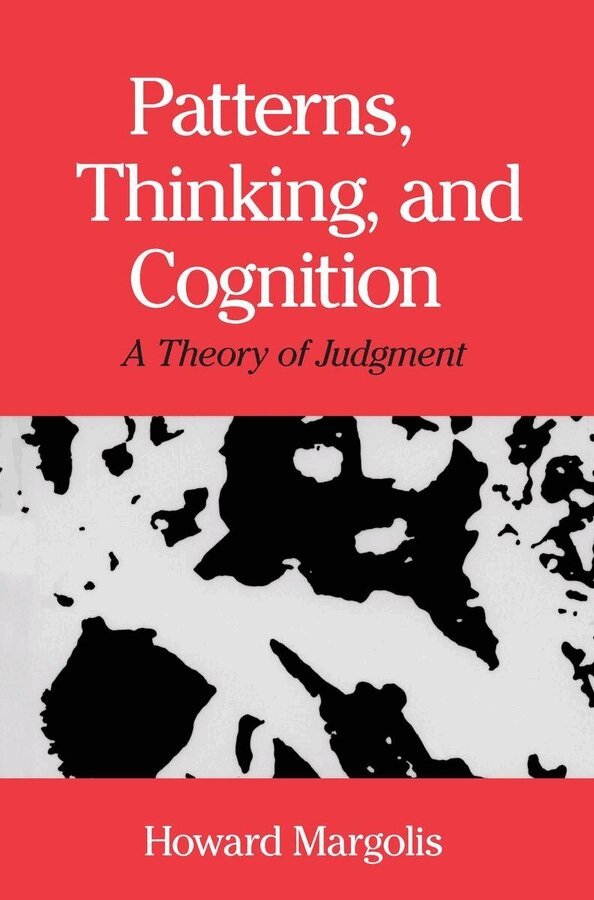
What happens when we think? How do people make judgments? While different theories abound—and are heatedly debated—most are based on an algorithmic model of how the brain works. Howard Margolis builds a fascinating case for a theory that thinking is based on recognizing patterns and that this process is intrinsically a-logical. Margolis gives a Darwinian account of how pattern recognition evolved to reach human cognitive abilities. Illusions of judgment—standard anomalies where people consistently misjudge or misperceive what is logically implied or really present—are often used in cognitive science to explore the workings of the cognitive process. The explanations given for these anomalous results have generally explained only the anomaly under study and nothing more. Margolis provides a provocative and systematic analysis of these illusions, which explains why such anomalies exist and recur. Offering empirical applications of his theory, Margolis turns to historical cases to show how an individual's cognitive repertoire—the available cognitive patterns and their relation to cues—changes or resists changes over time. Here he focuses on the change in worldview occasioned by the Copernican discovery: not only how an individual might come to see things in a radically new way, but how it is possible for that new view to spread and become the dominant one. A reanalysis of the trial of Galileo focuses on social cognition and its interactions with politics. In challenging the prevailing paradigm for understanding how the human mind works, Patterns, Thinking, and Cognition is certain to stimulate fruitful debate.
Dealing with Risk
Why the Public and the Experts Disagree on Environmental Issues
Häftad, Engelska, 1997
274 kr
Skickas inom 7-10 vardagar
For decades, policymakers and analysts have been frustrated by the stubborn and often dramatic disagreement between experts and the public on acceptable levels of environmental risk. Most experts, for instance, see no severe problem in dealing with nuclear waste, given the precautions and safety levels now in place. Yet public opinion vehemently rejects this view, repudiating both the experts' analysis and the evidence. In this study, Howard Margolis moves beyond the usual "rival rationalities" explanation proffered by risk analysts for the rift between expert and lay opinion. He reveals the conflicts of intuition that underlie those concerns, and proposes a new approach to the psychology of persuasion and belief. Examining the role of intuition, mental habits, and cognitive frameworks in the construction of public opinion, this account seeks to bridge the public policy impasse that has plagued controversial environmental issues.
2 570 kr
Skickas inom 10-15 vardagar
One of the most exciting recent innovations in the social sciences has been the emergence of 'behaviour economics', which extends the notion of rational choice to allow for both motivation beyond self-interest and intuitions that cannot be reduced to the logic of a situation. This new book by Howard Margolis demonstrates how an account of widely-discussed topics, from tipping points in social choice to cognitive illusions and experimental anomalies, can be brought within a coherent framework.Starting from Darwin's own comments on the origins of moral concerns and from a review of notorious cognitive illusions, Margolis shows how rational choice theory can be extended to incorporate social as well as self-interested motivation, but allowing for the cognitive complications that can be expected in domains well-outside familiar experience. This yields a coherent account of many otherwise mystifying results from cooperation experiments. This book will be of great interest not only to students and researchers in behavioral and experimental economics but across the social sciences.
874 kr
Skickas inom 10-15 vardagar
One of the most exciting recent innovations in the social sciences has been the emergence of 'behaviour economics', which extends the notion of rational choice to allow for both motivation beyond self-interest and intuitions that cannot be reduced to the logic of a situation. This new book by Howard Margolis demonstrates how an account of widely-discussed topics, from tipping points in social choice to cognitive illusions and experimental anomalies, can be brought within a coherent framework.Starting from Darwin's own comments on the origins of moral concerns and from a review of notorious cognitive illusions, Margolis shows how rational choice theory can be extended to incorporate social as well as self-interested motivation, but allowing for the cognitive complications that can be expected in domains well-outside familiar experience. This yields a coherent account of many otherwise mystifying results from cooperation experiments. This book will be of great interest not only to students and researchers in behavioral and experimental economics but across the social sciences.