Hubert Schmitz - Böcker
Visar alla böcker från författaren Hubert Schmitz. Handla med fri frakt och snabb leverans.
5 produkter
5 produkter
1 673 kr
Skickas inom 10-15 vardagar
Originally published in 1985, this book analyses the extent and way in which technological change determines the utilisation of labour in less developed economies. The book compares firms which are technologically very advanced with firms which use less sophisticated machinery and equipment, and analyses how technology shapes their demand for labour. It is concerned with the impact of technological change on the utilisation of labour in terms of number of jobs, recruitment, training, skill requirements, labour turnover, wages and internal mobility; it also investigates the impact on the utilisation of external labour in the form of subcontracting of small producers and employment of outworkers.
507 kr
Skickas inom 10-15 vardagar
Originally published in 1985, this book analyses the extent and way in which technological change determines the utilisation of labour in less developed economies. The book compares firms which are technologically very advanced with firms which use less sophisticated machinery and equipment, and analyses how technology shapes their demand for labour. It is concerned with the impact of technological change on the utilisation of labour in terms of number of jobs, recruitment, training, skill requirements, labour turnover, wages and internal mobility; it also investigates the impact on the utilisation of external labour in the form of subcontracting of small producers and employment of outworkers.
2 444 kr
Skickas inom 7-10 vardagar
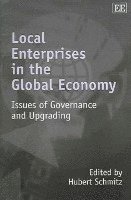
This book opens a fresh chapter in the debate on local enterprise clusters and their strategies for upgrading in the global economy. The authors employ a novel conceptual framework in their research on industrial clusters in Europe, Latin America and Asia and provide new perspectives and insights for researchers and policymakers alike.The debate on local upgrading capacity is torn between two lines of thinking: those who believe that local relationships between enterprises and institutions are key to upgrading, and those who argue that the spaces for upgrading are defined by the sourcing strategies of global buyers. From this debate a number of important questions arise: how feasible is it to develop local upgrading strategies? Can local policy networks make a difference, or do global forces undermine them? Do global quality and labour standards marginalise developing country producers or do they help them to upgrade? To answer these questions, the book brings together theoretical and empirical research on local and regional clusters, global value chains and global standards, using case studies from developed and developing countries. The authors provide a new understanding of how global and local governance interact, highlighting power and inequality in global chains but also identifying scope for local action.By showing how and why insertion in global value chains can accelerate or inhibit local upgrading, this book represents a significant contribution to the academic and political debate on globalization. It will be essential reading for all students, academics and researchers interested in global political economy, global and local governance structures, economic geography and innovation studies.

877 kr
Skickas inom 7-10 vardagar
This book opens a fresh chapter in the debate on local enterprise clusters and their strategies for upgrading in the global economy. The authors employ a novel conceptual framework in their research on industrial clusters in Europe, Latin America and Asia and provide new perspectives and insights for researchers and policymakers alike.The debate on local upgrading capacity is torn between two lines of thinking: those who believe that local relationships between enterprises and institutions are key to upgrading, and those who argue that the spaces for upgrading are defined by the sourcing strategies of global buyers. From this debate a number of important questions arise: how feasible is it to develop local upgrading strategies? Can local policy networks make a difference, or do global forces undermine them? Do global quality and labour standards marginalise developing country producers or do they help them to upgrade? To answer these questions, the book brings together theoretical and empirical research on local and regional clusters, global value chains and global standards, using case studies from developed and developing countries. The authors provide a new understanding of how global and local governance interact, highlighting power and inequality in global chains but also identifying scope for local action.By showing how and why insertion in global value chains can accelerate or inhibit local upgrading, this book represents a significant contribution to the academic and political debate on globalization. It will be essential reading for all students, academics and researchers interested in global political economy, global and local governance structures, economic geography and innovation studies.

Budo - Pädagogik
Das erzieherische Wesen der Kampfkünste und budopädagogische Perspektiven
Häftad, Tyska, 2014
403 kr
Skickas inom 5-8 vardagar