Hugh Aldersey-Williams – författare
Visar alla böcker från författaren Hugh Aldersey-Williams. Handla med fri frakt och snabb leverans.
20 produkter
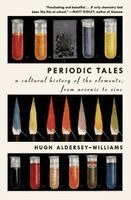
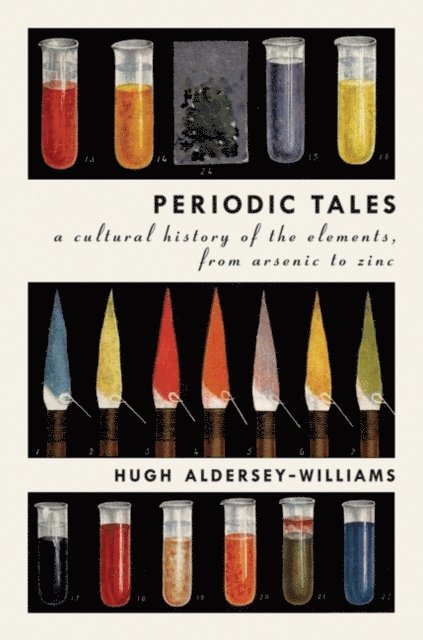
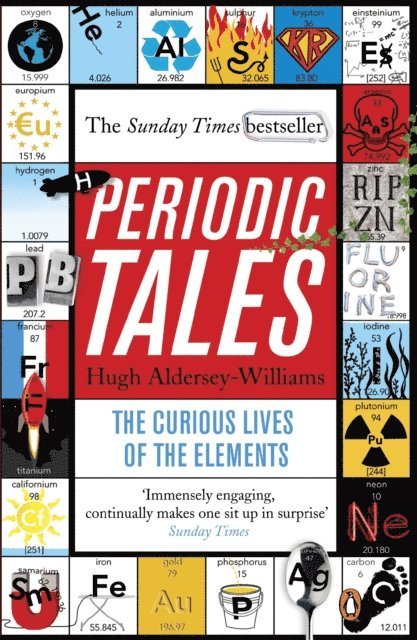
Periodic Tales: A Cultural History of the Elements, from Arsenic to Zinc
Häftad, 2020
258 kr
Lägg i varukorg
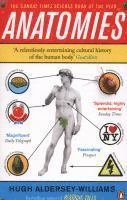
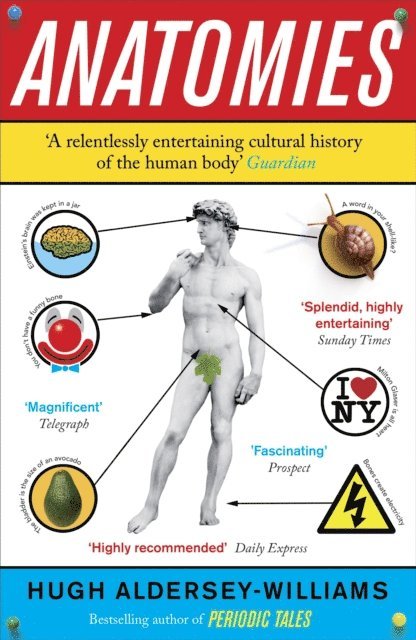
Anatomies
The Human Body, Its Parts and The Stories They Tell
Häftad, 2014
181 kr
Lägg i varukorg
The Sunday Times Science Book of the Year, Anatomies by Hugh Aldersey-Williams, author of bestseller Periodic Tales, is a splendidly entertaining journey through the art, science, literature and history of the human body.'Magnificent, inspired. He writes like a latter-day Montaigne. Stimulating …
Periodic Tales
A Cultural History of the Elements, from Arsenic to Zinc
E-bok, 2011
102 kr
Lägg i varukorg
"Fascinating and beautiful . . . if only chemistry had been like this at school." —Matt Ridley, New York Times–bestselling author of Genome, in Prospect magazineLike the alphabet, the calendar, or the zodiac, the periodic table of the chemical elements has a permanent place in our imagination. But …
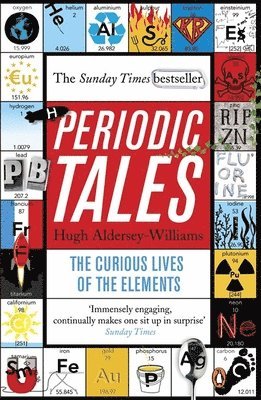
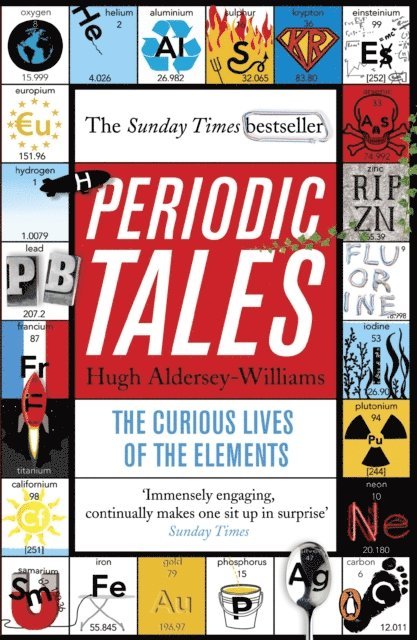
Periodic Tales
The Curious Lives of the Elements
Häftad, 2012
5,0 utav 5 stjärnor. Totalt antal röster: (1)
155 kr
Lägg i varukorg
THE PHENOMENAL SUNDAY TIMES BESTSELLER'Science writing at its best. If only chemistry had been like this at school' Matt Ridley____________________Everything in the universe is made of them, including you. Like you, the elements have personalities, attitudes, talents, shortcomings, stories rich …
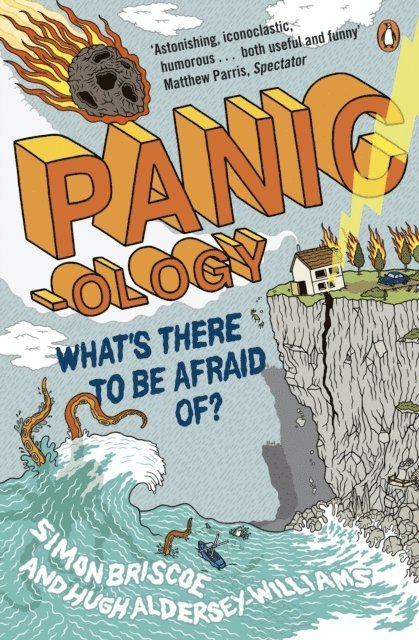
Panicology
Av Hugh Aldersey-Williams, Simon Briscoe
E-bok, 2008
96 kr
Lägg i varukorg
What exactly are your chances of being struck by a meteorite?Think you're having less sex than the French?How high will sea levels actually rise?We live in an increasingly uncertain world. There's so much to worry about it is often hard to know what to really panic about. But stay calm! For …
Periodic Tales
The Curious Lives of the Elements
E-bok, 2011
108 kr
Lägg i varukorg
THE SUNDAY TIMES BESTSELLER'If only chemistry had been like this at school' Matt Ridley, Prospect________________Elements. Everything in the universe is made of them, including you. And like you, the elements have personalities, attitudes, talents, shortcomings, stories rich with meaning.Here …
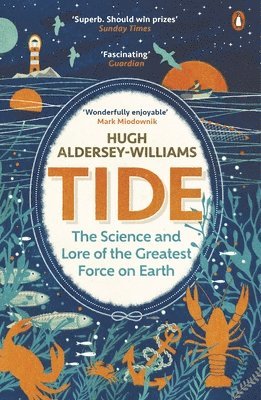
Tide
The Science and Lore of the Greatest Force on Earth
Häftad, 2017
165 kr
Lägg i varukorg
A Sunday Times 'Must Read' book.Described by the Sunday Times as "a gently studious Bill Bryson crossed with an upbeat and relaxed WG Sebald", Tide is "a superb book... a delight to read. It is profound and powerful, and should win prizes."From Cnut to D-Day, the history and science of the …
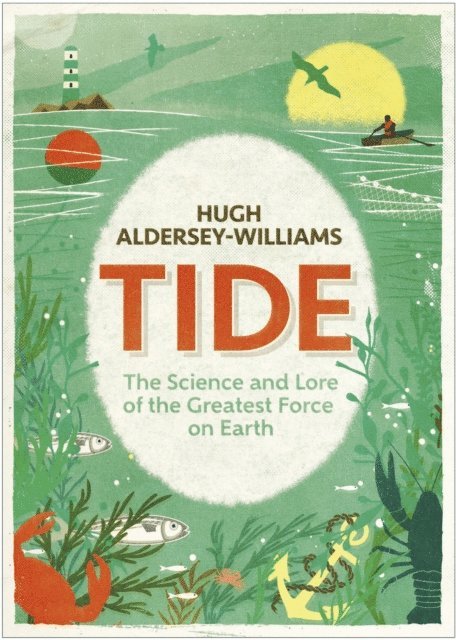
Tide
The Science and Lore of the Greatest Force on Earth
E-bok, 2016
105 kr
Lägg i varukorg
From Cnut to D-Day: the history and science of the unceasing tide explored for the first time.Half of the world's population lives in coastal regions lapped by tidal waters. Yet how little most of us know about the tide.Our ability to predict and understand the tide depends on centuries of science, …
Periodic Tales
The Curious Lives of the Elements
Ljudbok, 2018
158 kr
Lägg i varukorg
Penguin presents the audiobook edition of Periodic Tales by Hugh Aldersey-Williams, read by John Sackville. Everything in the universe is made of them, including you. Like you, the elements have personalities, attitudes, talents, shortcomings, stories rich with meaning. Here you''ll meet iron that …
In Search of Sir Thomas Browne
The Life and Afterlife of the Seventeenth Century's Most Inquiring Mind
Inbunden, 2017
616 kr
Lägg i varukorg
Sir Thomas Browne (1605–1682) was an English writer, physician, and philosopher whose work has inspired everyone from Ralph Waldo Emerson to Jorge Luis Borges, Virginia Woolf to Stephen Jay Gould. In an intellectual adventure like Sarah Bakewell's book about Montaigne, How to Live, Hugh …
Tide
The Science and Stories Behind the Greatest Force on Earth
Häftad, 2017
321 kr
Lägg i varukorg
Half of the world’s population today lives in coastal regions lapped by tidal waters. But the tide rises and falls according to rules that are a mystery to almost all of us. In The Tide, celebrated science writer Hugh Aldersey-Williams weaves together centuries of scientific thinking with the …
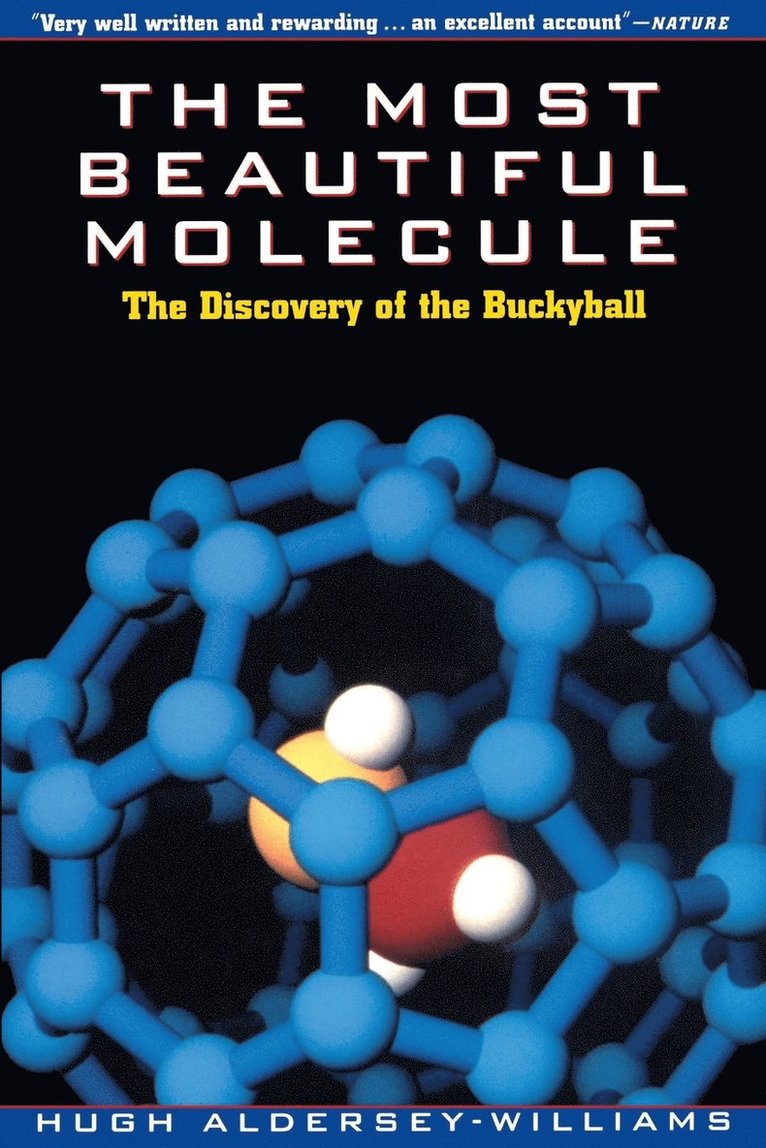
Most Beautiful Molecule
The Discovery of the Buckyball
Häftad, 1997
210 kr
Lägg i varukorg
The Most Beautiful Molecule "The molecule, buckminsterfullerene, is beautiful physically and intellectually. Its qualities, and even some of its properties, can be appreciated instantly and intuitively by nonscientists. Its uniqueness is bound to lead to novel applications-superconductivity is the …
Anatomies
The Human Body, Its Parts and The Stories They Tell
E-bok, 2013
105 kr
Lägg i varukorg
The Sunday Times Science Book of the Year, Anatomies by Hugh Aldersey-Williams, author of bestseller Periodic Tales, is a splendidly entertaining journey through the art, science, literature and history of the human body.'Magnificent, inspired. He writes like a latter-day Montaigne. Stimulating …
Letters for the Ages Great Scientists
Private Letters from the Greatest Minds in Science
Av James Drake, Hugh Aldersey-Williams
E-bok, 2024
228 kr
Lägg i varukorg
A collection of the most fascinating letters by the world''s greatest scientists. ''Most people say that it is the intellect which makes a great scientist. They are wrong: it is character'' – Albert Einstein Scientists are not often remembered for their character, but rather for the enduring impact …
Letters for the Ages Great Scientists
Private Letters from the Greatest Minds in Science
Av James Drake, Hugh Aldersey-Williams
Inbunden, 2024
245 kr
Lägg i varukorg
A collection of the most fascinating letters by the world's greatest scientists.‘Most people say that it is the intellect which makes a great scientist. They are wrong: it is character’ – Albert EinsteinScientists are not often remembered for their character, but rather for the enduring impact of …
Letters for the Ages Great Scientists
Private Letters from the Greatest Minds in Science
Av James Drake, Hugh Aldersey-Williams
E-bok, 2024
220 kr
Lägg i varukorg
A collection of the most fascinating letters by the world''s greatest scientists. ''Most people say that it is the intellect which makes a great scientist. They are wrong: it is character'' – Albert Einstein Scientists are not often remembered for their character, but rather for the enduring impact …
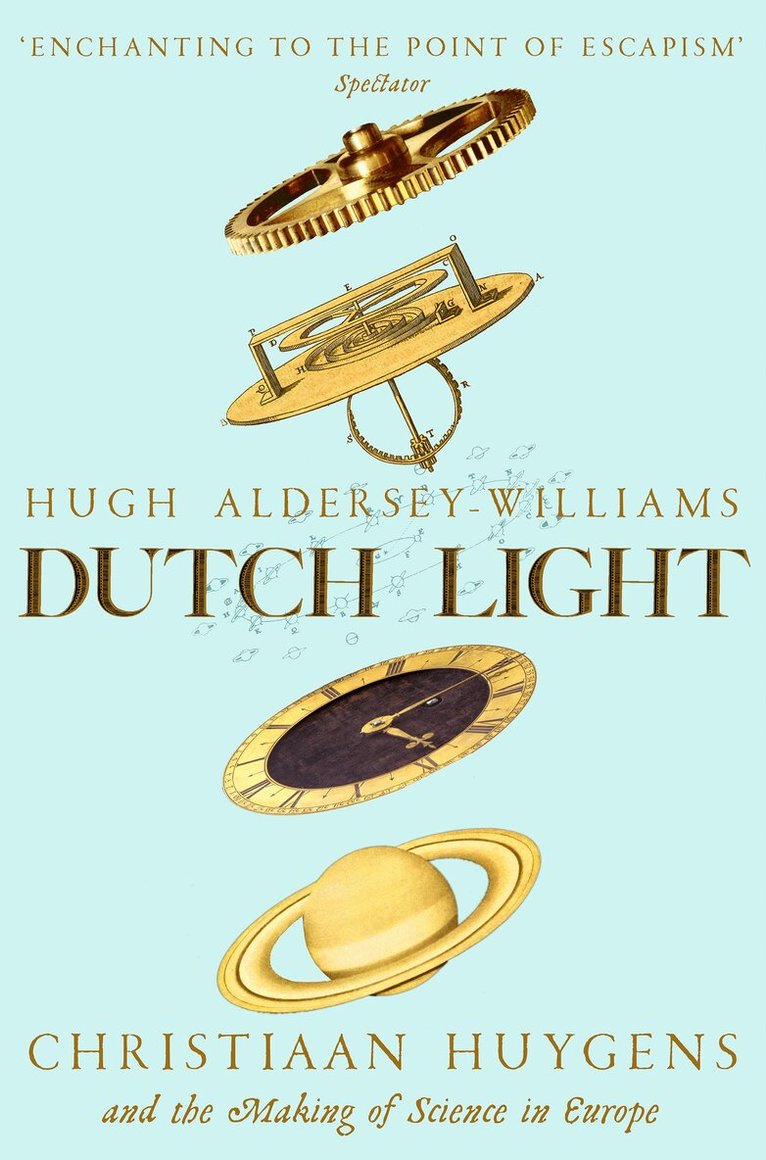
Dutch Light
Christiaan Huygens and the Making of Science in Europe
E-bok, 2020
179 kr
Lägg i varukorg
'Enchanting to the point of escapism.' – Simon Ings, Spectator'Hugh Aldersey-Williams rescues his subject from Newton's shadow, where he was been unjustly confined for over three hundred years.' – Literary ReviewFilled with incident, discovery, and revelation, Dutch Light is a vivid account of …
Dutch Light
Christiaan Huygens and the Making of Science in Europe
Häftad, 2020
191 kr
Lägg i varukorg
'At last – a scintillating biography of Christiaan Huygens . . . Hugh Aldersley-Williams has evocatively illuminated this brilliant polymath who laid the foundations of modern European science.' Dr Patricia Fara, Emeritus Fellow of Clare College, Cambridge'Fascinating . . . an impressive piece of …
Dutch Light
Christiaan Huygens and the Making of Science in Europe
Häftad, 2021
481 kr
Lägg i varukorg
'Enchanting to the point of escapism.' – Simon Ings, Spectator'Hugh Aldersey-Williams rescues his subject from Newton's shadow, where he was been unjustly confined for over three hundred years.' – Literary ReviewFilled with incident, discovery, and revelation, Dutch Light is a vivid account of …
Tide
The Science and Stories Behind the Greatest Force on Earth
Inbunden, 2016
239 kr
Tillfälligt slut
Half of the world’s population today lives in coastal regions lapped by tidal waters. But the tide rises and falls according to rules that are a mystery to almost all of us. In The Tide, celebrated science writer Hugh Aldersey-Williams weaves together centuries of scientific thinking with the …