Hugh E Williams – författare
380 kr
Skickas inom 5-8 vardagar
352 kr
Läs direkt efter köp
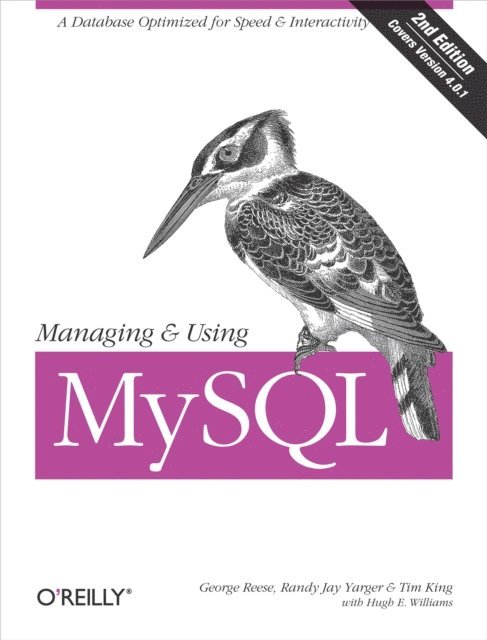
MySQL is a popular and robust open source database product that supports key subsets of SQL on both Linux and Unix systems. MySQL is free for nonprofit use and costs a small amount for commercial use. Unlike commercial databases, MySQL is affordable and easy to use. This book includes introductions to SQL and to relational database theory. If you plan to use MySQL to build web sites or other Linux or Unix applications, this book teaches you to do that, and it will remain useful as a reference once you understand the basics. Ample tutorial material and examples are included throughout.
This book has all you need to take full advantage of this powerful database management system. It takes you through the whole process from installation and configuration to programming interfaces and database administration. This second edition has a greatly enhanced administration chapter that includes information on administrative tools, server configuration, server startup and shutdown, log file management, database backup and restore, and database administration and repair. In addition, a new chapter on security describes data, server, and client-server security, while a chapter on extending MySQL provides an overview of MySQL internals and describes the use of MySQL user-defined functions.
If you know C/C++, Java, Perl, PHP, or Python, you can write programs to interact with your MySQL database. In addition, you can embed queries and updates directly in an HTML file so that a web page becomes its own interface to the database. Managing and Using MySQL includes chapters on the programming language interfaces, and it also includes a complete reference section with specific function calls for each language.
Also included in the reference section are references to the SQL language, and details of the MySQL system variables, programs, and utilities. New to the second edition is a reference to the internal MySQL tables, which will be of particular interest to those who want to work extensively with MySQL security.
436 kr
Läs direkt efter köp
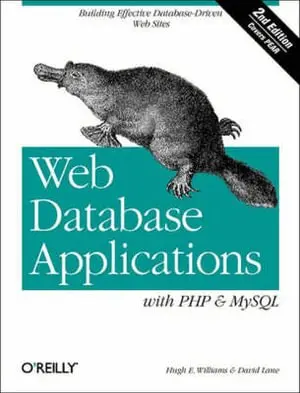
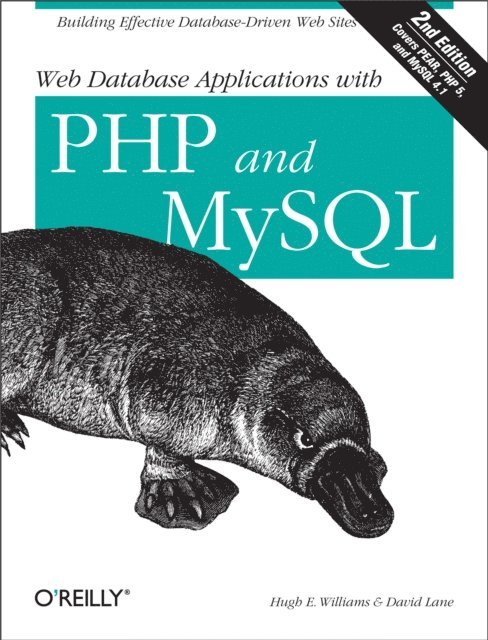
There are many reasons for serving up dynamic content from a web site: to offer an online shopping site, create customized information pages for users, or just manage a large volume of content through a database. Anyone with a modest knowledge of HTML and web site management can learn to create dynamic content through the PHP programming language and the MySQL database. This book gives you the background and tools to do the job safely and reliably.Web Database Applications with PHP and MySQL, Second Edition thoroughly reflects the needs of real-world applications. It goes into detail on such practical issues as validating input (do you know what a proper credit card number looks like?), logging in users, and using templatesto give your dynamic web pages a standard look.But this book goes even further. It shows how JavaScript and PHP can be used in tandem to make a user''s experience faster and more pleasant. It shows the correct way to handle errors in user input so that a site looks professional. It introduces the vast collection of powerful tools available in the PEAR repository and shows how to use some of the most popular tools.Even while it serves as an introduction to new programmers, the book does not omit critical tasks that web sites require. For instance, every site that allows updates must handle the possibility of multiple users accessing data at the same time. This book explains how to solve the problem in detail with locking.Through a sophisticated sample application--Hugh and Dave''s Wine Store--all the important techniques of dynamic content are introduced. Good design is emphasized, such as dividing logic from presentation. The book introduces PHP 5 and MySQL 4.1 features, while providing techniques that can be used on older versions of the software that are still in widespread use.This new edition has been redesigned around the rich offerings of PEAR. Several of these, including the Template package and the database-independent query API, are fully integrated into examples and thoroughly described in the text. Topics include:
Installation and configuration of Apache, MySQL, and PHP on Unix®, Windows®, and Mac OS® X systemsIntroductions to PHP, SQL, and MySQL administrationSession management, including the use of a custom database for improved efficiencyUser input validation, security, and authenticationThe PEAR repository, plus details on the use of PEAR DB and Template classesProduction of PDF reports329 kr
Läs direkt efter köp
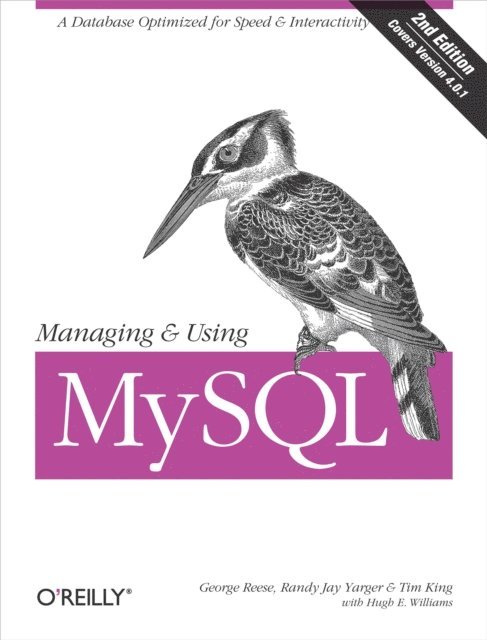
MySQL is a popular and robust open source database product that supports key subsets of SQL on both Linux and Unix systems. MySQL is free for nonprofit use and costs a small amount for commercial use. Unlike commercial databases, MySQL is affordable and easy to use. This book includes introductions to SQL and to relational database theory. If you plan to use MySQL to build web sites or other Linux or Unix applications, this book teaches you to do that, and it will remain useful as a reference once you understand the basics. Ample tutorial material and examples are included throughout.
This book has all you need to take full advantage of this powerful database management system. It takes you through the whole process from installation and configuration to programming interfaces and database administration. This second edition has a greatly enhanced administration chapter that includes information on administrative tools, server configuration, server startup and shutdown, log file management, database backup and restore, and database administration and repair. In addition, a new chapter on security describes data, server, and client-server security, while a chapter on extending MySQL provides an overview of MySQL internals and describes the use of MySQL user-defined functions.
If you know C/C++, Java, Perl, PHP, or Python, you can write programs to interact with your MySQL database. In addition, you can embed queries and updates directly in an HTML file so that a web page becomes its own interface to the database. Managing and Using MySQL includes chapters on the programming language interfaces, and it also includes a complete reference section with specific function calls for each language.
Also included in the reference section are references to the SQL language, and details of the MySQL system variables, programs, and utilities. New to the second edition is a reference to the internal MySQL tables, which will be of particular interest to those who want to work extensively with MySQL security.
405 kr
Läs direkt efter köp
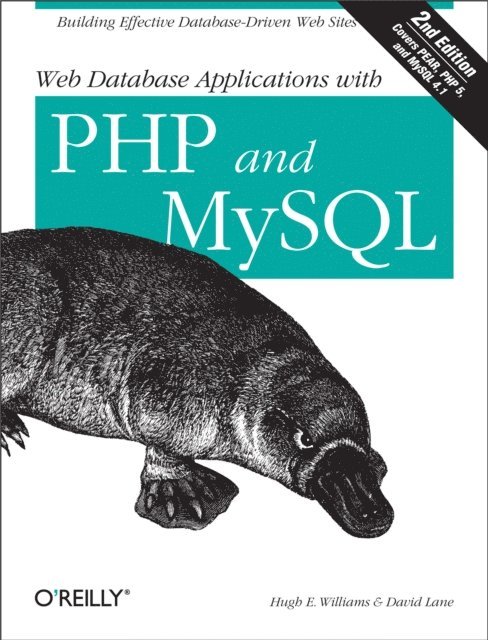
There are many reasons for serving up dynamic content from a web site: to offer an online shopping site, create customized information pages for users, or just manage a large volume of content through a database. Anyone with a modest knowledge of HTML and web site management can learn to create dynamic content through the PHP programming language and the MySQL database. This book gives you the background and tools to do the job safely and reliably.Web Database Applications with PHP and MySQL, Second Edition thoroughly reflects the needs of real-world applications. It goes into detail on such practical issues as validating input (do you know what a proper credit card number looks like?), logging in users, and using templatesto give your dynamic web pages a standard look.But this book goes even further. It shows how JavaScript and PHP can be used in tandem to make a user''s experience faster and more pleasant. It shows the correct way to handle errors in user input so that a site looks professional. It introduces the vast collection of powerful tools available in the PEAR repository and shows how to use some of the most popular tools.Even while it serves as an introduction to new programmers, the book does not omit critical tasks that web sites require. For instance, every site that allows updates must handle the possibility of multiple users accessing data at the same time. This book explains how to solve the problem in detail with locking.Through a sophisticated sample application--Hugh and Dave''s Wine Store--all the important techniques of dynamic content are introduced. Good design is emphasized, such as dividing logic from presentation. The book introduces PHP 5 and MySQL 4.1 features, while providing techniques that can be used on older versions of the software that are still in widespread use.This new edition has been redesigned around the rich offerings of PEAR. Several of these, including the Template package and the database-independent query API, are fully integrated into examples and thoroughly described in the text. Topics include:
Installation and configuration of Apache, MySQL, and PHP on Unix®, Windows®, and Mac OS® X systemsIntroductions to PHP, SQL, and MySQL administrationSession management, including the use of a custom database for improved efficiencyUser input validation, security, and authenticationThe PEAR repository, plus details on the use of PEAR DB and Template classesProduction of PDF reports