Hwaiyu Geng – författare
2 002 kr
Läs direkt efter köp
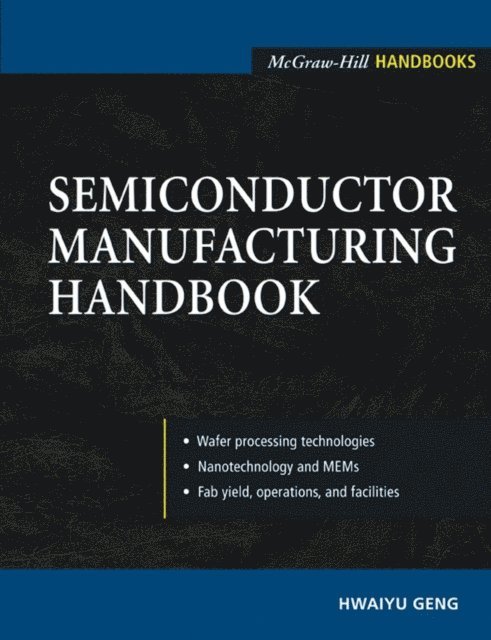
This handbook will provide engineers with the principles, applications, and solutions needed to design and manage semiconductor manufacturing operations. Consolidating the many complex fields of semiconductor fundamentals and manufacturing into one volume by deploying a team of world class specialists, it allows the quick look up of specific manufacturing reference data across many subdisciplines.
1 863 kr
Skickas inom 3-6 vardagar
A fully revised guide to manufacturing engineering technologies, principles, and applications
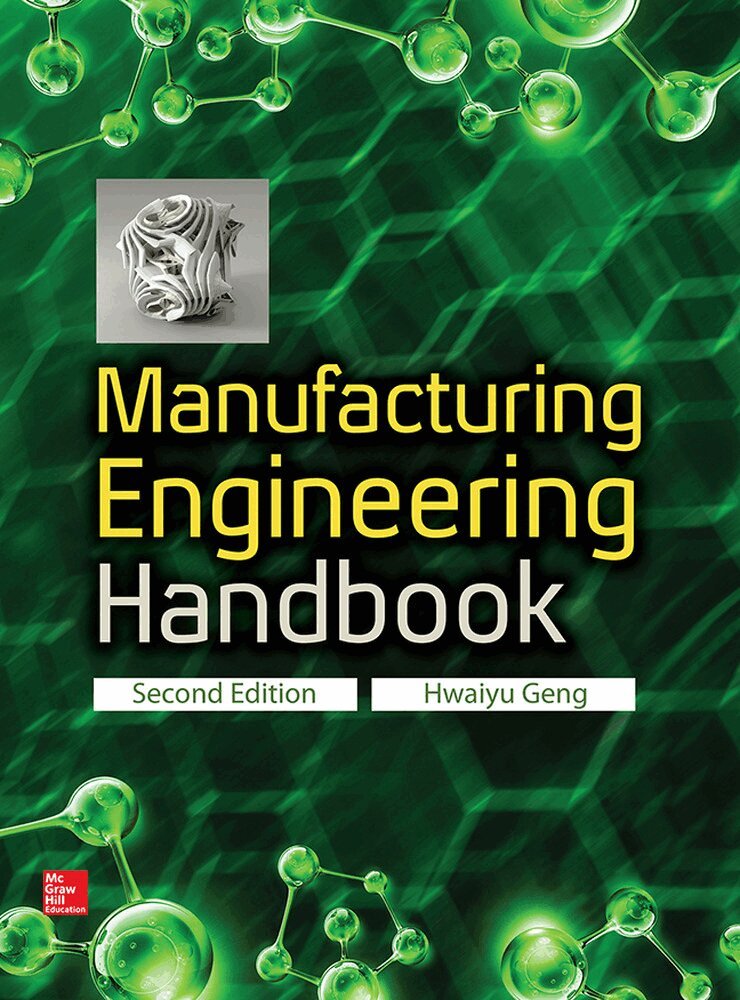
This thoroughly updated resource offers complete details on traditional, advanced, and emerging manufacturing engineering processes. Written by a team of 58 international experts, this second edition shows how to optimize all aspects of the global manufacturing process and build the highest quality goods at the lowest price in the shortest possible time. All new topics include cloud computing, Internet of Things, 3D printing, nano manufacturing and advanced manufacturing, and operations research.
Manufacturing Engineering Handbook, Second Edition covers:
· Cloud computing, Internet of Things, Sustainability,and Global Manufacturing
· Additive Manufacturing, Robotics, and Machine Vision
· Microelectromechanical Systems and Nano-manufacturing
· Laser Technology, Abrasive Jet, Welding, Sheet-metal Forming Process
· Lean Manufacturing and Six Sigma
· Value Engineering and Adaptive Manufacturing
· Computer-Aided-Design, and Manufacturing
· Heat Teatment, Casting, and Powder Metallurgy
· Metalworking, Grinding, and Metal Forming
· Composite, Mold-Making, and Plastics Processing
· Quality Control, Engineering Economics, Human Factors, and Supply Chain Management
· And many more processes and technologies
2 211 kr
Läs direkt efter köp
The new edition of this professional resource reveals how to optimize all aspects of the global manufacturing process to build the highest quality goods at the lowest price in the shortest possible time.
How can one apply technical and business knowledge to develop a strategic plan that delivers increased productivity, quality, sustainability, reliability, agility, resilience, and best practices with rapid time to production and value? The answers are found in the fully updated new edition of Manufacturing Engineering Handbook.
The goal of this second edition is to provide the essential knowledge needed to build products with the highest quality at the lowest cost in the least amount of time by optimizing all aspects of the manufacturing process—design, development, tools, processes, quality, speed, output, safety, and sustainability. You will gain access to information on conventional and modern technologies, manufacturing processes, and operations management that will assist you in achieving these goals.
The book is written by a team of more than 100 internationally renowned manufacturing engineering experts, and pared down from its original 1200 pages. The new and vastly improved second edition is specifically designed to concisely and succinctly cover traditional manufacturing processes and advanced technologies as well as newer manufacturing software and systems to integrate them into the modern, global manufacturing world.
Brand-new chapters on: eco-design and sustainability; nano materials and nano manufacturing; facilities planning; operations researchNew sections on plastics, composites, and moldmaking; global manufacturing and supply chain managementIncreased coverage of Design for Six Sigma and adaptive manufacturingAffiliated web site with color illustrations, graphs, charts, discussions on future trends, additional technical papers, and suggestions for further reading2 330 kr
Läs direkt efter köp
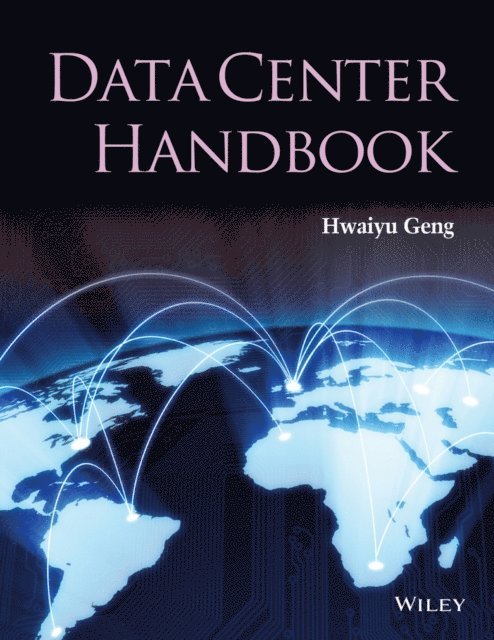
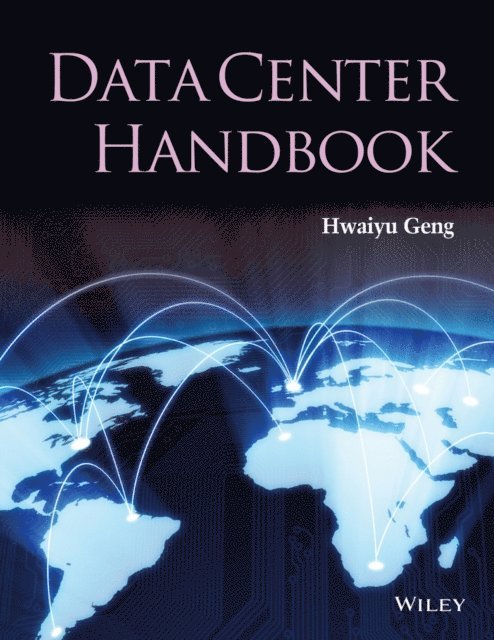
Organizations in need of high-speed connectivity and nonstop systems operations depend upon data centers for a range of deployment solutions. A data center is a facility used to house computer systems and associated components, such as telecommunications and storage systems. It generally includes multiple power sources, redundant data communications connections, environmental controls (e.g., air conditioning, fire suppression) and security devices.
With contributions from an international list of experts, The Data Center Handbook instructs readers to:
Prepare strategic plan that includes location plan, site selection, roadmap and capacity planning Design and build "green" data centers, with mission critical and energy-efficient infrastructure Apply best practices to reduce energy consumption and carbon emissions Apply IT technologies such as cloud and virtualization Manage data centers in order to sustain operations with minimum costs Prepare and practice disaster reovery and business continuity planThe book imparts essential knowledge needed to implement data center design and construction, apply IT technologies, and continually improve data center operations.
2 330 kr
Läs direkt efter köp
Organizations in need of high-speed connectivity and nonstop systems operations depend upon data centers for a range of deployment solutions. A data center is a facility used to house computer systems and associated components, such as telecommunications and storage systems. It generally includes multiple power sources, redundant data communications connections, environmental controls (e.g., air conditioning, fire suppression) and security devices.
With contributions from an international list of experts, The Data Center Handbook instructs readers to:
Prepare strategic plan that includes location plan, site selection, roadmap and capacity planning Design and build "green" data centers, with mission critical and energy-efficient infrastructure Apply best practices to reduce energy consumption and carbon emissions Apply IT technologies such as cloud and virtualization Manage data centers in order to sustain operations with minimum costs Prepare and practice disaster reovery and business continuity planThe book imparts essential knowledge needed to implement data center design and construction, apply IT technologies, and continually improve data center operations.
2 025 kr
Läs direkt efter köp
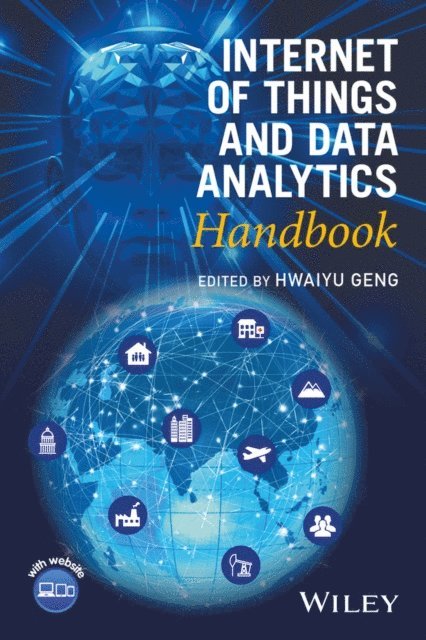
This book examines the Internet of Things (IoT) and Data Analytics from a technical, application, and business point of view.
Internet of Things and Data Analytics Handbook describes essential technical knowledge, building blocks, processes, design principles, implementation, and marketing for IoT projects. It provides readers with knowledge in planning, designing, and implementing IoT projects. The book is written by experts on the subject matter, including international experts from nine countries in the consumer and enterprise fields of IoT. The text starts with an overview and anatomy of IoT, ecosystem of IoT, communication protocols, networking, and available hardware, both present and future applications and transformations, and business models. The text also addresses big data analytics, machine learning, cloud computing, and consideration of sustainability that are essential to be both socially responsible and successful. Design and implementation processes are illustrated with best practices and case studies in action. In addition, the book:
Examines cloud computing, data analytics, and sustainability and how they relate to IoT overs the scope of consumer, government, and enterprise applications Includes best practices, business model, and real-world case studies Hwaiyu Geng, P.E., is a consultant with Amica Research (www.AmicaResearch.org, Palo Alto, California), promoting green planning, design, and construction projects. He has had over 40 years of manufacturing and management experience, working with Westinghouse, Applied Materials, Hewlett Packard, and Intel on multi-million high-tech projects. He has written and presented numerous technical papers at international conferences. Mr. Geng, a patent holder, is also the editor/author of Data Center Handbook (Wiley, 2015).2 025 kr
Läs direkt efter köp
This book examines the Internet of Things (IoT) and Data Analytics from a technical, application, and business point of view.
Internet of Things and Data Analytics Handbook describes essential technical knowledge, building blocks, processes, design principles, implementation, and marketing for IoT projects. It provides readers with knowledge in planning, designing, and implementing IoT projects. The book is written by experts on the subject matter, including international experts from nine countries in the consumer and enterprise fields of IoT. The text starts with an overview and anatomy of IoT, ecosystem of IoT, communication protocols, networking, and available hardware, both present and future applications and transformations, and business models. The text also addresses big data analytics, machine learning, cloud computing, and consideration of sustainability that are essential to be both socially responsible and successful. Design and implementation processes are illustrated with best practices and case studies in action. In addition, the book:
Examines cloud computing, data analytics, and sustainability and how they relate to IoT overs the scope of consumer, government, and enterprise applications Includes best practices, business model, and real-world case studies Hwaiyu Geng, P.E., is a consultant with Amica Research (www.AmicaResearch.org, Palo Alto, California), promoting green planning, design, and construction projects. He has had over 40 years of manufacturing and management experience, working with Westinghouse, Applied Materials, Hewlett Packard, and Intel on multi-million high-tech projects. He has written and presented numerous technical papers at international conferences. Mr. Geng, a patent holder, is also the editor/author of Data Center Handbook (Wiley, 2015).1 819 kr
Skickas inom 5-8 vardagar
1 918 kr
Skickas inom 5-8 vardagar
2 232 kr
Läs direkt efter köp
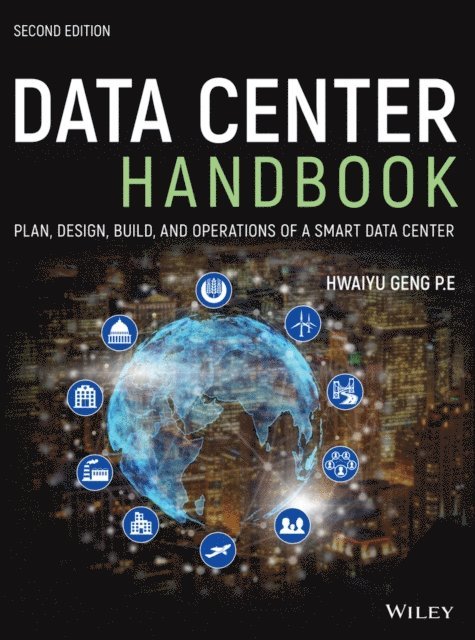
Written by 59 experts and reviewed by a seasoned technical advisory board, the Data Center Handbook is a thoroughly revised, one-stop resource that clearly explains the fundamentals, advanced technologies, and best practices used in planning, designing, building and operating a mission-critical, energy-efficient, sustainable data center. This handbook, in its second edition, covers anatomy, ecosystem and taxonomy of data centers that enable the Internet of Things and artificial intelligent ecosystems and encompass the following:
SECTION 1: DATA CENTER OVERVIEW AND STRATEGIC PLANNING
Megatrends, the IoT, artificial intelligence, 5G network, cloud and edge computingStrategic planning forces, location plan, and capacity planning Green design & construction guidelines and best practicesEnergy demand, conservation, and sustainability strategiesData center financial analysis & risk managementSECTION 2: DATA CENTER TECHNOLOGIES
Software-defined environmentComputing, storage, network resource managementWireless sensor networks in data centersASHRAE data center guidelinesData center telecommunication cabling, BICSI and TIA 942Rack-level and server-level coolingCorrosion and contamination controlEnergy saving technologies and server designMicrogrid and data centersSECTION 3: DATA CENTER DESIGN & CONSTRUCTION
Data center site selectionArchitecture design: rack floor plan and facility layoutMechanical design and cooling technologiesElectrical design and UPSFire protectionStructural designReliability engineeringComputational fluid dynamicsProject managementSECTION 4: DATA CENTER OPERATIONS TECHNOLOGIES
Benchmarking metrics and assessmentData center infrastructure managementData center air managementDisaster recovery and business continuity managementThe Data Center Handbook: Plan, Design, Build, and Operations of a Smart Data Center belongs on the bookshelves of any professionals who work in, with, or around a data center.
2 122 kr
Läs direkt efter köp
Written by 59 experts and reviewed by a seasoned technical advisory board, the Data Center Handbook is a thoroughly revised, one-stop resource that clearly explains the fundamentals, advanced technologies, and best practices used in planning, designing, building and operating a mission-critical, energy-efficient, sustainable data center. This handbook, in its second edition, covers anatomy, ecosystem and taxonomy of data centers that enable the Internet of Things and artificial intelligent ecosystems and encompass the following:
SECTION 1: DATA CENTER OVERVIEW AND STRATEGIC PLANNING
Megatrends, the IoT, artificial intelligence, 5G network, cloud and edge computingStrategic planning forces, location plan, and capacity planning Green design & construction guidelines and best practicesEnergy demand, conservation, and sustainability strategiesData center financial analysis & risk managementSECTION 2: DATA CENTER TECHNOLOGIES
Software-defined environmentComputing, storage, network resource managementWireless sensor networks in data centersASHRAE data center guidelinesData center telecommunication cabling, BICSI and TIA 942Rack-level and server-level coolingCorrosion and contamination controlEnergy saving technologies and server designMicrogrid and data centersSECTION 3: DATA CENTER DESIGN & CONSTRUCTION
Data center site selectionArchitecture design: rack floor plan and facility layoutMechanical design and cooling technologiesElectrical design and UPSFire protectionStructural designReliability engineeringComputational fluid dynamicsProject managementSECTION 4: DATA CENTER OPERATIONS TECHNOLOGIES
Benchmarking metrics and assessmentData center infrastructure managementData center air managementDisaster recovery and business continuity managementThe Data Center Handbook: Plan, Design, Build, and Operations of a Smart Data Center belongs on the bookshelves of any professionals who work in, with, or around a data center.
1 938 kr
Skickas inom 3-6 vardagar
1 789 kr
Kommande