I. Budge – författare
Visar alla böcker från författaren I. Budge. Handla med fri frakt och snabb leverans.
8 produkter
8 produkter
Inbunden, Engelska, 1993
544 kr
Skickas inom 10-15 vardagar
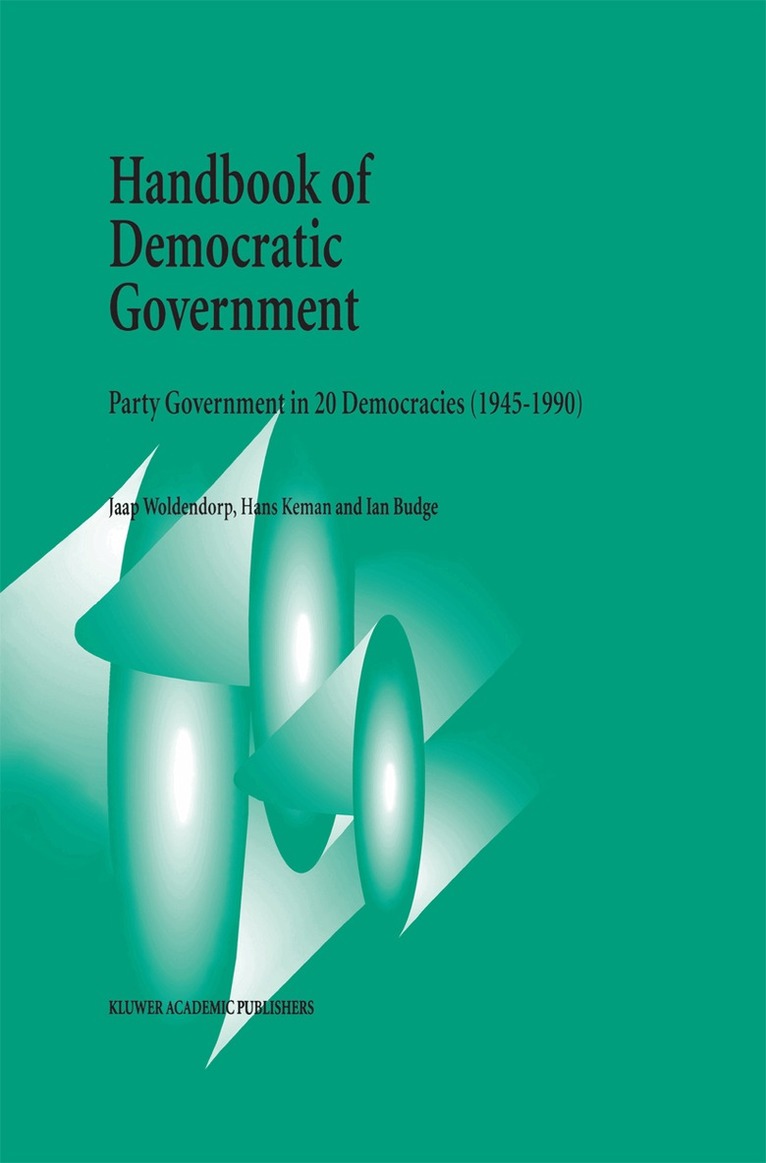
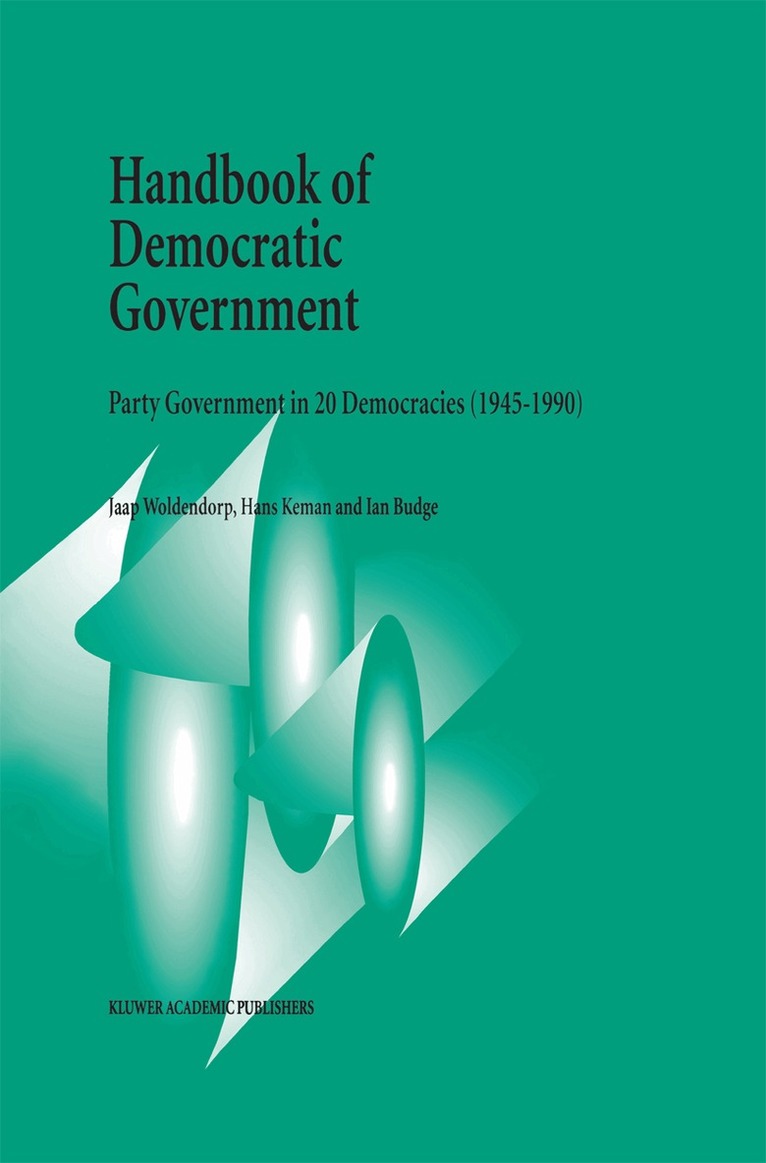
This handbook provides a compact and comprehensive collection of data from 20 countries which offers comparative information on the composition of governments. Parties, ministries, portfolios, ministers and parliamentary support are listed, as well as duration, type of government and reasons for termination. The data are organized in such a manner that researchers can use them as a basic data set, ready to be transformed according to the particular needs dictated by the research undertaken. Various levels of analysis are possible, both cross-nationally and across time, ranging from individual ministers and separate ministries to specific parties, governments or countries. Given its format, the data set is also a very useful background to the special annual issue of the "European Journal of Political Research - Political Data Yearbook". It should save researchers in the field of comparative politics valuable time as it can be utilized in connection with, or in addition to, other data sources.
Inbunden, Engelska, 2000
2 159 kr
Skickas inom 10-15 vardagar
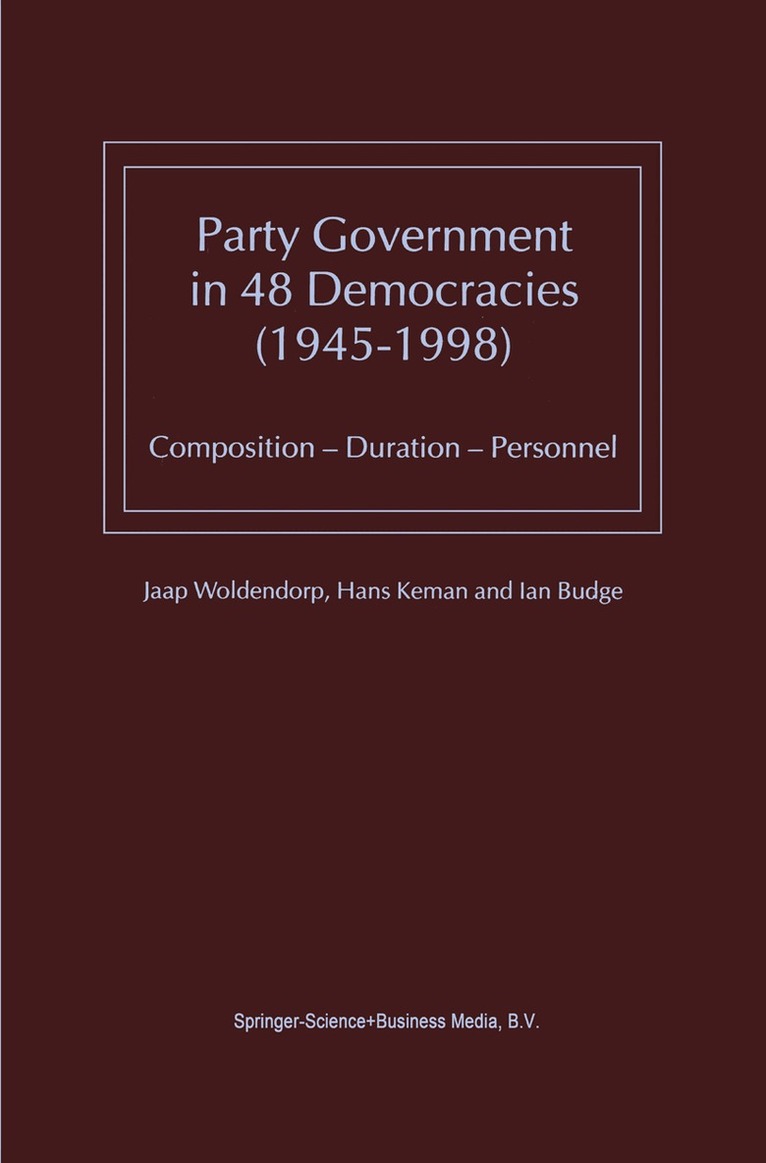
Since the 1980s, political scientists have developed a renewed interest in the study of political institutions, based on the assumption that "institutions matter" -that is, that formal governmental institutions and constitutional-legal rules (as well as informal institutions like parties and interest groups) are crucial determinants of the shape of politics and policy outcomes. In this respect, the "new institutionalism" resembles the "old institutionalism" of pre-behaviorist days, but the crucial difference between the two is that the new institutionalists are committed to systematic empirical testing of their hypotheses, at least in principle. In practice, however, especially in compara tive analyses, this goal has often been frustrated by the lack of reliable data for a large number of countries. Researchers have therefore usually been limited to testing their hypotheses with modest data sets collected for their own particular purposes. Of all of the political institutions, the executive branch of the government is by far the most important; it can be regarded as the irreducible core of government and the principal embodiment of political authority with specific powers that are not lodged elsewhere in the political system. Almost all countries in the world, and certainly all modem democracies, have an executive body called "government", "cabinet", or "administration" (as in the term "the Clinton administration") that has the main responsibility for running the country's public affairs.
National Policy in a Global Economy
How Government can Improve Living Standards and Balance the Books
Inbunden, Engelska, 2014
549 kr
Skickas inom 10-15 vardagar
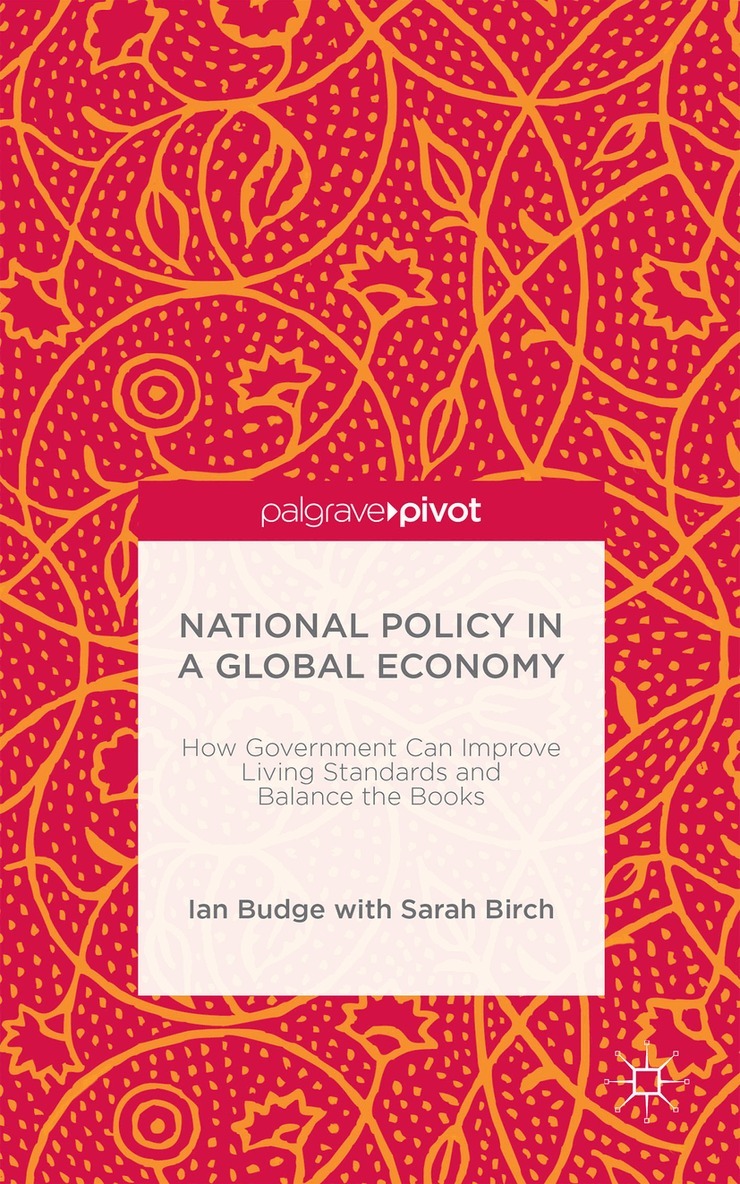
This study offers an analysis of the UK's current economic policy options and a plan for improving life for ordinary citizens via a sensible and realistic understanding of governments' limited ability to manage economic performance. It provides a manifesto which political parties could immediately adopt to make life better for all.
National Policy in a Global Economy
How Government can Improve Living Standards and Balance the Books
E-bok
PDF, Engelska, 2014687 kr
Läs direkt efter köp
This study offers an analysis of the UK''s current economic policy options and a plan for improving life for ordinary citizens via a sensible and realistic understanding of governments'' limited ability to manage economic performance. It provides a manifesto which political parties could immediately adopt to make life better for all.
Häftad, Engelska, 2010
2 241 kr
Skickas inom 10-15 vardagar
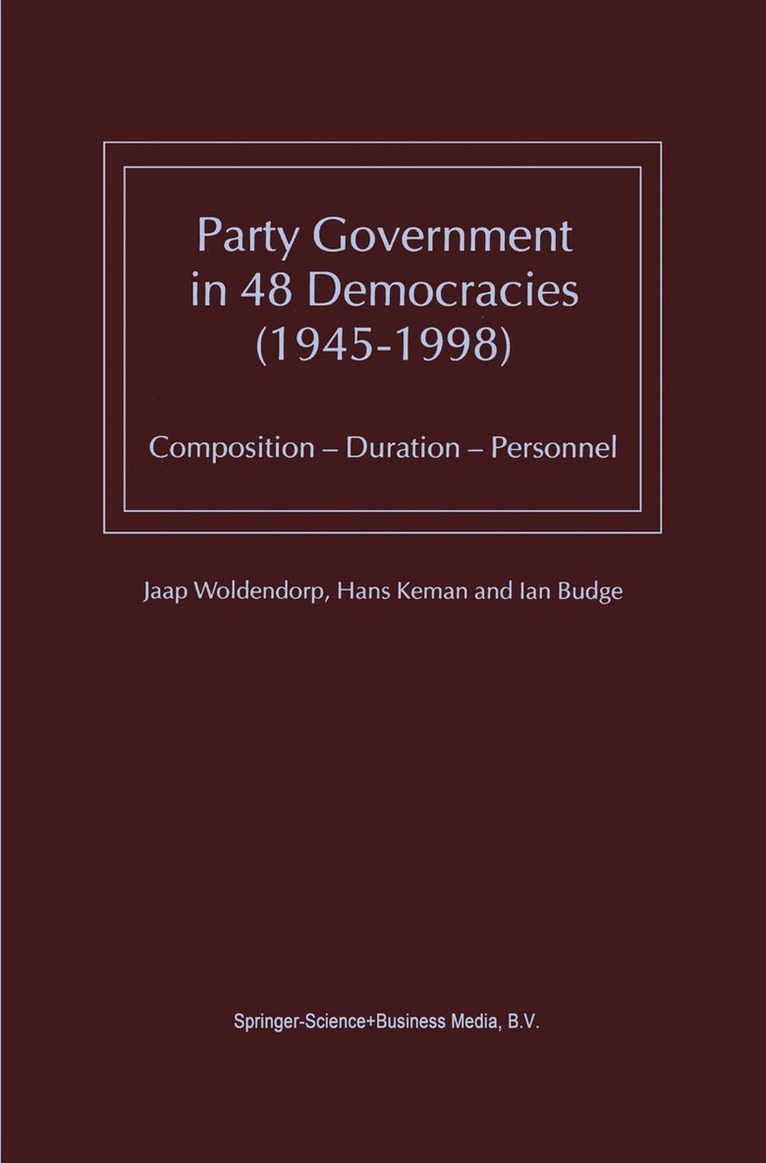
This Handbook of Democratic Government is the first compact and comprehensive data collection which simultaneously provides comparative and complete information on the composition of governments between 1945 and 1998 in 48 countries across the democratic world. Parties, ministries, competences, ministers and parliamentary support are listed, as well as duration, type of government and reasons for termination. This information is provided for 48 parliamentary democracies, covering the whole period 1945-1998. Also included is additional comparative information on institutions and governance, based on the countries' constitutions and related basic laws. The data are organised in such a manner that every researcher can use them as a basic data set, ready to be transformed according to the particular needs dictated by the research undertaken. Various levels of analysis are possible, both cross-nationally and across time, ranging from individual ministers and separate ministries to specific parties, governments or countries.This data collection will save researchers in the field of comparative politics valuable time and resources as it can be utilised in connection with, or in addition to, other data sources.
Häftad, Engelska, 2012
549 kr
Skickas inom 10-15 vardagar
The Handbook of Democratic Government is the first compact and comprehensive data collection for 20 countries which simultaneously provides comparative and complete information on the composition of governments.
E-bok
PDF, Engelska, 2012708 kr
Läs direkt efter köp
The Handbook of Democratic Government is the first compact and comprehensive data collection for 20 countries which simultaneously provides comparative and complete information on the composition of governments. Parties, ministries, portfolios, ministers and parliamentary support are listed, as well as duration, type of government and reasons for termination. The data are organised in such a manner that every researcher can use them as a basic data set, ready to be transformed according to the particular needs dictated by the research undertaken. Various levels of analysis are possible, both cross-nationally and across time, ranging from individual ministers and separate ministries to specific parties, governments or countries. Given its format, the data set is also a very useful background to the special annual issue of the European Journal of Political Research: Political Data Yearbook. It will save researchers in the field of comparative politics valuable time as it can be utilised in connection with, or in addition to other data sources.
E-bok
PDF, Engelska, 20132 822 kr
Läs direkt efter köp
Since the 1980s, political scientists have developed a renewed interest in the study of political institutions, based on the assumption that "institutions matter" -that is, that formal governmental institutions and constitutional-legal rules (as well as informal institutions like parties and interest groups) are crucial determinants of the shape of politics and policy outcomes. In this respect, the "new institutionalism" resembles the "old institutionalism" of pre-behaviorist days, but the crucial difference between the two is that the new institutionalists are committed to systematic empirical testing of their hypotheses, at least in principle. In practice, however, especially in compara tive analyses, this goal has often been frustrated by the lack of reliable data for a large number of countries. Researchers have therefore usually been limited to testing their hypotheses with modest data sets collected for their own particular purposes. Of all of the political institutions, the executive branch of the government is by far the most important; it can be regarded as the irreducible core of government and the principal embodiment of political authority with specific powers that are not lodged elsewhere in the political system. Almost all countries in the world, and certainly all modem democracies, have an executive body called "government", "cabinet", or "administration" (as in the term "the Clinton administration") that has the main responsibility for running the country''s public affairs.