Iakov Iskhakov – författare
Visar alla böcker från författaren Iakov Iskhakov. Handla med fri frakt och snabb leverans.
7 produkter
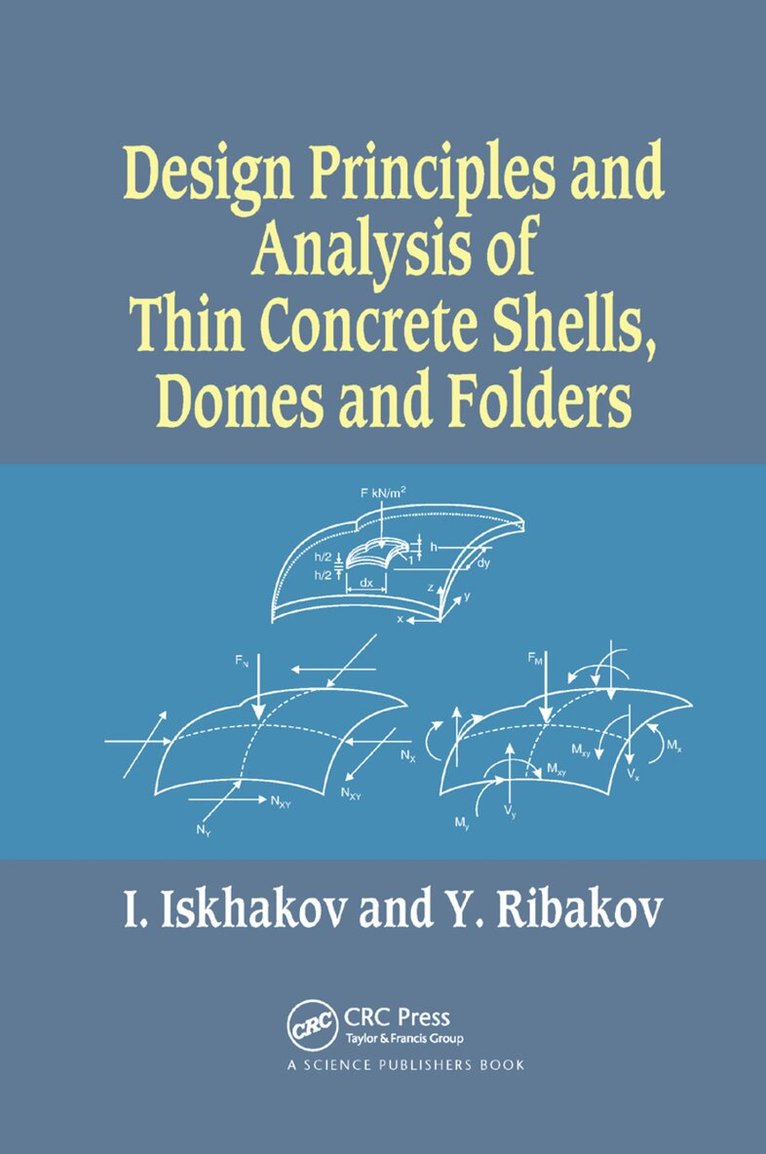
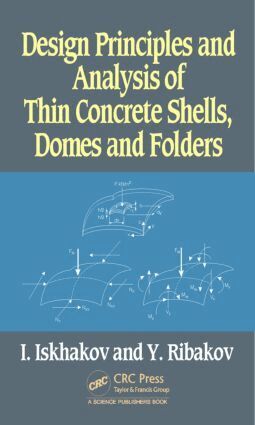
Design Principles and Analysis of Thin Concrete Shells, Domes and Folders
Av Iakov Iskhakov, Yuri Ribakov
Häftad, 2019
1041 kr
Lägg i varukorg
One of the main goals of a good and effective structural design is to decrease, as far as possible, the self-weight of structures, because they must carry the service load. This is especially important for reinforced concrete (RC) structures, as the self-weight of the material is substantial. For …
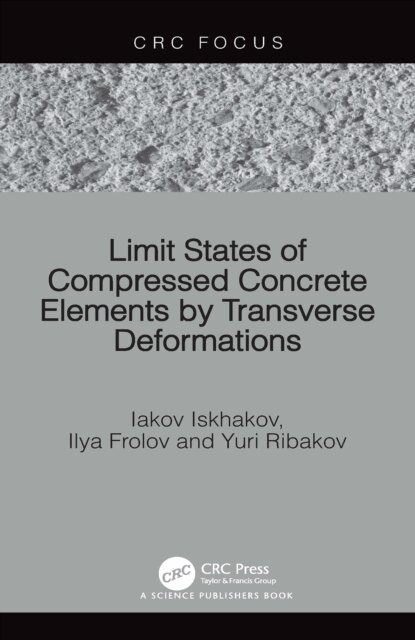
Limit States of Compressed Concrete Elements by Transverse Deformations
Av Iakov Iskhakov, Ilya Frolov m. fl.
Inbunden, 2025
2134 kr
Lägg i varukorg
The theoretical stress-strain model for compressed concrete (Iskhakov and Ribakov, 2018), is based on the structural phenomenon and requires no empirical coefficients. It includes such main parameters of concrete behavior as stresses and strains at the border between the elastic and non-elastic …
Limit States of Compressed Concrete Elements by Transverse Deformations
Av Iakov Iskhakov, Ilya Frolov m. fl.
Häftad, 2026
633 kr
Lägg i varukorg
The theoretical stress-strain model for compressed concrete (Iskhakov and Ribakov, 2018), is based on the structural phenomenon and requires no empirical coefficients. It includes such main parameters of concrete behavior as stresses and strains at the border between the elastic and non-elastic …
Limit States of Compressed Concrete Elements by Transverse Deformations
Av Yuri Ribakov, Ilya Frolov m. fl.
E-bok, 2025
433 kr
Lägg i varukorg
The theoretical stress-strain model for compressed concrete (Iskhakov and Ribakov, 2018), is based on the structural phenomenon and requires no empirical coefficients. It includes such main parameters of concrete behavior as stresses and strains at the border between the elastic and non-elastic …
Limit States of Compressed Concrete Elements by Transverse Deformations
Av Yuri Ribakov, Ilya Frolov m. fl.
E-bok, 2025
424 kr
Lägg i varukorg
The theoretical stress-strain model for compressed concrete (Iskhakov and Ribakov, 2018), is based on the structural phenomenon and requires no empirical coefficients. It includes such main parameters of concrete behavior as stresses and strains at the border between the elastic and non-elastic …
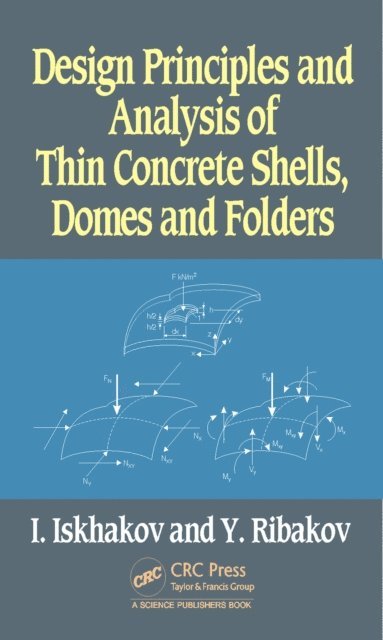
Design Principles and Analysis of Thin Concrete Shells, Domes and Folders
Av Iakov Iskhakov, Yuri Ribakov
Inbunden, 2015
3074 kr
Lägg i varukorg
One of the main goals of a good and effective structural design is to decrease, as far as possible, the self-weight of structures, because they must carry the service load. This is especially important for reinforced concrete (RC) structures, as the self-weight of the material is substantial. For …
Design Principles and Analysis of Thin Concrete Shells, Domes and Folders
Av Yuri Ribakov, Iakov Iskhakov
E-bok, 2015
1230 kr
Lägg i varukorg
One of the main goals of a good and effective structural design is to decrease, as far as possible, the self-weight of structures, because they must carry the service load. This is especially important for reinforced concrete (RC) structures, as the self-weight of the material is substantial. For …