Ian Lerche - Böcker
Visar alla böcker från författaren Ian Lerche. Handla med fri frakt och snabb leverans.
9 produkter
9 produkter
1 114 kr
Skickas inom 5-8 vardagar
1 590 kr
Skickas inom 10-15 vardagar
There has long been interest in the flow of fluids through permeable aqui fers. Stratigraphic trapping of oil and gas by permeability changes in an aquifer and the amounts of hydrocarbons so trapped are major concerns to the oil industry. The variations of aquifer width and geometry and of the positions in an aquifer where hydrocarbons can be trapped by hydro dynamic forces are intimately intertwined in determining the shape, and thus the volume, of hydrocarbons. Perhaps the seminal work in this area is reflected by King Hubbert's massive review paper "Entrapment of Petroleum under Hydrodynamic Conditions" (Am. Assoc. Pet. Geol. Bull. 37(8), 1954-2026, 1953), in which a wide variety of effects, such as capillarity, buoyancy, surface tension, and salinity of water, are incorporated as basic factors influenc ing the positioning and shaping of hydrocarbon masses in hydrodynami cally active aquifers. In those days, while the basic physics could readily be appreciated, development of a detailed quantitative understanding of the interplay of the various factors in controlling or modulating hydro dynamic shapes was severely limited by computer abilities. Indeed, Hub bert actually constructed and photographed physical models, using alcohol and water, to illustrate basic concepts. It is difficult to obtain an appreciation of the behavior of flow geometries from such experiments when all factors are permitted to vary simultaneously.
1 590 kr
Skickas inom 10-15 vardagar
Since the dissolution of the Soviet Union almost a decade ago, there has been rapid evolution of interactions between the Western nations and individual countries of the former Soviet Union. As part of that interaction, the autonomous independent Republic of Azerbaijan through its scientific arm, the Geological Institute of the Azerbaijan Academy of Sciences under the Directorship of Academician Akif Ali-Zadeh and Deputy Director Ibrahim Guliev, arranged for personnel to be seconded to the University of South Carolina. The idea here was to see to what extent a quantitative understanding could be achieved of the evolution of the Azerbaijan part of the South Caspian Basin from dynamical, thermal and hydrocarbon perspectives. The Azeris brought with them copious amounts of data collected over decades which, together with the quantitative numerical codes available at USC, enabled a concerted effort to be put forward, culminating in two large books (Evolution of the South Caspian Basin: Geological Risks and Probable Hazards, 675 pps; and The South Caspian Basin: Stratigraphy, Geochemistry, and Risk Analysis, of which were published by the Azerbaijan Academy of 472 pps. ) both Sciences, and also many scientific papers. Thus, over the last four to five years an integrated comprehensive start has been made to understand the hydrocarbon proneness of the South Caspian Basin. In the course of the endeavor to understand the basinal evolution, it became clear that a variety of natural hazards occur in the Basin.
1 968 kr
Skickas inom 10-15 vardagar
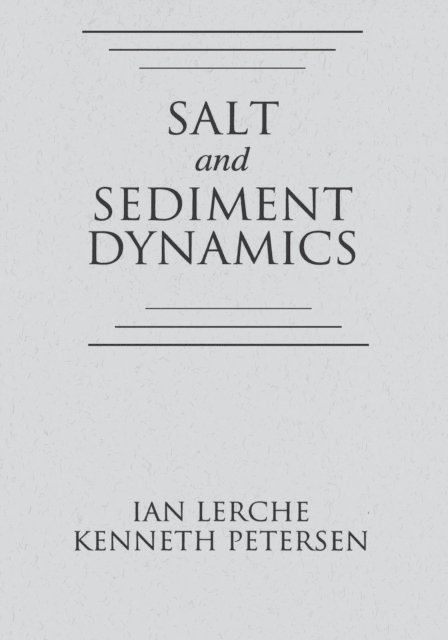
Salt and Sediment Dynamics presents a thorough treatment of salt and sediment interactions and the implications of such interactions for sub-salt exploration. The book emphasizes and utilizes recent discoveries on many aspects of salt and sediment interactions, provides the theoretical framework for interpreting the increasing amount of available data on salt and sediments, and develops a self-consistent dynamical evolution model of salt structures and their interaction with surrounding sediments.The model developed in the text consists of an evolving salt structure that influences sediment motion with self-consistent evolution of sediments and salt shape. The resulting stress and strain in the sediments and the thermal focusing effects of the salt are evaluated. The salt and sediments in the model are consistent with observed geometries, a result of having freely adjustable, observation-controlled model parameters.In addition, the book describes case histories in a variety of geological settings, thus explaining aspects of the genesis and development of salt structures, of their impact on sedimentary structural evolution, and of the impact of sediments on salt masses.The techniques developed by the authors expand the current state of knowledge regarding the evolution and dynamics of salt structures and increase the potential for effective sub-salt hydrocarbon exploration.
1 590 kr
Skickas inom 10-15 vardagar
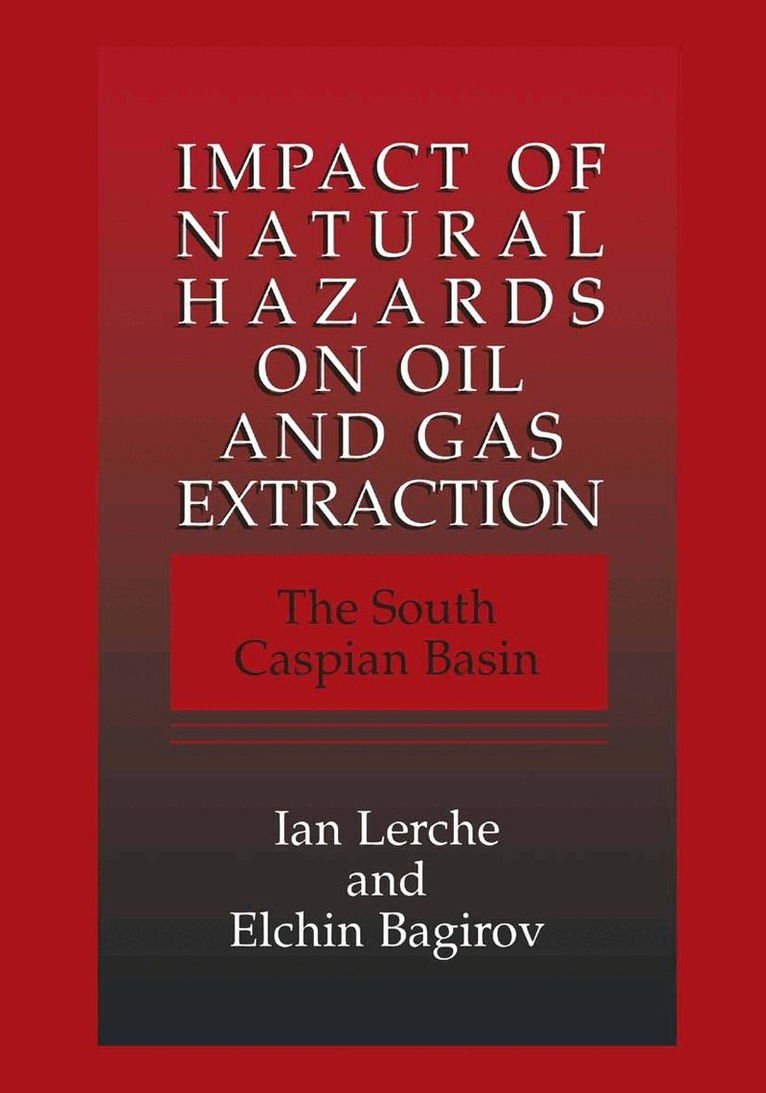
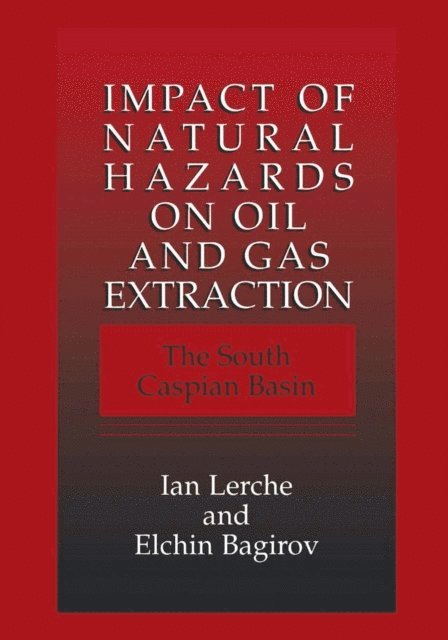
There exists a broad range of natural hazards, including seismicity, faulting, fracturing, mud volcano eruptions, mud island motion, overpressure and lateral stress. These natural hazards, along with others, affect the exploration and production of hydrocarbons, especially in offshore operations. For each potential hazard, an estimation of their frequencies of occurrence, in addition to a quantitative assessment of the possible consequences, must be made. Impact of Natural Hazards on Oil and Gas Extraction: The South Caspian Basin provides technical details regarding these natural hazards, using the South Caspian Basin as a model. Here, the variation of natural hazards is documented in a geological setting. Accordingly, the scales of possible damage for each situation can be compared, and an understanding provided of the influence each hazard type has on every other.
1 590 kr
Skickas inom 10-15 vardagar
There has long been interest in the flow of fluids through permeable aqui fers. Stratigraphic trapping of oil and gas by permeability changes in an aquifer and the amounts of hydrocarbons so trapped are major concerns to the oil industry. The variations of aquifer width and geometry and of the positions in an aquifer where hydrocarbons can be trapped by hydro dynamic forces are intimately intertwined in determining the shape, and thus the volume, of hydrocarbons. Perhaps the seminal work in this area is reflected by King Hubbert's massive review paper "Entrapment of Petroleum under Hydrodynamic Conditions" (Am. Assoc. Pet. Geol. Bull. 37(8), 1954-2026, 1953), in which a wide variety of effects, such as capillarity, buoyancy, surface tension, and salinity of water, are incorporated as basic factors influenc ing the positioning and shaping of hydrocarbon masses in hydrodynami cally active aquifers. In those days, while the basic physics could readily be appreciated, development of a detailed quantitative understanding of the interplay of the various factors in controlling or modulating hydro dynamic shapes was severely limited by computer abilities. Indeed, Hub bert actually constructed and photographed physical models, using alcohol and water, to illustrate basic concepts. It is difficult to obtain an appreciation of the behavior of flow geometries from such experiments when all factors are permitted to vary simultaneously.
Environmental Risk Assessment
Quantitative Measures, Anthropogenic Influences, Human Impact
Inbunden, Engelska, 2006
1 590 kr
Skickas inom 10-15 vardagar
The world is a dirty place and getting dirtier all the time. The reasons for this ever-increasing lack of cleanliness are not hard to find, being basically caused by the actions of the six billion people who inhabit the planet. The needs of the people for air, water, food, housing, clothing, heating, materials, oil, gas, minerals, metals, chemicals, and so forth have, over the centuries, given rise to a variety of environmental problems that have been exacerbated or been newly created by the industrialization of the world, the increase in population, and the increase in longevity of the population. The costs of cleaning even fractions of the known environmental problems are truly enormous, as detailed in the volume Environmental Risk Analysis (I. Lerche and E. Paleologos, 2001, McGraw-Hill). The chances of causing new environmental problems, and their associated costs of clean up, are equally challenging in terms of anthropogenic influences and also of the natural environmental problems that can be triggered by humanity. This volume discusses many examples of environmental problems that have occurred and that are still ongoing. The volume also considers the effects in terms of sickness and death of fractions of the population of the planet caused by such environmental problems.
Environmental Risk Assessment
Quantitative Measures, Anthropogenic Influences, Human Impact
Häftad, Engelska, 2010
1 638 kr
Skickas inom 10-15 vardagar
The world is a dirty place and getting dirtier all the time. The reasons for this ever-increasing lack of cleanliness are not hard to find, being basically caused by the actions of the six billion people who inhabit the planet. The needs of the people for air, water, food, housing, clothing, heating, materials, oil, gas, minerals, metals, chemicals, and so forth have, over the centuries, given rise to a variety of environmental problems that have been exacerbated or been newly created by the industrialization of the world, the increase in population, and the increase in longevity of the population. The costs of cleaning even fractions of the known environmental problems are truly enormous, as detailed in the volume Environmental Risk Analysis (I. Lerche and E. Paleologos, 2001, McGraw-Hill). The chances of causing new environmental problems, and their associated costs of clean up, are equally challenging in terms of anthropogenic influences and also of the natural environmental problems that can be triggered by humanity. This volume discusses many examples of environmental problems that have occurred and that are still ongoing. The volume also considers the effects in terms of sickness and death of fractions of the population of the planet caused by such environmental problems.
589 kr
Skickas inom 3-6 vardagar