Ian M. Ward – författare
Visar alla böcker från författaren Ian M. Ward. Handla med fri frakt och snabb leverans.
10 produkter
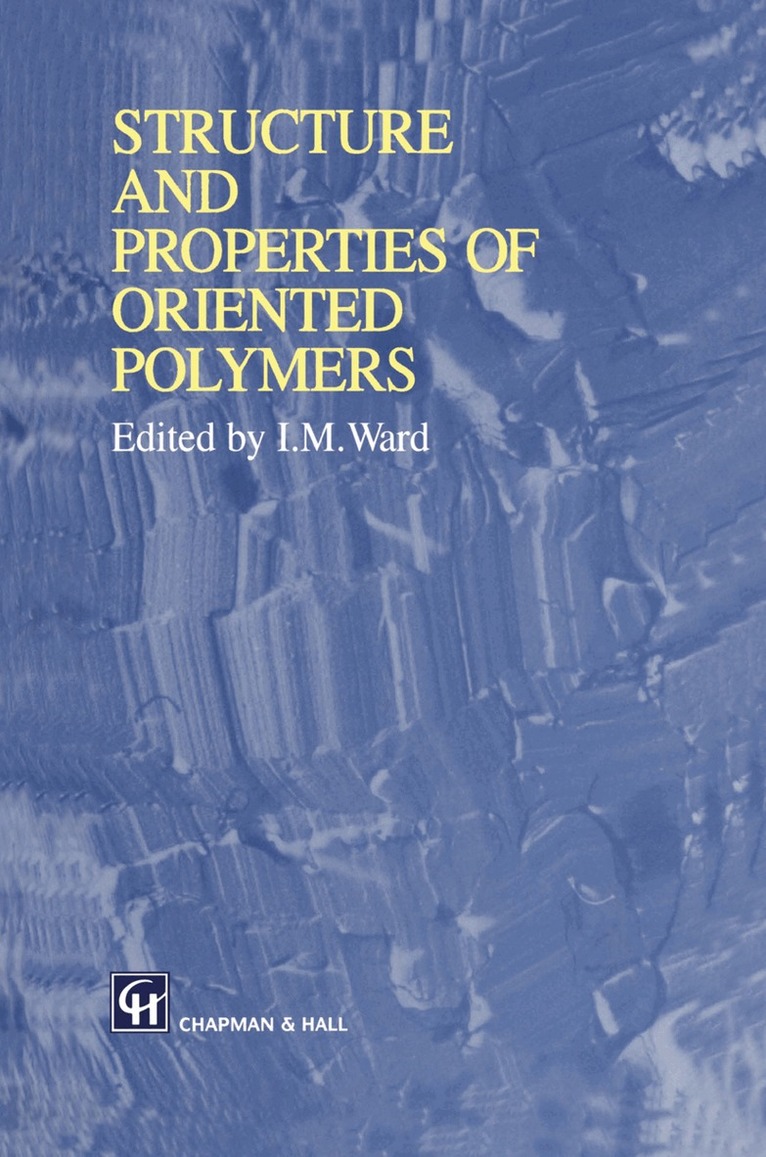
Structure and Properties of Oriented Polymers
Av Ian M. Ward
Inbunden, 1997
3054 kr
Lägg i varukorg
The first edition was produced at a time when the advantages of studying oriented polymers were just becoming apparent. From a sci entific stand point it had been demonstrated that greater insight into both structure and properties could be obtained if an oriented polymer was prepared. From a …
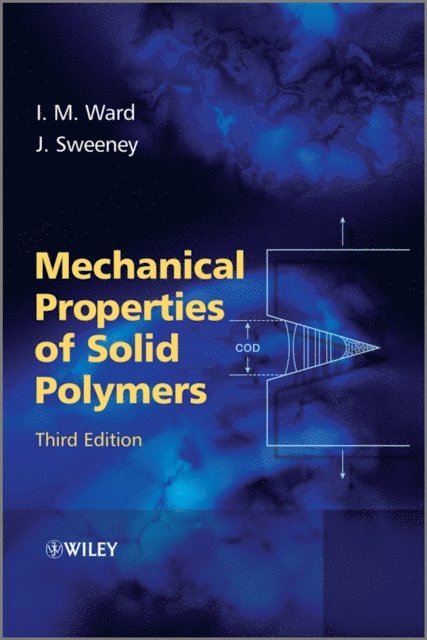
Mechanical Properties of Solid Polymers
E-bok, 2012
1992 kr
Lägg i varukorg
Providing an updated and comprehensive account of the properties of solid polymers, the book covers all aspects of mechanical behaviour. This includes finite elastic behavior, linear viscoelasticity and mechanical relaxations, mechanical anisotropy, non-linear viscoelasicity, yield behavior and …
Mechanical Properties of Solid Polymers
E-bok, 2012
2036 kr
Lägg i varukorg
Providing an updated and comprehensive account of the properties of solid polymers, the book covers all aspects of mechanical behaviour. This includes finite elastic behavior, linear viscoelasticity and mechanical relaxations, mechanical anisotropy, non-linear viscoelasicity, yield behavior and …
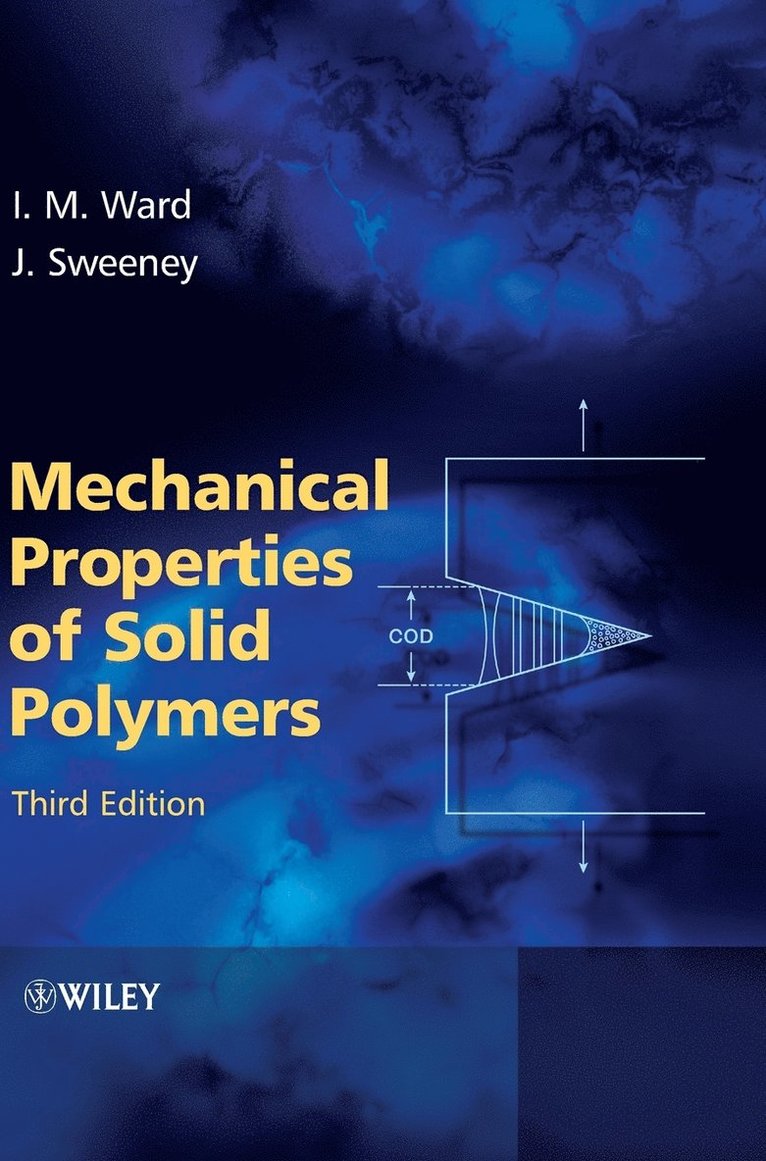
Mechanical Properties of Solid Polymers
Inbunden, 2012
1760 kr
Lägg i varukorg
Providing an updated and comprehensive account of the properties of solid polymers, the book covers all aspects of mechanical behaviour. This includes finite elastic behavior, linear viscoelasticity and mechanical relaxations, mechanical anisotropy, non-linear viscoelasicity, yield behavior and …
High Temperature Alloys
Their Exploitable Potential
Av Ian M. Ward, J. Nihoul m. fl.
E-bok, 2012
1413 kr
Lägg i varukorg
Advances in industrial technologies and improved performance of constructional materials are interdependent and have become of increasing concern in recent years. This Conference aimed to - provoke discussion of the limits towards which high temperature alloys properties can, ultimately, be …
Developments in Oriented Polymers-2
Av Ian M. Ward
E-bok, 2012
734 kr
Lägg i varukorg
The last four years since the publication of the first of this series have seen further striking developments in both the science and technology of oriented polymers. In particular, polymers possessing very high degrees of molecular orientation are now quite commonplace, and this is reflected by …
Structure and Properties of Oriented Polymers
Av Ian M. Ward
Häftad, 2012
3598 kr
Lägg i varukorg
The first edition was produced at a time when the advantages of studying oriented polymers were just becoming apparent. From a sci entific stand point it had been demonstrated that greater insight into both structure and properties could be obtained if an oriented polymer was prepared. From a …
High Temperature Alloys
Their Exploitable Potential
Av J.B. Marriott, M. Merz m. fl.
Häftad, 2011
1095 kr
Lägg i varukorg
Advances in industrial technologies and improved performance of constructional materials are interdependent and have become of increasing concern in recent years. This Conference aimed to - provoke discussion of the limits towards which high temperature alloys properties can, ultimately, be …
Developments in Oriented Polymers—2
Av Ian M. Ward
Häftad, 2011
551 kr
Lägg i varukorg
The last four years since the publication of the first of this series have seen further striking developments in both the science and technology of oriented polymers. In particular, polymers possessing very high degrees of molecular orientation are now quite commonplace, and this is reflected by …
Structure and Properties of Oriented Polymers
Av Ian M. Ward
E-bok, 2012
4001 kr
Lägg i varukorg
The first edition was produced at a time when the advantages of studying oriented polymers were just becoming apparent. From a sci entific stand point it had been demonstrated that greater insight into both structure and properties could be obtained if an oriented polymer was prepared. From a …