Ian Maddocks - Böcker
Visar alla böcker från författaren Ian Maddocks. Handla med fri frakt och snabb leverans.
2 produkter
2 produkter
5 191 kr
Skickas inom 7-10 vardagar
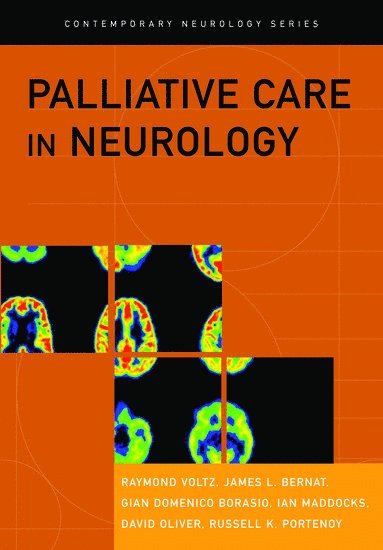
Palliative care is the duty of every neurologist: however, to date, this has not been a standard feature of neurological practice or training. This book helps define a new field, namely palliative care in neurology. It brings together all necessary information for neurologists caring for a patient with advance disease.Palliative care is an approach to the management of patients with life-threatening illness that attempts to enhance comfort, relieve psychosocial and spiritual distress, assure respect for decision making, provide support for the family, and prepare the patient and family for the end of life. This unique book covers each of the many dimensions of palliative care as they relate to patients with advanced neurological disorders. Basic principles of palliative care and specific ethical issues (such as euthanasia, food and hydration and advance directives) are covered. The needs of populations with specific neurological disorders are described and the management of symptoms that are common to all is explored in detail. Each chapter introduces its topic using a case report that may be used directly for teaching purposes. The authors have put together an invaluable resource, which lays the foundation for further research in the field.
1 083 kr
Skickas inom 7-10 vardagar
Palliative care affirms the value of holistic support for persons facing death from advanced disease. Increasingly the approach of palliative care is seen as relevant not only to terminal cancer (its initial concern) but also to many other incurable conditions. To date, the major emphasis of specialist neurology has been on diagnosis, and the continuing long term management of the many major diseases has received far less attention. This handbook aims to provide succinct and practical advice on the management of major neurological disorders in both their supportive and terminal phases, recognizing that these conditions are increasing in prevalence in virtually every society as the proportion of elderly persons grows. It demonstrates how the discomforts encountered in dementia, stroke, Parkinson's disease, ALS, Huntington's disease, muscular dystrophies and multiple sclerosis can benefit from the same comprehensive approach to palliation as has evolved in specialist care for cancer.